COLUMBUS, MARCONI, BALBO AND MUSSOLINI: Italian Heroes Collide in Chicago - Part 4
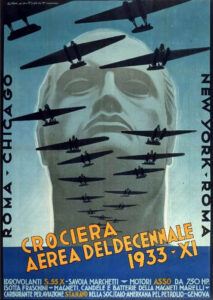
CONTENTS:
(11) THE SECOND COLUMBUS CRASHES AND BURNS
FOR MORE OF THE CHICAGO CENTURY OF PROGRESS STORY, SEE:
COLUMBUS, MARCONI, BALBO AND MUSSOLINI: Italian Heroes Collide in Chicago - Part 1
COLUMBUS, MARCONI, BALBO AND MUSSOLINI: Italian Heroes Collide in Chicago - Part 2
COLUMBUS, MARCONI, BALBO AND MUSSOLINI: Italian Heroes Collide in Chicago - Part 3

(11) THE SECOND COLUMBUS CRASHES AND BURNS

Trib 4 August 1933 (dated Rome 3 August—which in Chicago was Italian Day at the Fair and the dedication of the Columbus monument.
Ultimately, Italo Balbo was too charismatic for his own good. Back in Italy, many saw him as the Duce's self-appointed successor and an overly-eager one at that.
Although Mussolini and Balbo had been political allies for as long as anyone could remember, essential differences were becoming harder to ignore.
According to Balbo, Germany was undermining Italian autonomy and obstructing Italian priorities —while an impotent Mussolini looked on.
Then there were the creeping excesses of Nazi racial policy, which the Duce was unable or unwilling to oppose.
Balbo was born and raised in Ferrara, amidst ardent Jewish fascists, and he maintained close relations with them until the very end.

Ferrara was also the home town of Aldo Finzi (1891-1944), Balbo's slightly slightly older contemporary (1896-1940)..
I have always been fascinated with people's next chapters--especially historical figures who seemed to be moving along a a clear-cut path.
In paticular,Fthere was thaascist aviators?
They were often the most enthusiastic Party members up to a point —that point being Italian independence from Hitler's racial laws?
Aldo Finzi was perhaps a special case— being Jewish himself.
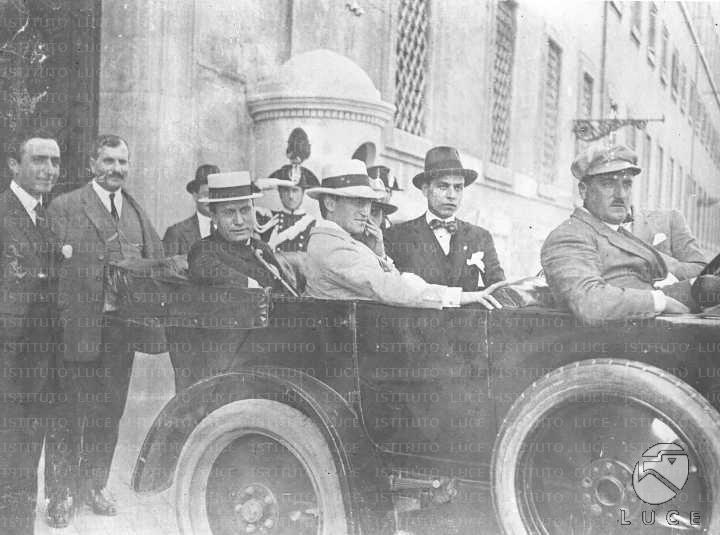
Finzi in light-colored suit.
But then ther there was the noble Ludovico Potenziani who reverted to type as a monarchist
The most startling case of all...Giuseppe Castruccio ten years after the Century of Progress

https://diplomatic-reports.ehri-project.eu/document/EHRI-DR-19430811-IT
EHRI-DR-19430811-IT
1943-09-04 | Thessaloniki
Archivio Storico Diplomatico del Ministero degli Affari Esteri, A.G. Uff. IV, Posizione S.E. 27.869, busta G, fasc. Grecia E. Original in Italian.
-

https://x.com/sergio_barbanti/status/1787530017741627704/photo/2
Italian Ambassador
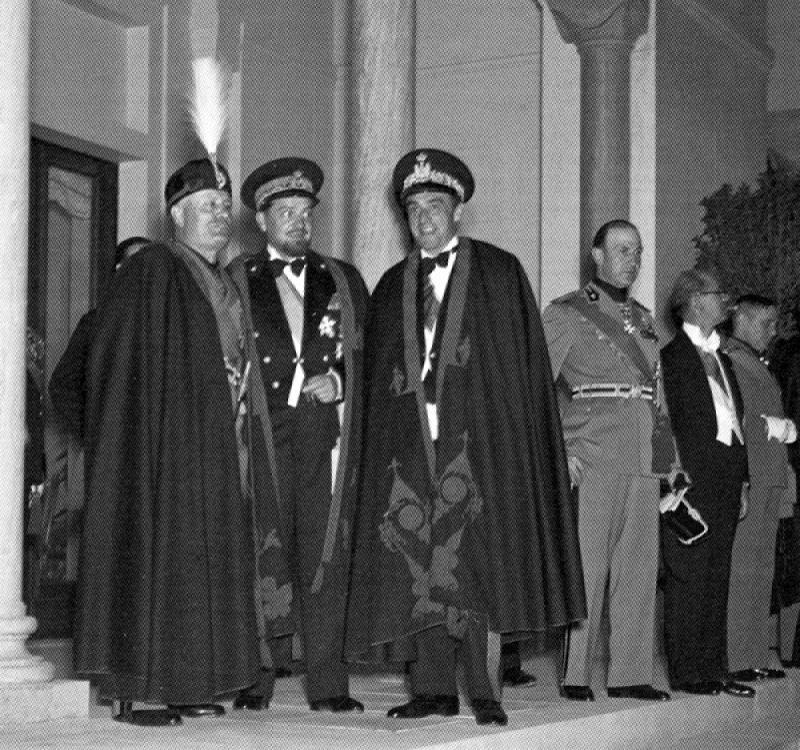
Benito Mussolini visits Tripoli as Imperial overlord in 1937. Italo Balbo flanks him at a grand evening event, with the Duce in orientalizing fancy dress.
Rome was not big enough for both Mussolini and Balbo. Only a few months after his American triumph, the Duce shunted him off to Libya as Colonial Governor.
Mussolini also pulled the plug on Balbo's long-running media sweep. Italian newspapers —going forward —were ordered to feature him less frequently and in subordinate roles.
During the remaining six years of his life, Italo Balbo still found plenty to do— albeit in political exile and detached from his popular base.
North Africa was emerging as a principal theater of the Second World War and this daring fighter pilot was right on the spot.
Balbo and Jews of Tripoli
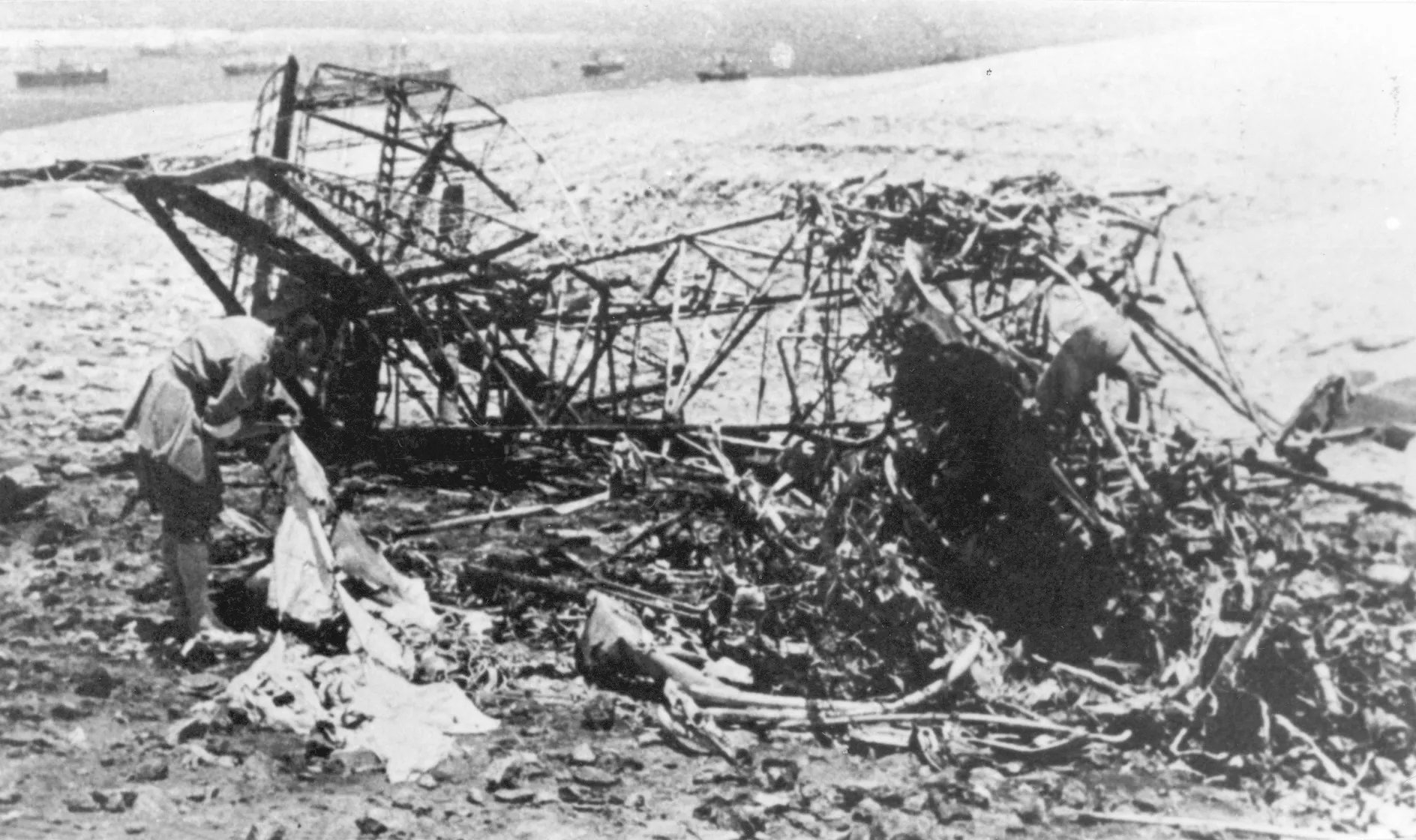
While serving as Governor, Balbo also flew aerial missions on the front line. Then on 28 June 1940, his plane was brought down by friendly fire, while returnng from a reconaissance foray over Tobruk.
The Duce did not bother to feign grief, at least not to those in his inner circle who knew the score —but the public response was a different matter entirely.

The death of Italo Balbo fills the front page of the chief daily newspaper of the Emilia-Romagna, his home region.
HEADLINES: Eternal Glory to Those Who Have Fallen in the Service of the Fatherland / The Heroic Death of the Fighter Pilot Italo Balbo in the Sky Over Tobruk / The Duce Orders that Flags Be Flown at Half Staff Today and Tomorrow and that the Symbols of the Fascist Party be Draped in Mourning / A Life of Fascist Passion and Warlike Daring / The Supreme Holocaust.
The "Holocaust" reference was a nod to ancient Greek history, signifying a holy sacrifice and more specifically, a burnt offering.
In any case, Balbo exited at the age of 44, without seeing the final immolation of the Fascist and Nazi Regimes. Mussolini and Hitler both outlived him by nearly five years, dying only two days apart on April 28 and April 30, 1945.
As for Italo Balbo's legacy, across America there is barely one at all— apart from a run of vivid newspaper stories now more or less lost in time.
For a brief moment, he seemed ready to join Christopher Columbus and Guglielmo Marconi in the Italian Pantheon —or the Italian-American Pantheon, at least.
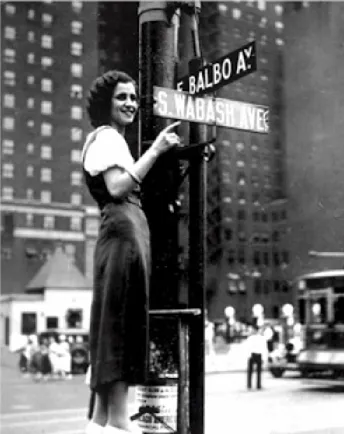
Chicago is the chief and perhaps only locale where Balbo's memory persists, recalling a moment when that city was the epicenter of the world.
Balbo Drive still cuts through Grant Park and crosses Columbus Drive, marking Ground Zero of the Second Columbus cult.
Grant Park also hosted Carlo Brioschi's bronze statue of Christopher Columbus— where the Italian pilot and his companions posed in their white uniforms— until it was purged in 2020.
Just to the south, in Burnham Park— site of the Century of Progress Exposition —the Balbo Monument still maintains its tenuous pride of place...for now, at least.
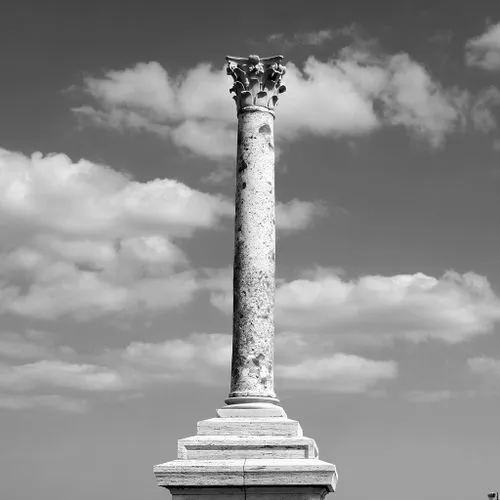
Benito Mussolini moved quickly to realize a durable monument to Balbo's epoch-making flight. He extracted "The Balbo Column" from the site of Ostia (the ancient port of Rome) and shipped it to the American heartland with a new base and Fascist trimmings.
On 15 July 1934, it was installed in front of the Italian Pavillion at the Century of Progress Exposition— proclaimed to a largely ethnic crowd by Balbo himself, long-distance. (This time the radio broadcast worked.)

The ancient column perfectly bisected the aerodynamic wing— presumably as planned.
This telling juxtaposition of old and new was flanked by two enormous loudspeakers broadcasting Balbo's address from Rome.
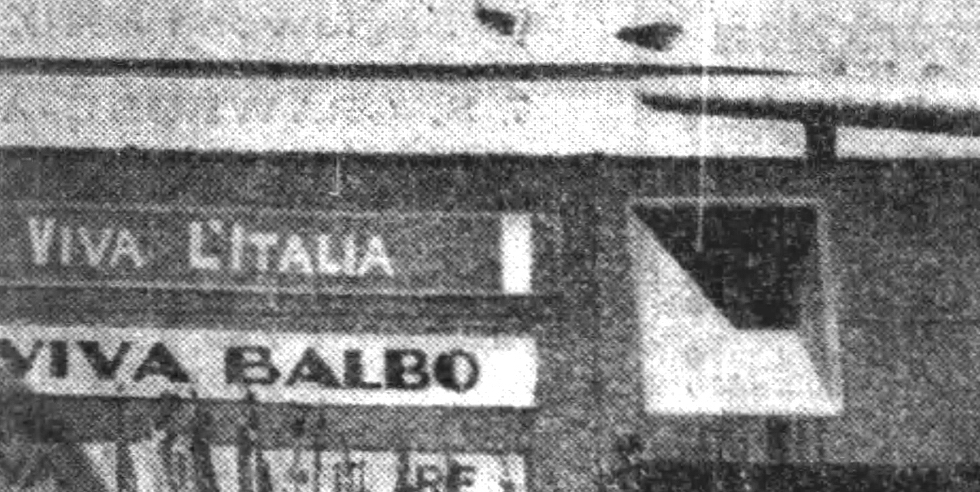
Viva L'Italia! Viva Balbo!
That was Italo Balbo's last hurrah on the American scene.
The column, however, still remains where it was —now that everything else is gone or diasappearing fast.
As for the now weathered inscription:
QUESTA COLONNA
DI VENTI SECOLI ANTICA
ERETTA SUL LIDO DI OSTIA
PORTO DI ROMA IMPERIALE
A VIGILARE LE FORTUNE E LE VITTORIE
DELLE TIREMI ROMANE
L'ITALIA FASCISTA SUSPICE BENITO MUSSOLINI
DONA A CHICAGO
ESALTAZIONE SIMBOLO RICORDO
DELLA SQUADRA ATLANTICA GUIDATA DA BALBO
CHE CON ROMANO ARDIMENTO TRASVOLO L'OCEANO
NELL' ANNO XI
DEL LITTORIO
This column, twenty centuries old, was erected on the beach of Ostia, the port of Imperial Rome, to watch over the fortunes and victories of the Roman triremes. Fascist Italy, with the sponsorship of Benito Mussolini, presents to Chicago a symbol and memorial in honor of the Atlantic Squadron led by Balbo, which with Roman daring, flew across the ocean in the 11th year of the Fascist era.
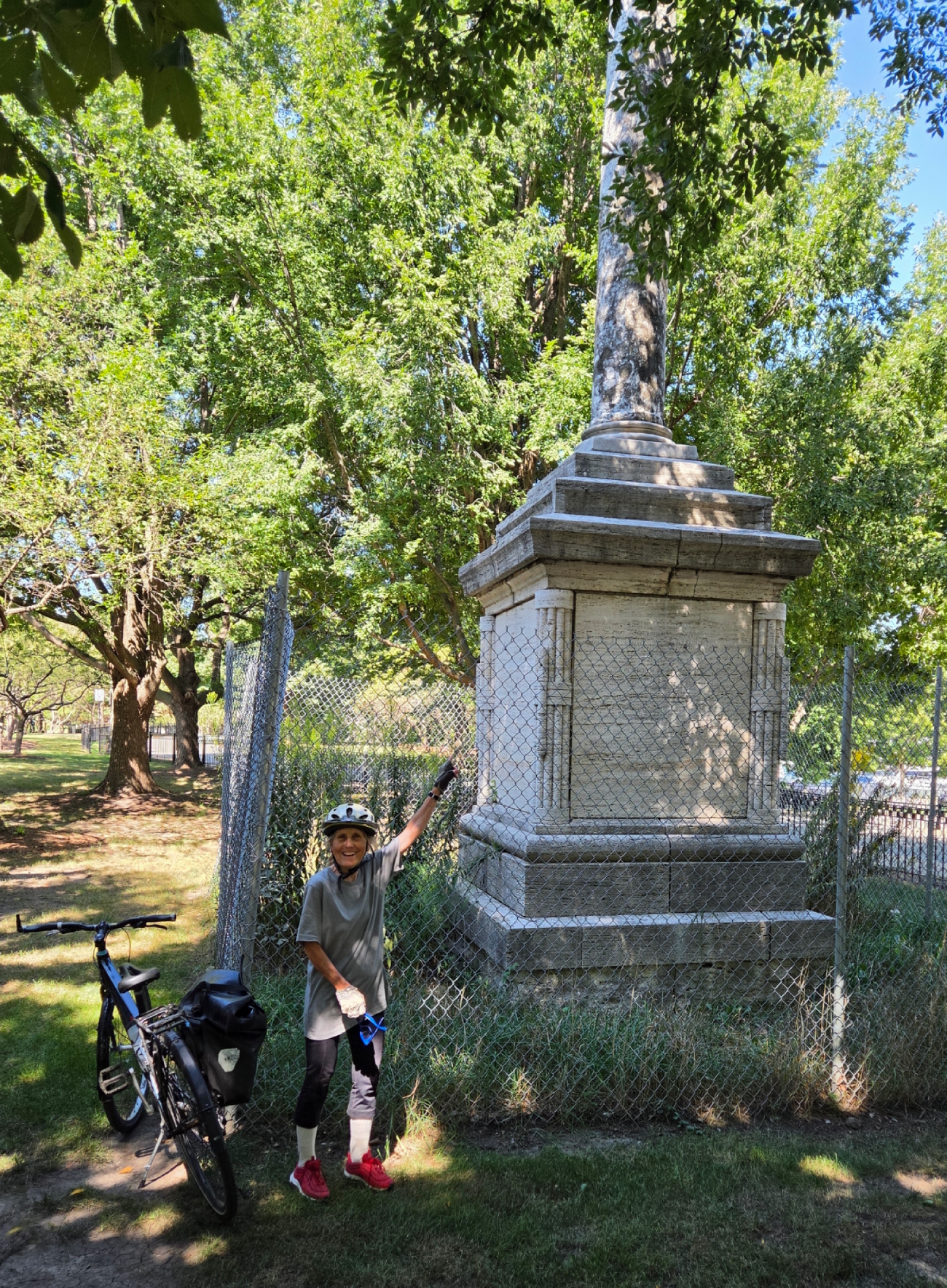
A running leap into the present day...
Diane Dillon, my inside source for All Things Chicago, visits the now much unloved Balbo Column— under constant threat of removal or worse.
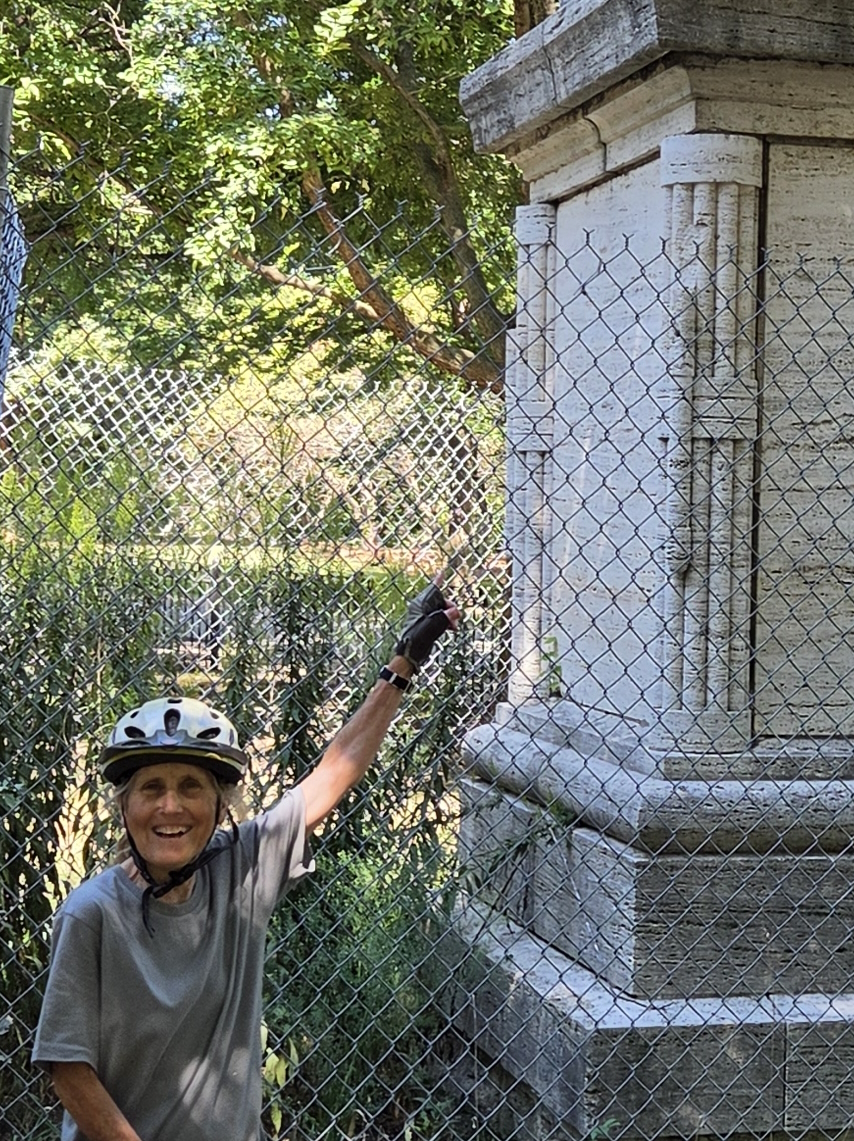
Everyone, however, does not find the prominent fasces quite so cheering nor the lyrical ode to that problematic passage of history.
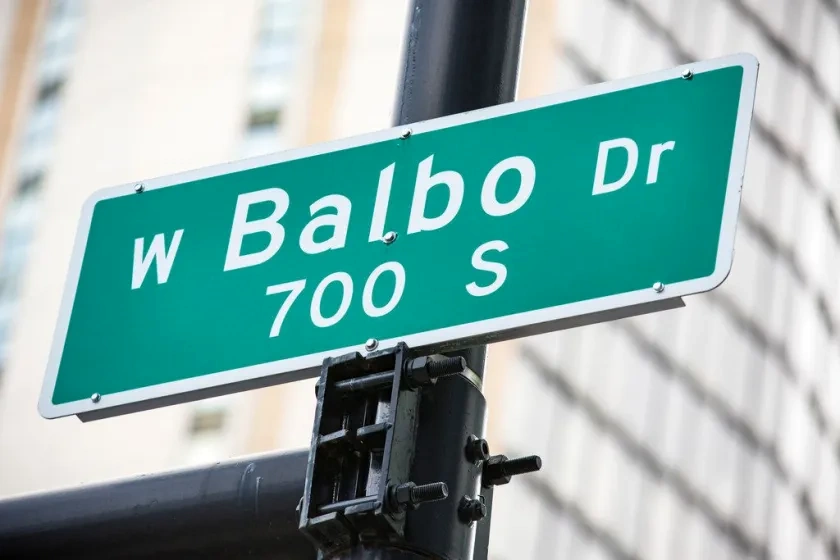
For decades, Chicago activists— overwhelmingly non-Italian, of course —have set their sights on Balbo Drive and the Balbo Column.
This began right after World War Two, when naming-rights were in hot demand for the latest crop of heroes.
"Chicago boys of Italian descent who fought in Italy do not wish to honor the Fascist who betrayed his own people as well as conducted a war against our country."
Thus spoke Russell Root, a Republican candidate for Mayor in 1947, but he didn't get very far in his election bid either.
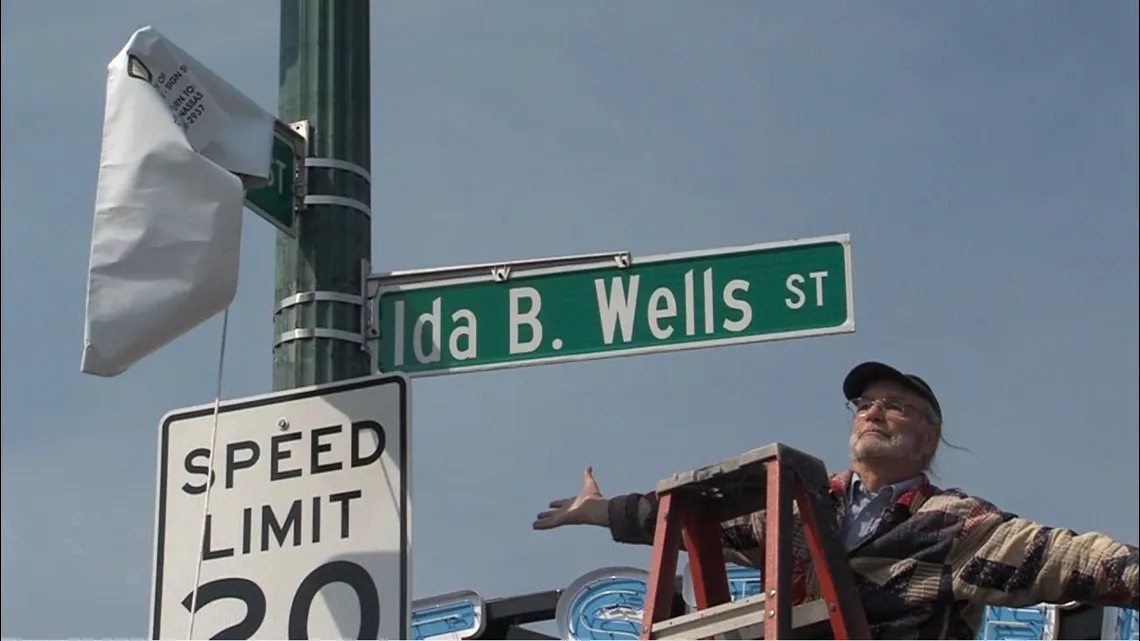
In 2018, there was a concerted push to make Balbo Drive over to the pioneering African-American journalist Ida B. Wells, but that hit local Italian opposition and stalled out too.
After the usual negotiations, another nearby thoroughfare was appropriated for Wells, while Balbo Drive remains as it was —and will likely remain for some time to come.
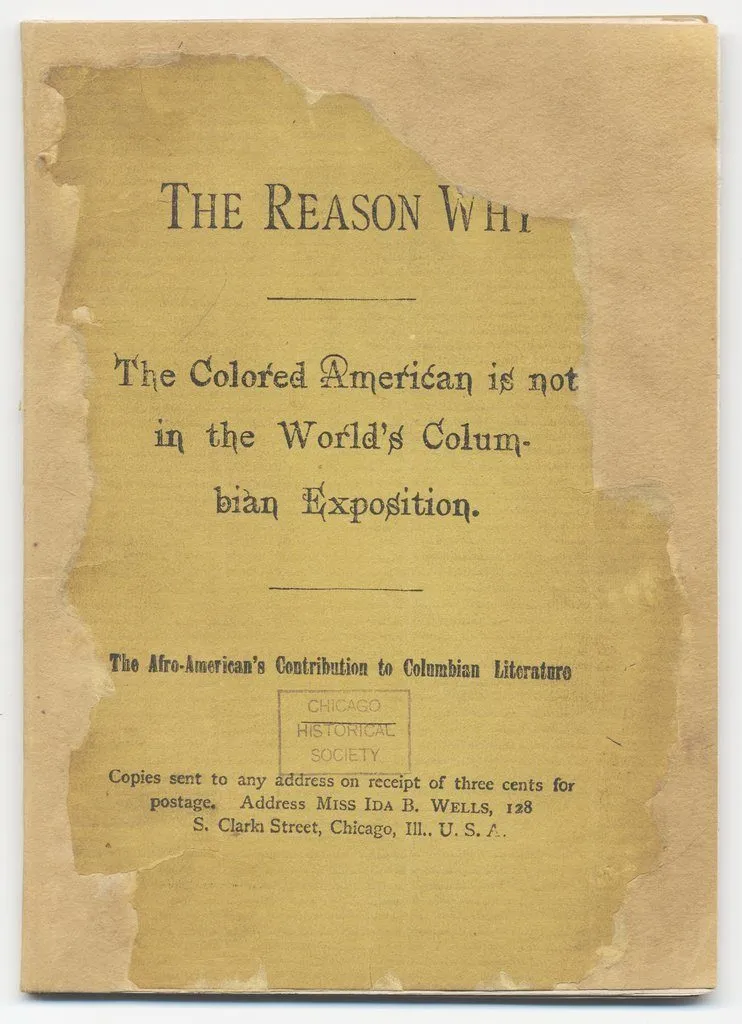
Ida B. Wells launched her momentous career with a self-published critique of Chicago's 1893 Columbian Exposition —the great national celebration where no African-American need apply.
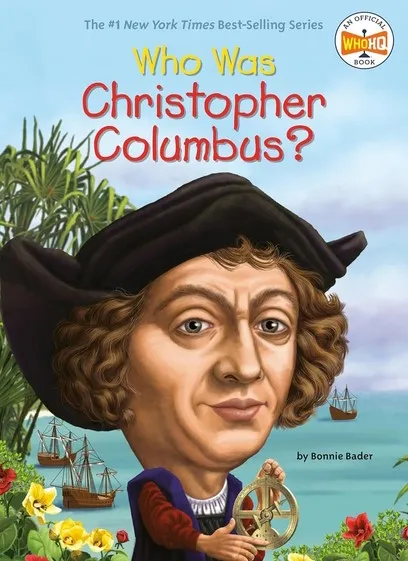
"Falling to his knees, he kissed the ground and cried. Oh, what riches awaited him! He would return to Spain a hero." (Bonnie Bader, 2013)
As we work our way through history, we still hit Christopher Columbus at every turn— more than five centuries after his death.
But who was this Great Navigator, really?
In the United States of America, at least...
FOR MORE ON THE COMPLEX AND CONTROVERSIAL COLUMBUS STORY, SEE:
WHOSE COLUMBUS? WHOSE COLUMBUS DAY?
Related posts
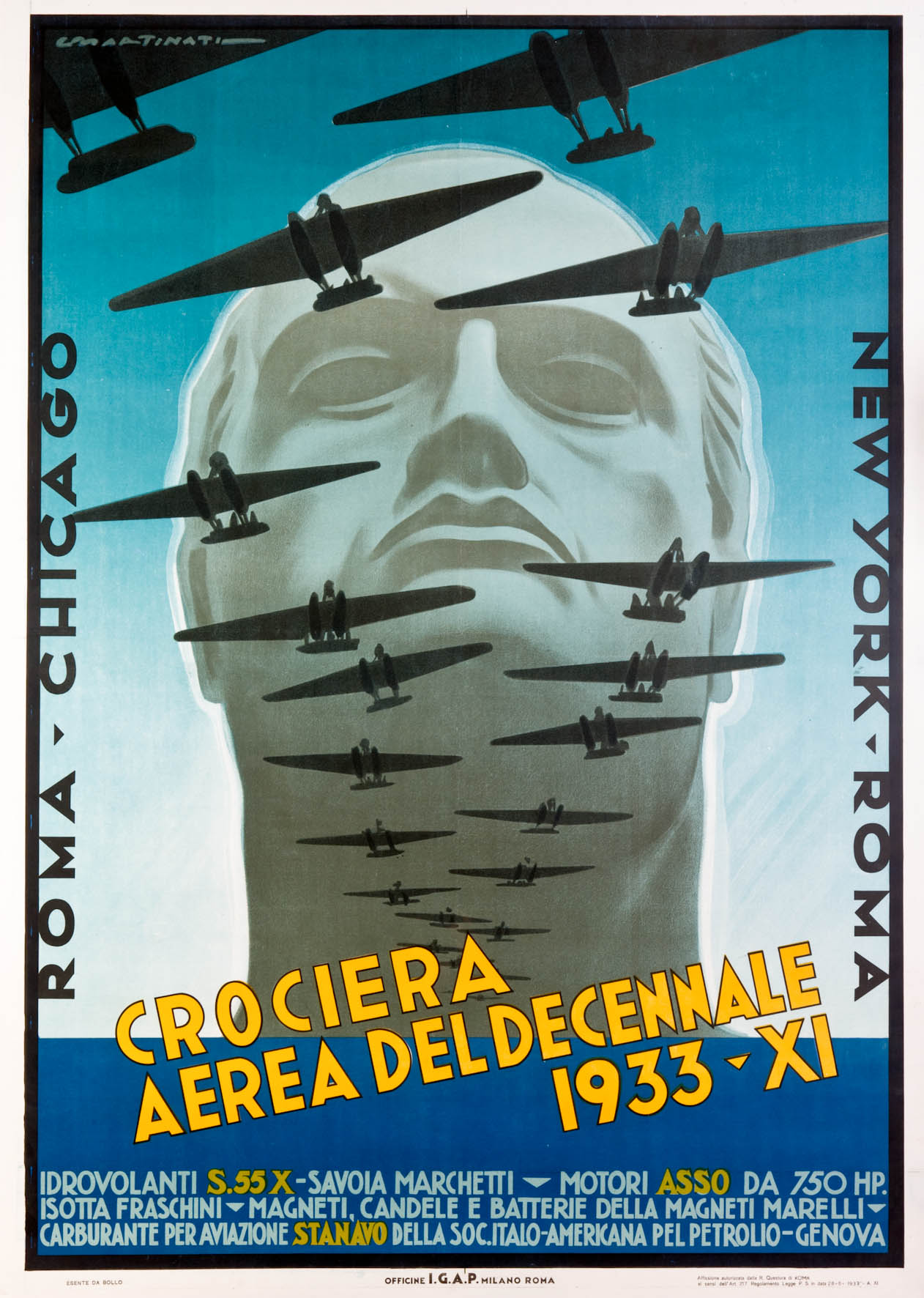
COLUMBUS, MARCONI, BALBO AND MUSSOLINI: Italian Heroes Collide in Chicago - Part 1
At Chicago's 1933-34 Century of Progress Exposition, Guglielmo Marconi, the inventor of the radiotelegraph and Italo Balbo, the aeronautical “Second Columbus” led a brilliantly orchestrated public relations campaign on behalf of Benito Mussolini’s regime.
Fascist Italy commanded a dazzling array of scientific, technological and cultural resources. It channeled them all into a sensational spectacle that astonished, intrigued and outraged the American public.
(1) The View From Marconi Plaza (Philadelphia)
(2) Marconi-Mania vs. Balbo-Mania (Chicago)
(3) Italo Balbo and the Columbus Thing
(4) My Hero!
COLUMBUS, MARCONI, BALBO AND MUSSOLINI: Italian Heroes Collide in Chicago - Part 2
At Chicago's 1933-34 Century of Progress Exposition, Guglielmo Marconi, the inventor of the radiotelegraph and Italo Balbo, the aeronautical “Second Columbus” led a brilliantly orchestrated public relations campaign on behalf of Benito Mussolini’s regime.
Fascist Italy commanded a dazzling array of scientific, technological and cultural resources. It channeled them all into a sensational spectacle that astonished, intrigued and outraged the American public.
(5) The Italian Pavilion (Chicago)
(6) The Other Exposition (Rome)
(7) The Commissioner Prince
(8) Two Directors and a Diplomat
COLUMBUS, MARCONI, BALBO AND MUSSOLINI: Italian Heroes Collide in Chicago - Part 3
At Chicago's 1933-34 Century of Progress Exposition, Guglielmo Marconi, the inventor of the radiotelegraph and Italo Balbo, the aeronautical “Second Columbus” led a brilliantly orchestrated public relations campaign on behalf of Benito Mussolini’s regime.
Fascist Italy commanded a dazzling array of scientific, technological and cultural resources. It channeled them all into a sensational spectacle that astonished, intrigued and outraged the American public.
(9) Behind the Scenes at the Italian Pavilion
(10) On Message and Off
WORK IN PROGRESS

GUGLIELMO MARCONI: Science, Fascism, Antisemitism and What Else?
History has given a free pass to Guglielmo Marconi, who was both a scientific genius and a Fascist ideologue.
There are two stories to tell—first in Italy and then in America.
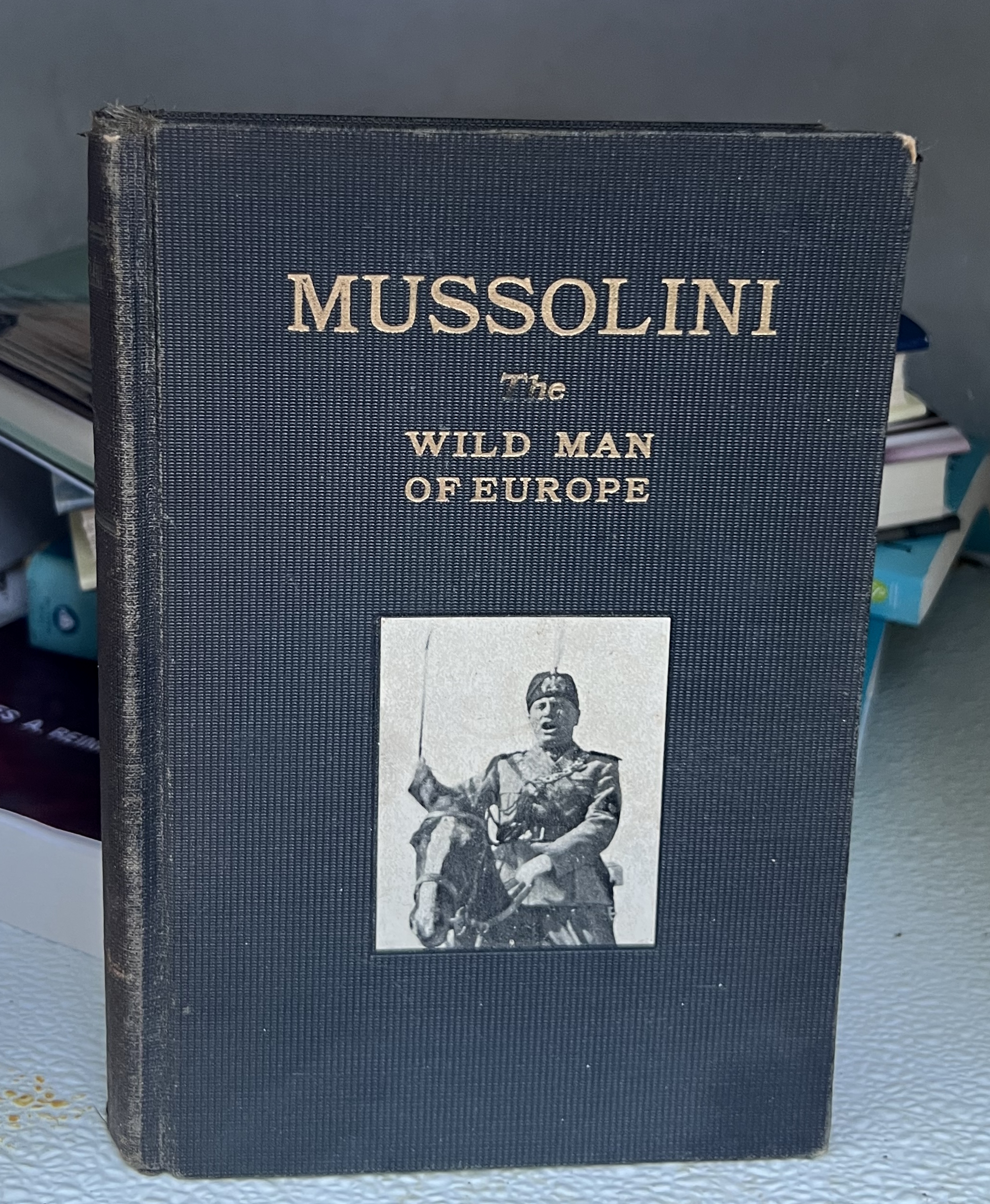
MUSSOLINI: THE WILD MAN OF EUROPE - Part 1
In a "Little Library" in Washington DC, I happened upon "Mussolini: The Wild Man of Europe"— John Bond's eccentric exposé of Benito Mussolini, printed in the Nation's Capital in 1929.
In my first post, "Wild Man, Part 1", Bond helped reveal the inner workings of the Ku Klux Klan in Washington DC, Atlanta GA and Altoona PA.
In "Wild Man, Part 2", we took Bond's book to Fascist Italy and viewed the Duce through the outraged author's eyes.
Here in "Wild Man", Part 3", we bring Bond back to Philo-Fascist America. There we see the Duce lauded by Italian Americans, by Hollywood celebrities and by the mainstream press.
Who was John Bond? A "Militant Freemason", a virulent anti-Catholic and an anti-Mussolini conspiracy theorist.
How about his message? Bond was strange and obsessed but he wasn't always wrong.
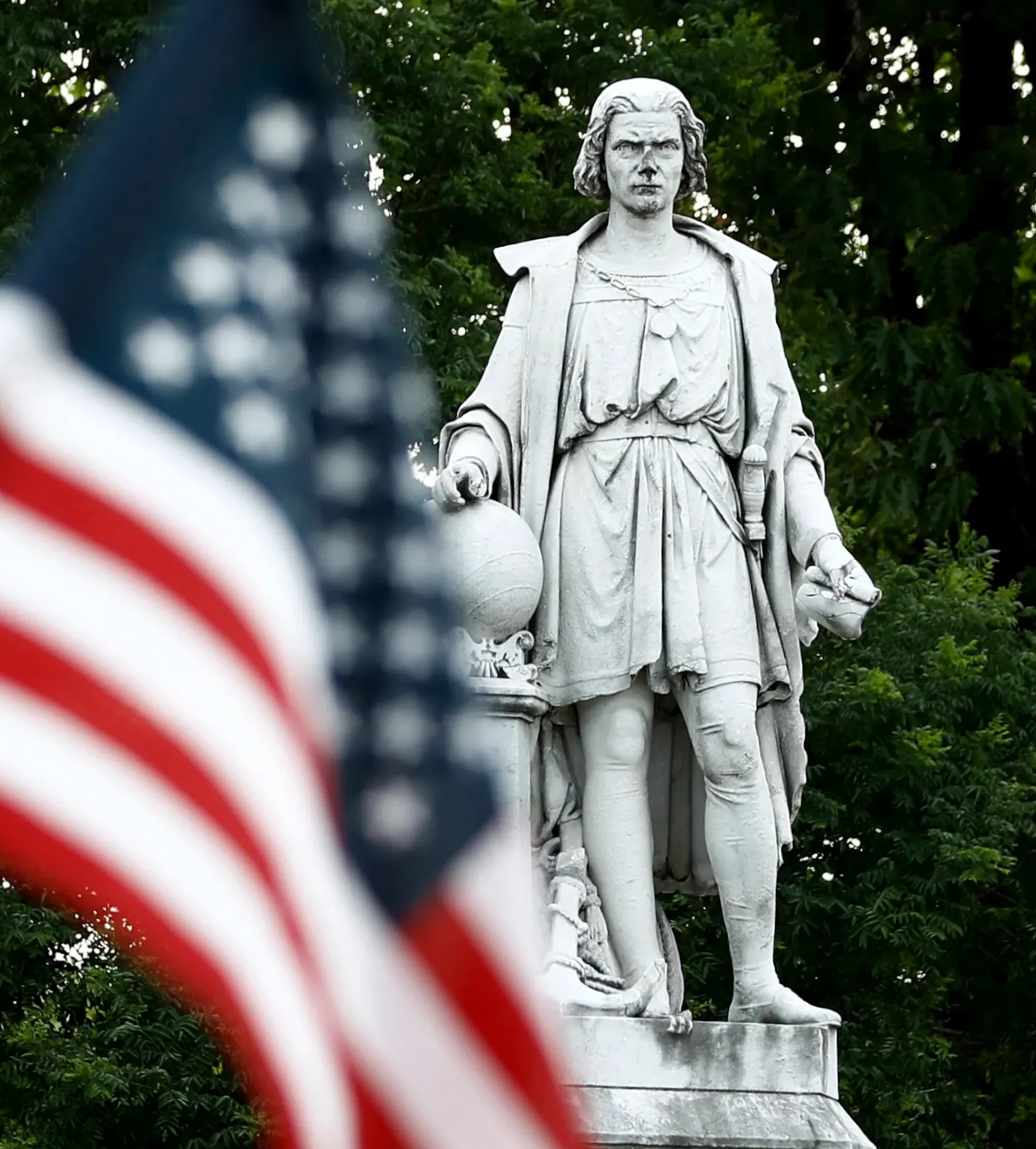
WHOSE COLUMBUS? WHOSE COLUMBUS DAY? Part 1: It begins with a statue in Philadelphia in 1876
Why is Columbus Day the most controversial of American holidays?
People disagree —often violently —about its past and present meaning.
Here are the facts. Make of them what you will!
***
The story begins in South Philly (then and now) and takes us to the American Civil War and the 1876 Centennial Exposition.
We meet Christopher Columbus (in several incarnations), sculptor Emanuele Caroni and Nunzio Finelli (ideator of Philadelphia’s Columbus Statue, long in Fairmount Park, now in Marconi Plaza).
Lorem ipsum dolor sit amet, consectetur adipiscing elit. Suspendisse varius enim in eros elementum tristique. Duis cursus, mi quis viverra ornare, eros dolor interdum nulla, ut commodo diam libero vitae erat. Aenean faucibus nibh et justo cursus id rutrum lorem imperdiet. Nunc ut sem vitae risus tristique posuere.