COLUMBUS, MARCONI, BALBO AND MUSSOLINI: Italian Heroes Collide with American Reality - Part 3
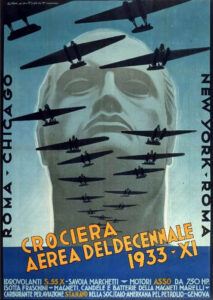
CONTENTS:
(7) THE COMMISSIONER PRINCE
(8) TWO DIRECTORS AND A DIPLOMAT
(9) BEHIND THE SCENES AT THE ITALIAN PAVILION
(10) THE SECOND COLUMBUS CRASHES AND BURNS


The Italian Royal Arms look old-fashioned next to the futuristic Century of Progress logo. However, this version —with the double fasces supporting the crowned Cross of Savoy —was a recent update, in use only from 1929 to 1944.
(7) THE COMMISSIONER PRINCE
Several names jumped out at us while we paged through the guidebook to the Italian Pavilion:
BENITO MUSSOLINI (DUCE)
ITALO BALBO (AIR FORCE GENERAL)
ADALBERTO LIBERA (ARCHITECT)
MARIO DERENZI (ARCHITECT)
ANTONIO VALENTE (ARCHITECT)
Here is another one:
PRINCE LUDOVICO POTENZIANI (ROYAL ITALIAN COMMISSIONER TO A CENTURY OF PROGRESS)
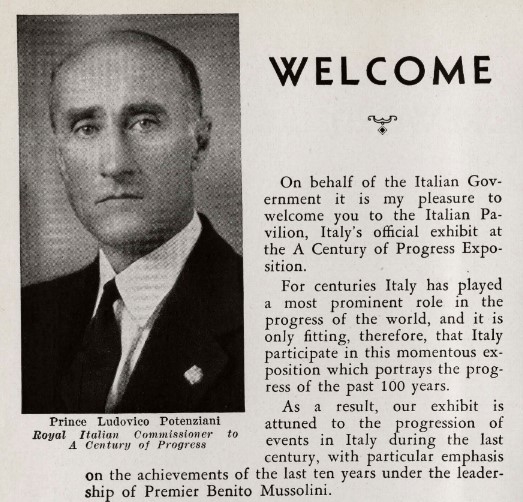
Prince Ludovico Potenziani does the honors, representing the regime in Rome:
"On behalf of the Italian Government it is my pleasure to welcome you to the Italian Pavilion...[O]ur exhibit is attuned to the progression of events in Italy during the last century, with particular emphasis on the achievements of the last ten years under the leadership of Premier Benito Mussolini."

"News Photo: Mussolini and Governor of Rome Ludovico Spada Veralli Potenziani inspect work on the Rome-Ostia Highway accompanied by those responsible for the project"
Ludovico Spada Veralli Potenziani (1880-1971), Fourth Prince of Castel Viscardo, was a notable figure in his time —moving from one prestigious public assignment to another in the course of his long career. Meanwhile, as a titled land-owner, he actively promoted land reclamation and agricultural reform.
In his early years, Potenziani showed an interest in the new and glamorous field of aviation. In 1908, he became president of the Società Aeronautica Italiana (Italian Aeronautical Society) and in 1911, president of the Aero Club d'Italia (Italian Flyring Club). During World War I, he participated as an officer in the Genio Aeronautico (Department of Aeronautical Engineering) —precursor of the Italian Air Force.

Though less flamboyant than Balbo, Francesco de Pinedo (1890-1933) at least equaled him as an intrepid flyer until his death in an aeronautical mishap in Brooklyn on September 2, 1933— only six weeks after Balbo's triumphal arrival in Chicago.
From 1926 to 1928, Potenziani served as Governor of Rome (in effect, appointed mayor). At that time, he was specially tasked with wooing the Duce's Anglo-Saxon admirers —who were flocking to the Eternal City in considerable numbers.

“Preface by His Excellency PRINCE LUDOVICO SPADA POTENZIANI (Governor of Rome)”
"Vahdah Jeanne Bordeux" was the pen-name of the Franco-American-Italian Marchesa Sofia McQuaide De Bonis.
Potenziani was an ideal front-man for the Fascist Regime, always ready to facilitate access while smoothing the Duce's rougher edges.

"Alla Signora Bordeux, Cordialmente Mussolini, Roma 14 gennaio 1928" ("To Signora Bordeux, Cordially, Mussolini, Rome 14 January 1928")
Bordeux's allegedly intimate biography— published concurrently in New York and London in 1927 —is no less softly-focused than the photo facing the title page.
The Duce personally autographed this copy of the British edition which included Potenziani's suave preface.

“This story of Benito Mussolini's life is told with clarity, directness and charm...The great work that the Duce has done for Italy is described with accuracy, and I, who know the man as well as it is perhaps possible to know him, find that with delicate intuition, Madame Bordeux has at all times divined the light and shade of his character…[A]lways one feels the great heart of the man, the indefinable something that is Benito Mussolini...(signed) Ludovico Spada Potenziani, Rome, May 7th 1927”
The "indefinable something that is Benito Mussolini"???

"Mussolini Continues to Mistify Observers of Fascism: Mme. Bordeux Sings His Praise; Nitti Curses His Work. English Ruminations on Italy's Future."
On January 1, 1928, The New York Times Book Review devoted a full page to Madam Bordeux's account and two other related works— hoping to elucidate this contemporary mystery.

Reviewer Hiram Motherwell assesses the conflicting signals currently bombarding the English-reading public.
“Mme. Bordeux sings canticles in praise of the hero whom she admires with perhaps more ardor than discrimination.”
“[Francesco Nitti] former Prime Minister of Italy, now in exile, reiterates the theme of his former volumes, that Fascism like Bolshevism is a passing disease of the post-war era and adds some data to the list of Fascist horrors.”
“Sir Frank Fox sets down entertainingly his observations during a recent and all too brief visit to Italy.”

Motherwell offered a rigorously balanced view in the inimitable style of the New York Times, without forcing conclusions or imposing personal judgements— although he knew Italian Fascism inside out.

“From 1919 to 1927 Mr. Motherwell was European correspondent for the Chicago Daily News. He was in charge of the Rome news bureau for four years. During that period he narrowly escaped being required to leave Italy by the Mussolini Government, as he recognized from the first the menace of fascism to Italy and to the world.”
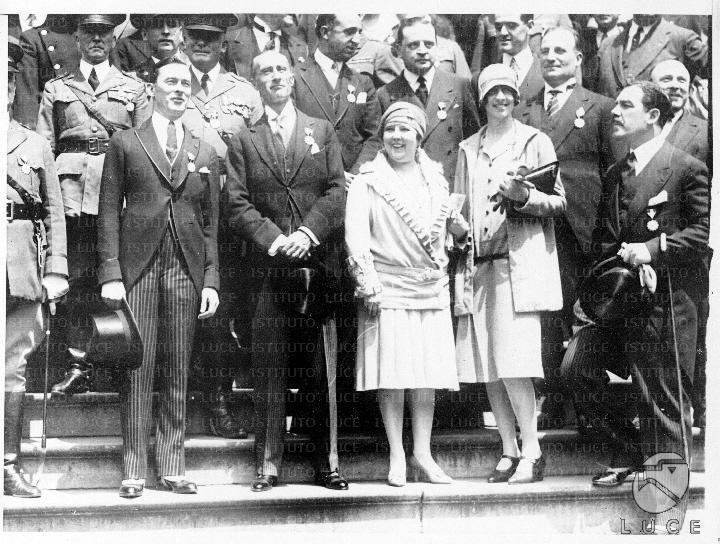
When Ludovico Potenziani landed in New York in the spring of 1928, Motherwell was there on the ground —newly established as a magazine editor. He must have had things to say, but I have not found his comments.
The Prince was bringing the Fascist charm offensive to the financial and cultural capital of the United States— where he enjoyed a rapturous reception, including a ticker-tape parade.



"ITALIANS HERE HONOR THE ROMAN GOVERNOR. Prince Ludovico Spada Potenziani —the 'very distinguished and terribly likeable Governor of Rome,' as he was described by Mayor Walker —was the guest of honor at a dinner of the Italian Societies of New York at the Plaza last night”
“The Mayor promised the Prince that for all his high social and financial position that he had so captivated the people of the City of New York that to him he was 'just one of the boys.' He praised him for having gone into the public service as so few persons of equivalent position in his country would have done.”
"Just one of the boys..."?
Amerca's fetishization of European aristocracy meets the national cult of the "Regular Joe"?

“The Prince spoke of the rapid development of Italian prosperity under the Fascist régime; particularly the production of electrical energy, the development of the merchant marine and the reclamation of marsh land to agriculture. He denied that Italy is dominated by the Government which is imperialistic or tyrranical (sic) and closed by quoting the advice of Mussolini to Italian-Americans to obey the laws of their adopted country.”
"The Prince spoke of the rapid development of Italian prosperity under the Fascist régime..."
He thus offers an uncanny preview of the message of their soon-to-be-imagined Century of Progress pavilion.
"He denied that Italy is dominated by a Government which is imperialistic or tyrannical..."
He thus acknowledges that others were saying exactly that.

Imperialistic...
"Plans for Rebuilding the Roman Empire" from the ruins of the past.

Tyrannical...
"Dictator Mussolini" pumps up his cult of personality at the expense of the Italian people.

I
Power drunk...
Mussolini as abusive father.

Megalomaniacal and erratic...
"Dictator Mussolini" chooses between the “Imperialism of Napoleon”, the “Tyranny of Louis XIV”, the “Ambition of Caesar”, the “Arrogance of Henry VIII”, the “Iron Man Stuff” of Richard I and the “Intrigue of Richelieu”.

Totalitarian...
The "Iron Rule of Fascism" vs. the "Mussolini Opposition" with "Political Liberty", "Freedom of Speech", "Right of Assembly" and "Freedom of the Press" devastated along the way.

By the time of Potenziani's 1928 visit to New York —when the Chicago Century of Progress Exposition was just emerging as a bright idea— dissent in Italy had been ruthlessly suppressed.
Foreign opinion, however, was something else entirely and it required a strategy of its own.

For nearly half a century, Carey Orr was the lead cartoonist at the Chicago Tribune and he pulled no punches when confronting political excesses. Benito Mussolini was a favorite target.
Negative reporting —in Chicago and elsewhere— worried the Duce's cohorts but old-fashioned ridicule hit harder and was more difficult to confute.
America was a large and varied country, with a mass culture that was fractious to say the least.
Fawning adulation? Searing disdain? Blank incomprehension?
Mussolini's fixers faced all of that and more.
(8) TWO DIRECTORS AND A DIPLOMAT
Three more names from the guidebook:
COMMANDER LUIGI RANIERI (GENERAL DIRECTOR OF ITALIAN PAVILION)
PROFESSOR ENRICO BOMPIANI (DIRECTOR OF ITALIAN SCIENTIFIC EXHIBIT)
GIUSEPPE CASTRUCCIO (ROYAL ITALIAN CONSUL AT CHICAGO)

COMMANDER LUIGI RANIERI (GENERAL DIRECTOR OF ITALIAN PAVILION)
General Director Luigi Ranieri was an engineer. Unlike the three absentee architects of record— Adalberto Libera, Mario Derenzi and Antonio Valente —he was sent to Chicago to coordinate onsite work.
Meanwhile, Commissioner Potenziani was their man in Rome. The Prince operated at the highest level —working his inside connections and lending his personal prestige to the initiative.
While not a nobleman like Potenziani, Luigi Ranieri was connected to the distinguished Umbrian family of that name. In their archive, he left a largely unstudied photographic record of the Chicago project.


In the guidebook, Ranieri's photo is embedded in an effusive “tribute to the genius of Marconi, noted Italian inventor-scientist and father of radio”—allusively at least. Since 1909, he too had been a forceful proponent of telecommunications.
In 1923, Ranieri launched Radio Araldo (Herald Radio) in Rome, a precocious and highly successful broadcasting station. Radio Araldo went through several transformations, emerging in 1944 as Radio Audizioni Italiane (RAI), still the Italian national radio and television network.

PROFESSOR ENRICO BOMPIANI (DIRECTOR OF SCIENTIFIC EXHIBIT)
Enrico Bompiani (1889-1975) was a distinguished mathematician and Professor of Geometry at the University of Rome from 1926 to 1964.
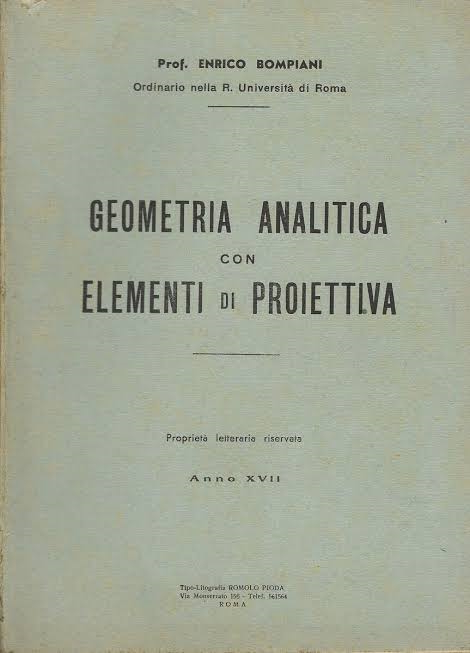
Differential Geometry (applying calculus to the study of non-flat shapes) was his area of specialization.
Bompiani's connection to Chicago went beyond curating Italy's exhibits in the Hall of Science at the Century of Progress. In 1930 and 1934, he served as Visiting Professor of Mathematics at the University of Chicago.

GIUSEPPE CASTRUCCIO (ROYAL ITALIAN CONSUL AT CHICAGO)
Giuseppe Castruccio (1887-1985) was the chief protagonist of the Pavilion project. He had an intriguing story of his own, both before and after the Century of Progress.


A keen sportsman, he spent his early years on the football field, advancing to the first team of Genoa CFC (Genoa Cricket and Football Club, as it is still known).

In World War I, Castruccio served as Lieutenant on the aeronautical side, piloting a hot-air balloon. In 1917, he was awarded a Gold Medal for Military Valor by King Vittorio Emanuele III.

After the war, Castruccio joined the Italian diplomatic corps while maintaining an interest in aviation.
In the spring of 1935, the celebrated solo pilot Amelia Earhart visited her hometown of Chicago. The air-minded Consul awarded her a "Balbo Medal", refreshing the public's memory of the General's aeronautical exploit two years earlier.

“The so-called Balbo medal, pinned on Amelia Earhart, flier, May 23, by Dr. Giuseppe Castruccio, then Royal Italian consul general to Chicago, has been returned to him, Miss Earhart disclosed here tonight.”
Things, however, were not quite what they seemed. On August 5, Castruccio wrote the aviatrix to "correct the erroneous impression that the medal given was an official decoration of his government." It was merely a "gift of personal devotion", he explained, and Earhart shunted it back by turn of post.

“The Italian embassy in Washington stated tonight that there is no “Balbo medal,” and suggested that perhaps the one presented to Miss Earhart was a replica of the special platinum decoration struck by Chicago Italian groups in honor of the flight here in 1934 [actually 1933] of General Balbo.”
The Times contacted the Italian Embassy for clarification. They disavowed the prize in no uncertain terms— leaving us to imagine what really went on.
With the famed flyer in Chicago, Castruccio presumably seized the moment and improvised a medal to present— making the most of the occasion.
As he certainly knew, that was not the first time that the Italian government had honored Earhart —with General Balbo in tow.

Castruccio's "Balbo Medal" would seem a shrewd bit of public relations and scarcely a diplomatic stretch —unless politics intervened, which they did.

“The developments have led to the surmise that the Italian Government may have ordered the disavowal of the official nature of the presentation. It is noted that fascism is anti-feminist. It was also suggested that Mr. Putnam may have made Mussolini angry by publishing an anti-Fascist book.”
Amelia Earhart was a fiercely liberated woman, as everyone knew, and far from the Fascist regime's feminine ideal.
George Palmer Putnam was an influential publisher, also Amelia Earhart’s husband, publicist and business manager.
As for Putnam "angering Mussolini with a book" —that was an understatement for the ages.
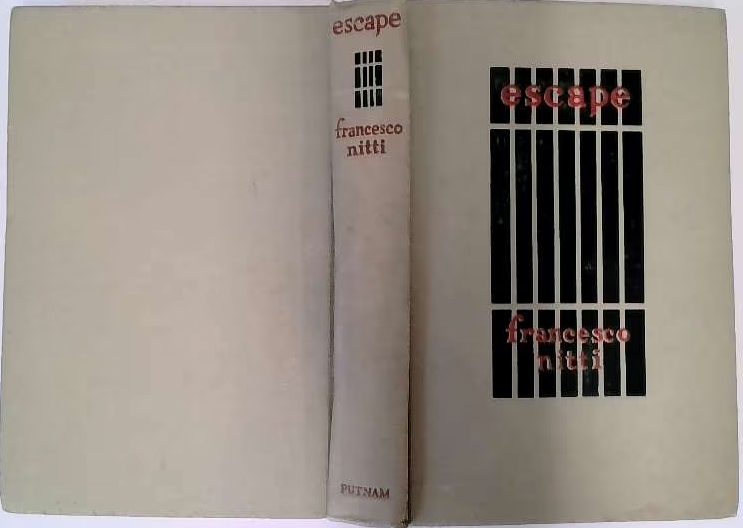
"Escape; the personal narrative of a political prisoner who was rescued from Lipari, the fascist "Devil's Island", by Francesco Fausto Nitti, with a preface by the author's uncle [Francesco Saverio Nitti], ex-premier of Italy, with nine illustrations 1930"
The Fascist regime did not welcome sensational exposés, at home or abroad. Sociaist Deputy Giacomo Matteotti was murdered in Rome in 1924 after publishing Un anno di dominazione fascista. (An English edition, titled The Fascisti Exposed: A Year of Fascist Domination, appeared almost immediately in London.)
The author of Putnam's latest tell-all was Francesco Fausto Nitti, anti-fascist intellectual and nephew of Francesco Saverio Nitti, leftist-liberal Prime Minister of Italy in 1919-20. At that time, both were living in Paris as political refugees and vigorously assailing the government back home.
The elder Nitti's Bolshevism, Fascism and Democracy had been reviewed by Hiram Motherwell in the New York Times on January 1, 1928, alongside Madam Bodreux's fluttery encomium to Mussolini—The Man and Sir Frank Fox's bright and discursive Italy Today (which included an autographed photo of the Duce).
So, the English-reading public could take their choice when it came to Italian Fascists and their doings.

“FUGITIVE TO BARE FASCIST PRISONS; Putnam Will Publish Book by Nitti, Ex-Premier’s Nephew, Who Fled Lipari Islands; UNCLE PENS INTRODUCTION; Revelations of Inner Workings of Regime Promised— Editions to Appear in Five Languages”

“Mr. Putnam is now in Paris conferring with the author, who since his escape has been living there writing the story of his experiences. It is understood that the Italian Government has been informed by its agents in Paris that Signor Nitti’s disclosures are in the hands of the American publisher.”
Putnam was certainly hands-on when it came to literary acquisitions and an evident agent provocateur —also a cunning businessman and a relentless publicity-hound.
Meanwhile, the former Prime Minister's nephew was writing directly in English, since the Italian market was essentially closed.
Putnam and Earhart did not marry until February 7, 1931 —a year after the explosive début of Escape.

"NEWS PHOTO: The Aviatrix Lady Lindy [Amelia Earhart] and her husband George P. Putnam visit Rome and the Hydroplane Landing in Ostia."
Still, Escape burst on the scene well before their reception by Balbo in Rome and their VIP visits to the Hydroplane installation in Ostia and the Aeronautical Academy in Orbetello in June 1932.
By 1929, Italian government agents were evidently surveiling the Nittis and Putnam in Paris. Only years later did the Regime make a messy rear-guard move against the American publisher by way of his celebrated wife.

The German edition was designed by the famed modernist calligrapher and typographer Jan Tschichold.
Putnam's initial plan was to speed the release of the younger Nitti’s book in English then blanket the globe with editions in Italian, French, German and Spanish.
The German version appeared more or less promptly since Nazi-Fascism was running some years behind its Italian model.

"Francesco F. Nitti, OUR PRISONS AND OUR ESCAPE; preface by Francesco Saverio Nitti". It has the heroically improvised look of the economical publications rushed into print right after World War II.
Only in 1946— at the dawn of the new Republic— did the searing memoir emerge in Italian, prepared by Nitti himself.
(9) BEHIND THE SCENES AT THE ITALIAN PAVILION

On October 3, 1933, Guglielmo Marconi and his party visited the Italian Pavilion at the Century of Progress Exposition.
For the Facist regime, America was both a problem and an opportunity.
Then came Chicago's Century of Progress Exposition...
We could always jump in at the end and view the Italian Pavilion as a done deal —but there were constant starts and stops along the way.
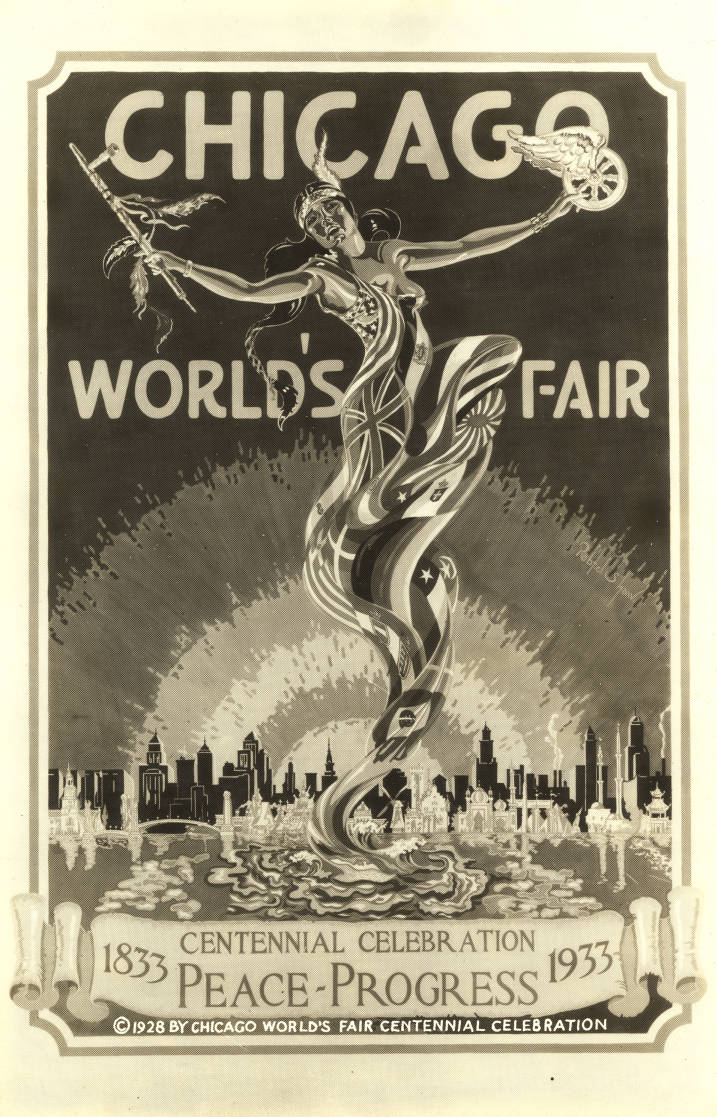
In January 1928, after years of discussion, Chicago proclaimed a World’s Fair marking the city’s hundredth anniversary (1833-1933).
A "Centennial Celebration of Peace and Progress" was the designated theme— extoling the great boom that followed the World War.
In their first blast of publicity, we see a chorus girl erupt from a swirl of flags— Indian Maiden-style —with a feather in her hair, a peace pipe in one hand and the winged wheel of progress in the other.
That was a giddy moment, to say the least… Unfortunately, the poster is in black-and-white, so it is not easy to read the panoply of national colors. Still, they were announcng a World’s Fair —so international participation was in the mix from the very start.
The organizers, however, were not yet authorized by Congress to invite foreign exhibitors.
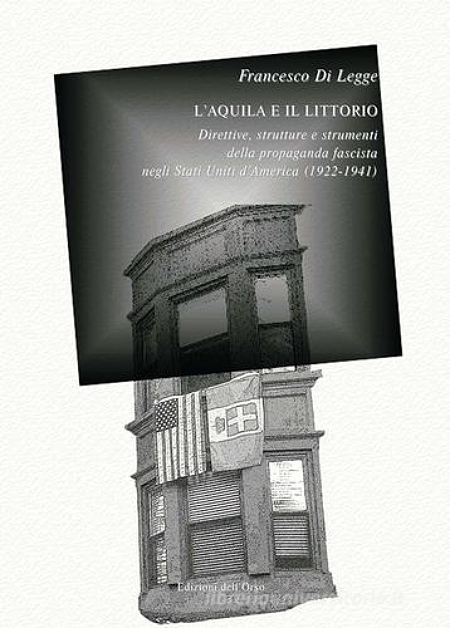
strumenti della propaganda fascista negli
Stati Uniti d'America (1922-1941) (Edizioni dell'Orso, 2027)
Title in English: "The Eagle and the Fasces: Directives, Structures and Instruments of Fascist Propaganda in the United States of America (1922-1941)". I cite the online version of Dr. Legge's preceding doctoral thesis (Università del Molise, 2013/2014)
In the files of the Minstero degli Esteri (Ministry of Foreign Affairs) in Rome, there is massive documentation of the Italian response to the evolving opportunities and challenges of the Century of Progress Exposition.
This material was mined to great effect by Dr. Francesco Di Legge in the context of his masterful study of Italian Fascism in America during the twenty years of Mussolini's ascendancy.

Once Congress ratified the Chicago venture on February 5, 1929 —duly endorsed by outgoing president Calvin Coolidge— Consul Castruccio was quick off the mark.
On 4 March, he made the first of many pitches for Italian participation, writing Ambassador Giacomo de Martino in Washington.
From the very outset, Castruccio had the goals and aspirations of the Fascist Regime firmly in mind.

"The 1933 Centennial Exposition is based on a concept that can be viewed as FASCIST in various ways. This Exposition will not be a display of manufacturers or artists competing among themselves. Instead, it will express the historical and logical development of the arts and industries etc.—starting from their inception, then registering the essential indicators of their advancement."
"In other words, the Exposition will not embody a competition between individuals or nations. Rather, it will demonstrate the progress of the arts and sciences through the ongoing collaboration of individuals, industries, corporate bodies and nations."
"Such an idea offers Italy an enormous opportunity since she is the cradle of all the arts, all the sciences and all the industries. Indeed, the Chicago Exposition seems made-to-order for Italy, allowing her full scope to assert her extraordinary contribution to the entire world."

Medals from nineteenth and early twentieth-century expositions are still the hall-mark of many traditional products in Italy.
For Castruccio, the Century of Progress promised a refreshing break from previous World Fairs with their emphasis on publicity and prizes, featuring a barrage of ingenious items —more or less commercial —in over-the-top settings.
Castruccio led with a paean to “Progress” —a historical force propelled by the “ongoing collaboration of individuals, industries, corporate bodies and nations”.
After this transnational flourish, he changed course —hailing the concrete benefits for the Italian people and their government.
The American connection was crucial to Italian prosperity, he explained, In that time of economic stagnation in Europe.
Meanwhile, there was also an ideological dimension. Fascist Italy needed to vindicate her standing as a modern and progressive country in the face of widespread denigration.
By affirming the prestige of Italian art and science, they could correct “the erroneous impression that we are a population of beggars and criminals, in other words an inferior people…demonstrating that the exact opposite is true”. (Di Legge, Aquila, p.210)

"Revise Nursery Rhymes"? Even The Post— "New York's Picture Newspaper"— would be hard put to maintain their famed insouciance as the economy collapsed.
The Consul made his move eight months before the the Stock Market Crash and ensuing Depression —which changed everything in America too.
The organizers of the Century of Progress found their Fair a much tougher sell and the Jazz Age frivolity of the initial proposal dropped out of sight —along with the public's fading interest in "Peace" (which they could no longer take for granted, in any case).

Felix Joseph Streyckmans (1877-1953), an eminent Chicago lawyer with political connections on the Republican side, was responsible for foreign participation in the Century of Progress Exposition.
It was up to Streyckmans to enlist cash-strapped and sometimes politically unstable nations for the Chicago fair. On February 11, 1931, he wrote Giuseppe Castruccio —demonstrating a keen understanding of what the Italian authorities wanted to hear.

“[T]he [Italian] Government could install dioramas showing Italian scenery and make such an exhibit as would show the progress of the Italian Government and of the Italian people under the present regime. I do not know of any better mode of propaganda to put Italy right before the people of the United States and also before the people of the rest of the world who will participate than to have an exhibit showing the development of the country and the real conditions under the present regime.”
The "present regime" meant Mussolini's Fascists and Streyckmans warmly welcomed their "propaganda" at the Century of Progress.
While Castruccio's superiors were eager to "put Italy right before the people of the United States", Streyckmans and his confederates were excessive in their demands— floating a participation package that cost 10 million lire (approximately half a million dollars then and 12 million dollars now).
So, in June 1931 the Italian government declined the invitation— gravely disappointing the Chicago Consul. He quickly proposed a personal visit to Rome, so he could lobby the Ministry of Foreign Affairs and even the Duce himself.
Meanwhile, Castruccio considered other less costly options —without building a pavilion of their own. (Di Legge, Aquila, p.212)
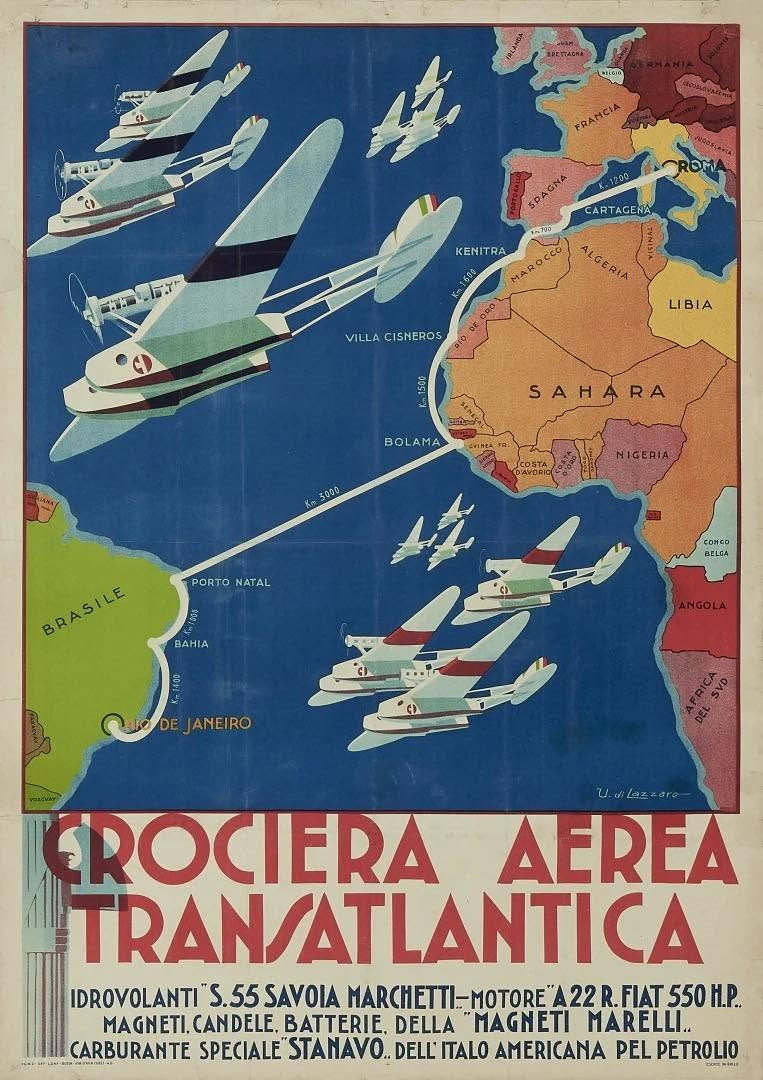
Italo Balbo and his hydroplane fleet had just completed a sensational transatlantic crossing in December 1930-January 1931— skirting colonial Africa and landing in the bay of Rio de Janeiro.
Now he was planning another crociera to New York, using the same technical components.
Might Balbo be induced to include the Chicago Exposition in his North American itinerary?

Council President Guglielmo Marconi is seated at the far left.
In 1929, the Regime founded the National Council for Research with its scientific superstar Guglielmo Marconi as president.

Contrary to the original plans, these models were eventually returned to Italy. Some of them figured in the 1939 Leonardo show in Milan, then the collection became part of the Museo Nazionale della Scienza e della Tecnologia (National Museum of Science and Technology).
Among the Council’s first projects was the creation of models of historic Italian inventions— under the supervision of astronomer Giorgio Abetti and mathematician Enrico Bompiani.
Might copies of these models be sent to Chicago— Castruccio asked —for the Exposition’s Hall of Science?
At the conclusion of the fair, they could be presented to the new Rosenwald Museum (later Museum of Science and Industry) as a perpetual reminder of Italy’s transformational role.

“MAY ENROLL FOREIGN COUNTRIES FOR FAIR: Confident that the leading nations of Europe will be represented at the Century of Progress Exposition in Chicago in 1933, Felix J. Streyckmans, chief of foreign participation, left Chicago recently on a world’s fair mission to Europe. Many foreign countries have already indicated their intention of participating.”
Streyckmans expressed confidence, but he was fighting an uphill battle—pursuing exhibitors with money to spend in the depths of a world-wide economic débacle.
Castruccio, on the ground in Rome during the summer of 1932, had his work cut out for him also— inducing the people at the top to rethink their previous refusal.
Castruccio and Streyckmans might have met in person, since they were lobbying many of the same officials— and they both wanted Italy at the Century of Progress for reasons of their own.
Streyckmans, it seems, also had a team of agents— American go-getters all— who trampled the Consul’s best-laid plans. (Di Legge, Aquila, p.212-13)

Gerardo Dottori was an advocate of Aeropittura (Airborn Painting), a branch of Futurism that extolled the speed and dynamism of flight. The title puns on “Wings of Italy” (Ali d’Italia) and the Fascist war cry, “Alalà!”. Balbo rises from a square-sailed, wooden ship alluding to heroic old-style seamanship (but not explicitly Columbus).
In Rome, with the support of their Embassy in Washington, Castruccio did the rounds of the relevant ministeries, making his case.
Meanwhile, Streyckmans and his deputies were tripping over their own feet —and his— calling on the same people and getting to “no” before the Consul could get to "yes”.
Castruccio had a very good encounter with Minister of Aviation Balbo who was favorably inclined to including Chicago in his next Atlantic transvolata.
Meanwhile, Prince Potenziani took the matter to Mussolini himself. (Di Legge, Aquila, p.212-13)

For a contemporary newsreel of Mussolini’s inaugural visit to the Mostra and a gimpse of the installation, see Roma. L'inaugurazione della mostra della Rivoluzione Fascista from the Istituto Luce (the Regime’s photographic and cinematic operation).
Chicago’s Century of Progress was not the chief spectacle on the Duce’s mind in the summer of 1932. Like everyone else around him, he was focusing on the Exhibition of the Fascist Revolution —scheduled to open on October 4 (10th anniversary of the March on Rome).
Still, Castruccio managed to propel his scaled-down proposal through the system, with its focus on a range of adjunct activities.
In August, there was a joint meeting of several ministries and these decisions were recorded:
(1) Italy would not construct a pavilion.
(2) Italy would participate conspicuously in the Hall of Science exhibition.
(3) Italy would figure in the Tourism exhibition.
(4) Italy would organize an Italian Day on August 3, 1933, in collaboration with the local Italian community, featuring the inauguration of Chicago’s already planned monument to Christopher Columbus.
Toward the end of August, Mussolini made this a fiscal reality— approving a relatively modest budget of two million lire (approximately $100,000 then and $2.5 million today). (Di Legge, Aquila, p.213)
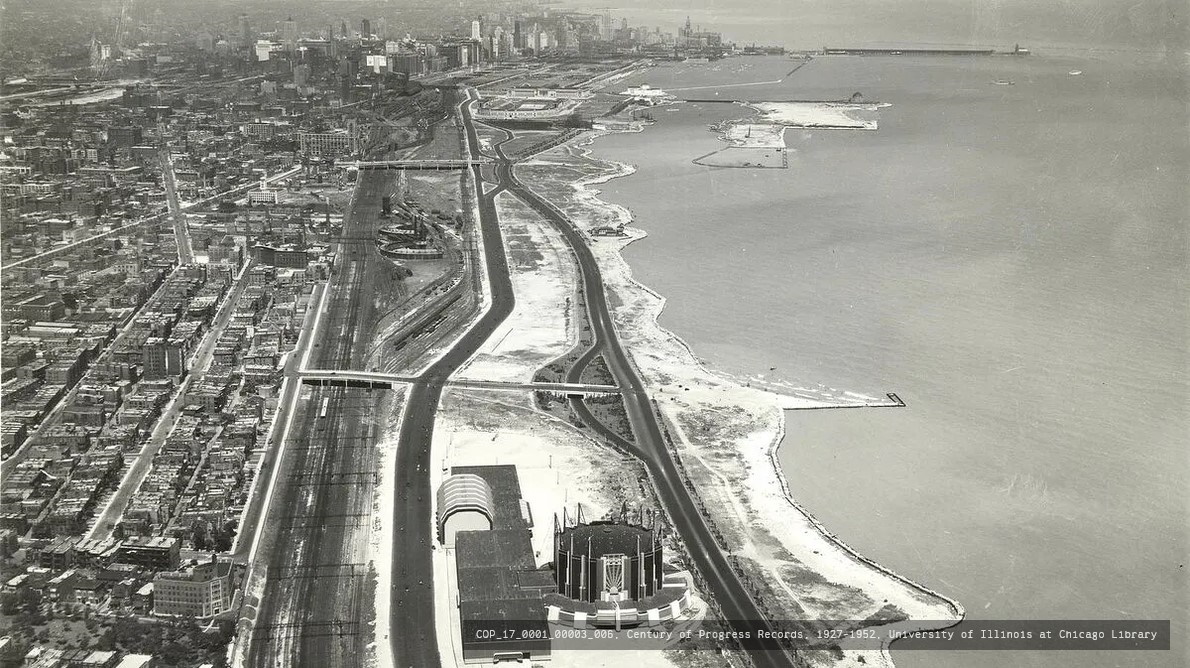
The Chicago commissioners were especially eager to host an Italian Pavilion since the other major European countries were opting out —including Great Britain, France, Spain and Germany.
So, only a few days after the Italians settled on a plan, the Chicago organizers dispatched a new negotiator to make them a deal they couldn't refuse. For only another million lire, they could build their pavilion and take their place in the forefront of participating nations.
Mussolini quickly came around to this new idea and allocated the additional money. He specified, however, that the Italian Pavilion would be a stripped down affair with only a few general exhibits, offering “a synthetic expression of the spirit that the Regime has created in Italy and the resulting progress in the area of public works along with a demonstration of our craftsmanship.” (Di Legge, Aquila, p.213)

There was no time to spare, since the Century of Progress Exposition was scheduled to open on May 27, 1933 —only seven months after the new arrangement was finalized.
In the meantime, the economic crisis cut the Italians a major break. To save money, the American organizers canceled their planned Art Pavilion— prominently sited on the Avenue of Flags next to Hall the Hall of Science —and offered them this prime space.
They needed an architectural plan on the fly. In Rome, the highly accomplished Adelberto Libera, Mario Derenzi and Antonio Valente were fresh off the Exhibition of the Fascist Revolution.
Since the Pavilion was going up in Chicago, they needed local people on the ground who knew their way around materials and manpower, not to mentio building regulations.
We can now introduce two more names —neither of which figure in the official guidebook to the Pavilion:
CHARLES MORGAN
ALEXANDER CAPRARO

perhaps something of a footnote to history...coming out of the office of Frank Lloyd Wright

The planners wanted iit to feel comfortable adn acesible to Americans
Credit Judy Capraro and her blog--which is a joy to read
Capraro not cited in the guidebook but evidently a well-known and well-remembered figure in the Italian community of Chicago--and the principal Italian American involved in the project.
Also someone who could presumably speak Italian to suppliers and workmen--which was essential to getting the building done quickly and economically.
Did builders have a lot of work then? That could have sped things up.


born in Pietrabondante...returned at age 43...

Additionally, Alexander V. Capraro (the first licensed Italian-American architect in Illinois) served as the associate and supervising architect in Chicago, while Comandante Luigi Ranieri acted as the architect and consulting engineer sent by the Italian government. [1, 2]
https://www.findagrave.com/memorial/186312817/alexander-v-capraro
https://blogginginitaly.com/2024/11/04/alexander-capraro-recognition-ceremony/
ON MESSAGE AND OFF
What is the message ofthe Italian Pavilion?
We can let Castruccio tell us in his own words...
But what was the experience--the message as read--by visitors to the Pavilion and passersby?
Pavilion--a directional sign fo rhe Italian displays in the Hall of science

Segment of video, starting at 52 seconds
https://www.youtube.com/watch?v=DdAbpWM3w5I
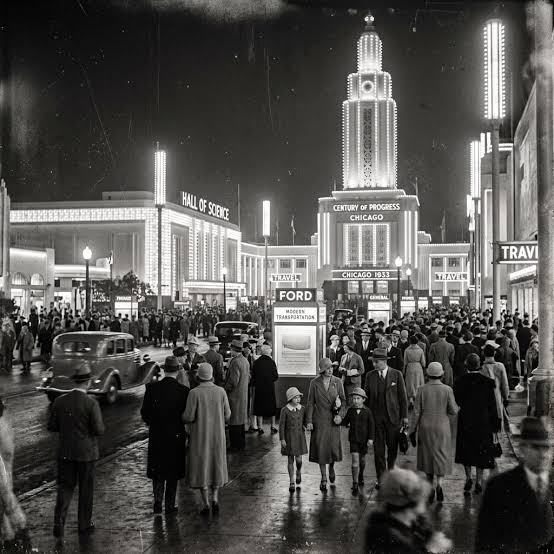
Essentialness of aeronautics in the ideation of the Italian presence at the CoP.
The two names that seem to run most conspicuously through the Chicago story--Balbo and Castruccio
Aviation-- the great aviator an the man who brought him to the CoP
In fact, the pavilion was above all a signifier for Balbo and what he reprsented in the new Italy.


Dedication of Balbo Monument
Transition by way of Castruccio's complaints
Italian Village
Sally Rand
(10) THE SECOND COLUMBUS CRASHES AND BURNS
Ultimately, Italo Balbo was too charismatic for his own good. Back in Italy, many saw him as the Duce's self-appointed successor and an overly-eager one at that.
Although Mussolini and Balbo had been political allies for as long as anyone could remember, essential differences were becoming harder to ignore.
According to Balbo, Germany was undermining Italian autonomy and obstructing Italian priorities —while an impotent Mussolini looked on.
Then there were the creeping excesses of Nazi racial policy, which the Duce was unable or unwilling to oppose.
Balbo was born and raised in Ferrara, amidst ardent Jewish fascists, and he maintained close relations with them until the very end.

Ferrara was also the home town of Aldo Finzi (1891-1944), Balbo's slightly slightly older contemporary (1896-1940)..
But this begs a broader question... What happened--ideologically and otherwise--to the Italian functionaries whowere pushing the Fascist lin and around the CoP.
Was there something peculiar about Fascist aviators?
They were often the most enthusiastic Party members up to a point —that point being Italian independence from Hitler's racial laws?
Aldo Finzi was perhaps a special case— being Jewish himself.
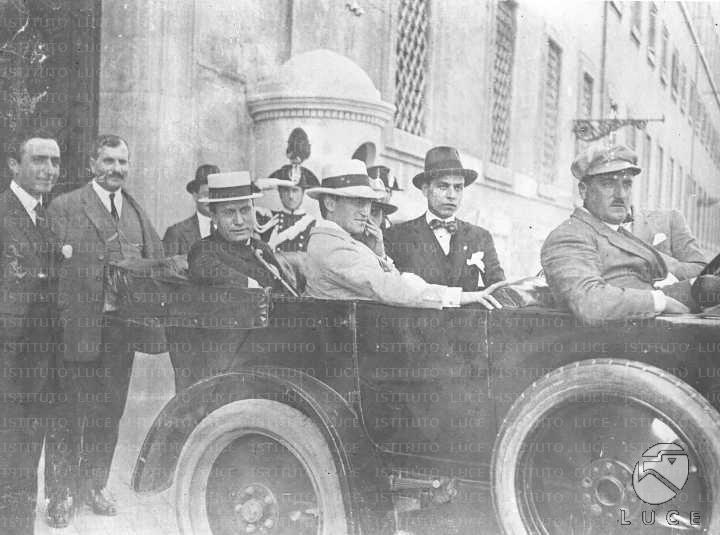
Finzi in light-colored suit.
But then ther there was the noble Ludovico Potenziani who reverted to type as a monarchist
The most startling case of all...Giuseppe Castruccio ten years after the Century of Progress

https://diplomatic-reports.ehri-project.eu/document/EHRI-DR-19430811-IT
EHRI-DR-19430811-IT
1943-09-04 | Thessaloniki
Archivio Storico Diplomatico del Ministero degli Affari Esteri, A.G. Uff. IV, Posizione S.E. 27.869, busta G, fasc. Grecia E. Original in Italian.
-

https://x.com/sergio_barbanti/status/1787530017741627704/photo/2
Italian Ambassador

Benito Mussolini visits Tripoli as Imperial overlord in 1937. Italo Balbo flanks him at a grand evening event, with the Duce in orientalizing fancy dress.
Rome was not big enough for both Mussolini and Balbo. Only a few months after his American triumph, the Duce shunted him off to Libya as Colonial Governor.
Mussolini also pulled the plug on Balbo's long-running media sweep. Italian newspapers —going forward —were ordered to feature him less frequently and in subordinate roles.
During the remaining six years of his life, Italo Balbo still found plenty to do— albeit in political exile and detached from his popular base.
North Africa was emerging as a principal theater of the Second World War and this daring fighter pilot was right on the spot.
Balbo and Jews of Tripoli

While serving as Governor, Balbo also flew aerial missions on the front line. Then on 28 June 1940, his plane was brought down by friendly fire, while returnng from a reconaissance foray over Tobruk.
The Duce did not bother to feign grief, at least not to those in his inner circle who knew the score —but the public response was a different matter entirely.

The death of Italo Balbo fills the front page of the chief daily newspaper of the Emilia-Romagna, his home region.
HEADLINES: Eternal Glory to Those Who Have Fallen in the Service of the Fatherland / The Heroic Death of the Fighter Pilot Italo Balbo in the Sky Over Tobruk / The Duce Orders that Flags Be Flown at Half Staff Today and Tomorrow and that the Symbols of the Fascist Party be Draped in Mourning / A Life of Fascist Passion and Warlike Daring / The Supreme Holocaust.
The "Holocaust" reference was a nod to ancient Greek history, signifying a holy sacrifice and more specifically, a burnt offering.
In any case, Balbo exited at the age of 44, without seeing the final immolation of the Fascist and Nazi Regimes. Mussolini and Hitler both outlived him by nearly five years, dying only two days apart on April 28 and April 30, 1945.
As for Italo Balbo's legacy, across America there is barely one at all— apart from a run of vivid newspaper stories now more or less lost in time.
For a brief moment, he seemed ready to join Christopher Columbus and Guglielmo Marconi in the Italian Pantheon —or the Italian-American Pantheon, at least.

Chicago is the chief and perhaps only locale where Balbo's memory persists, recalling a moment when that city was the epicenter of the world.
Balbo Drive still cuts through Grant Park and crosses Columbus Drive, marking Ground Zero of the Second Columbus cult.
Grant Park also hosted Carlo Brioschi's bronze statue of Christopher Columbus— where the Italian pilot and his companions posed in their white uniforms— until it was purged in 2020.
Just to the south, in Burnham Park— site of the Century of Progress Exposition —the Balbo Monument still maintains its tenuous pride of place...for now, at least.

Benito Mussolini moved quickly to realize a durable monument to Balbo's epoch-making flight. He extracted "The Balbo Column" from the site of Ostia (the ancient port of Rome) and shipped it to the American heartland with a new base and Fascist trimmings.
On 15 July 1934, it was installed in front of the Italian Pavillion at the Century of Progress Exposition— proclaimed to a largely ethnic crowd by Balbo himself, long-distance. (This time the radio broadcast worked.)

The ancient column perfectly bisected the aerodynamic wing— presumably as planned.
This telling juxtaposition of old and new was flanked by two enormous loudspeakers broadcasting Balbo's address from Rome.
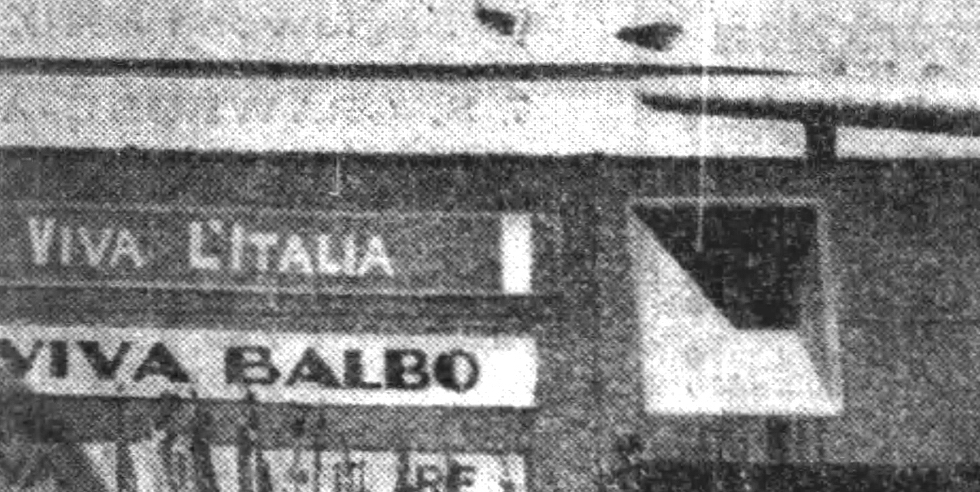
Viva L'Italia! Viva Balbo!
That was Italo Balbo's last hurrah on the American scene.
The column, however, still remains where it was —now that everything else is gone or diasappearing fast.
As for the now weathered inscription:
QUESTA COLONNA
DI VENTI SECOLI ANTICA
ERETTA SUL LIDO DI OSTIA
PORTO DI ROMA IMPERIALE
A VIGILARE LE FORTUNE E LE VITTORIE
DELLE TIREMI ROMANE
L'ITALIA FASCISTA SUSPICE BENITO MUSSOLINI
DONA A CHICAGO
ESALTAZIONE SIMBOLO RICORDO
DELLA SQUADRA ATLANTICA GUIDATA DA BALBO
CHE CON ROMANO ARDIMENTO TRASVOLO L'OCEANO
NELL' ANNO XI
DEL LITTORIO
This column, twenty centuries old, was erected on the beach of Ostia, the port of Imperial Rome, to watch over the fortunes and victories of the Roman triremes. Fascist Italy, with the sponsorship of Benito Mussolini, presents to Chicago a symbol and memorial in honor of the Atlantic Squadron led by Balbo, which with Roman daring, flew across the ocean in the 11th year of the Fascist era.
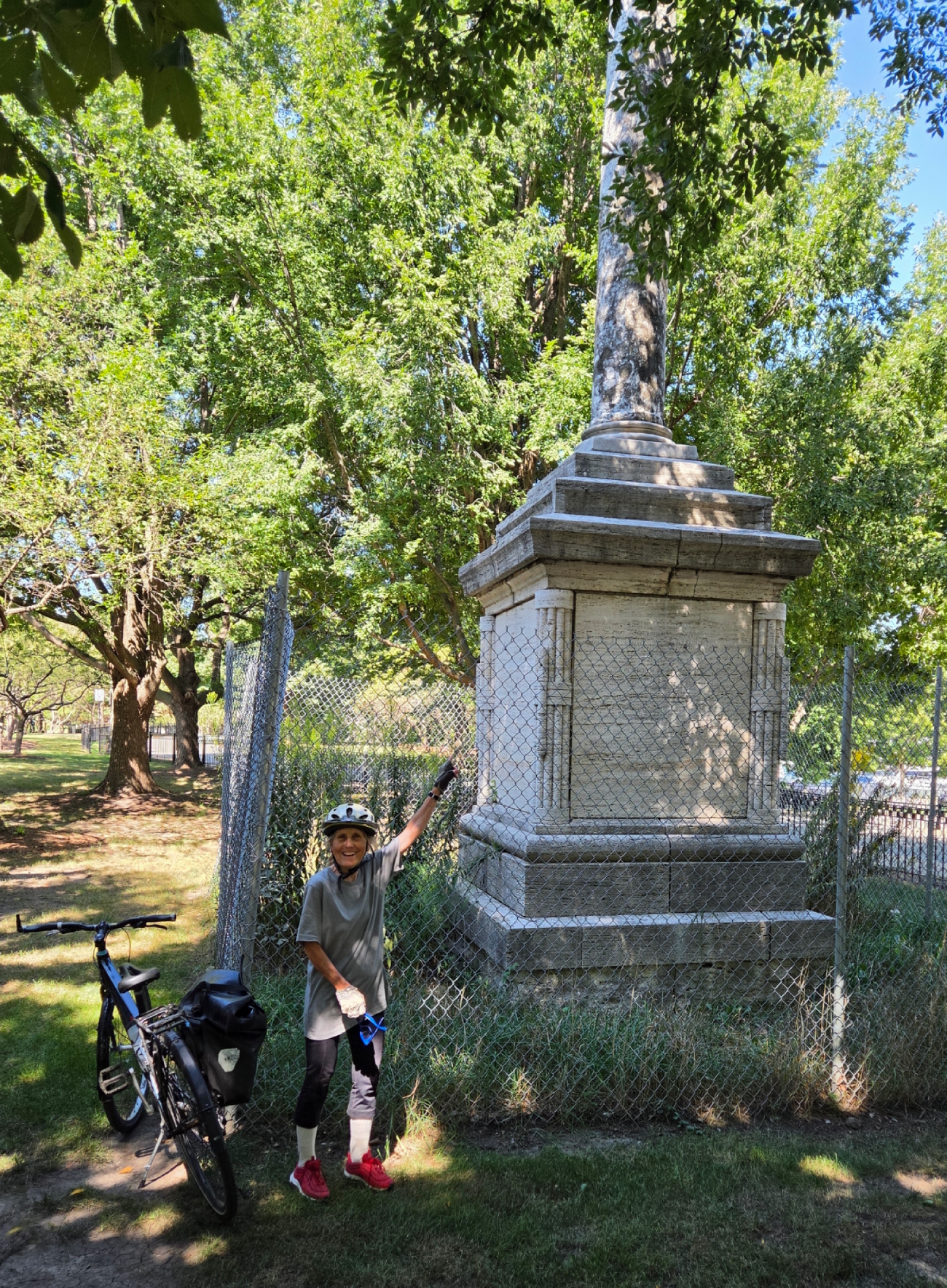
A running leap into the present day...
Diane Dillon, my inside source for All Things Chicago, visits the now much unloved Balbo Column— under constant threat of removal or worse.
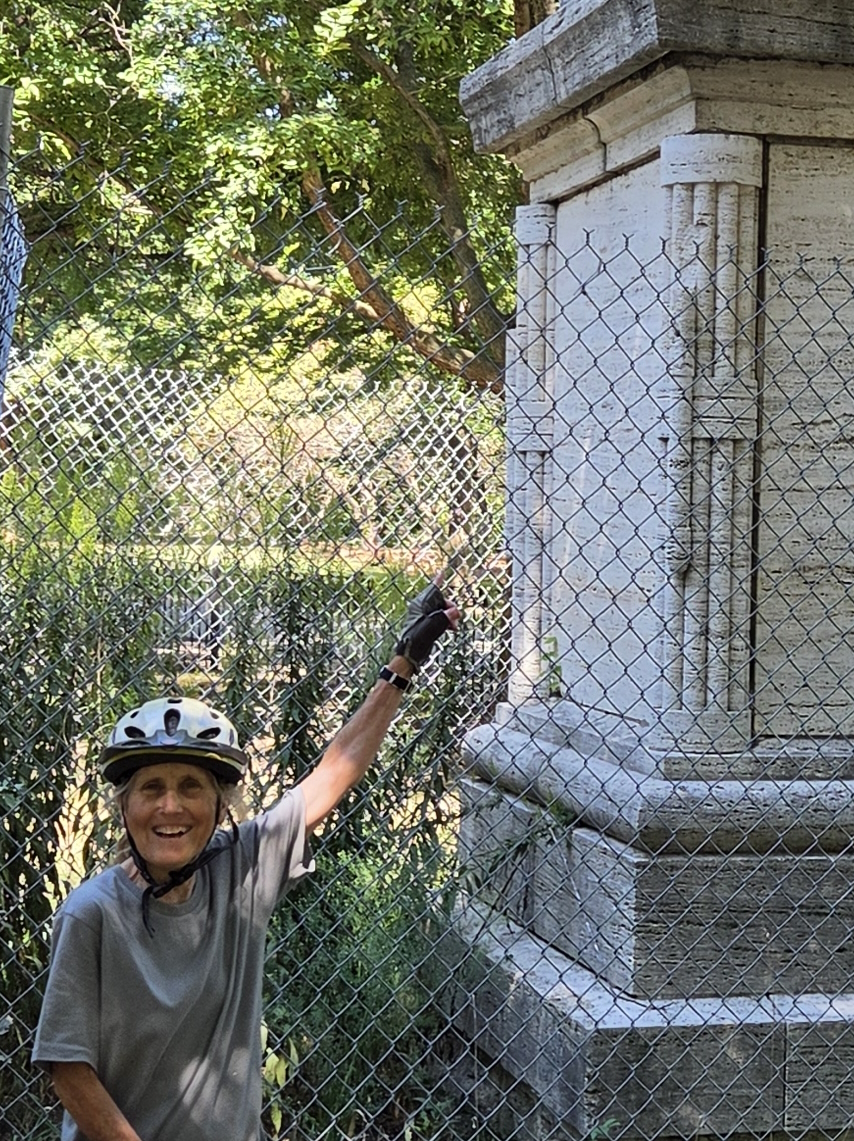
Everyone, however, does not find the prominent fasces quite so cheering nor the lyrical ode to that problematic passage of history.

For decades, Chicago activists— overwhelmingly non-Italian, of course —have set their sights on Balbo Drive and the Balbo Column.
This began right after World War Two, when naming-rights were in hot demand for the latest crop of heroes.
"Chicago boys of Italian descent who fought in Italy do not wish to honor the Fascist who betrayed his own people as well as conducted a war against our country."
Thus spoke Russell Root, a Republican candidate for Mayor in 1947, but he didn't get very far in his election bid either.

In 2018, there was a concerted push to make Balbo Drive over to the pioneering African-American journalist Ida B. Wells, but that hit local Italian opposition and stalled out too.
After the usual negotiations, another nearby thoroughfare was appropriated for Wells, while Balbo Drive remains as it was —and will likely remain for some time to come.

Ida B. Wells launched her momentous career with a self-published critique of Chicago's 1893 Columbian Exposition —the great national celebration where no African-American need apply.

"Falling to his knees, he kissed the ground and cried. Oh, what riches awaited him! He would return to Spain a hero." (Bonnie Bader, 2013)
As we work our way through history, we still hit Christopher Columbus at every turn— more than five centuries after his death.
But who was this Great Navigator, really?
In the United States of America, at least...
FOR MORE ON THE COMPLEX AND CONTROVERSIAL COLUMBUS STORY, SEE:
WHOSE COLUMBUS? WHOSE COLUMBUS DAY?
Lorem ipsum dolor sit amet, consectetur adipiscing elit. Suspendisse varius enim in eros elementum tristique. Duis cursus, mi quis viverra ornare, eros dolor interdum nulla, ut commodo diam libero vitae erat. Aenean faucibus nibh et justo cursus id rutrum lorem imperdiet. Nunc ut sem vitae risus tristique posuere.