WHOSE COLUMBUS? WHOSE COLUMBUS DAY? Part 4: Christopher Columbus Against the World
WHOSE COLUMBUS? WHOSE COLUMBUS DAY? Part 4: Christopher Columbus Against the World
SEE ALSO:
WHOSE COLUMBUS? WHOSE COLUMBUS DAY? Part 1: It begins with a statue in Philadelphia in 1876
WHOSE COLUMBUS? WHOSE COLUMBUS DAY? Part 2: The New Orleans Massacre (1891) and Italian-American Identity
WHOSE COLUMBUS? WHOSE COLUMBUS DAY? Part 3: Italian Columbus Day vs. American Columbus Day
WHOSE COLUMBUS? WHOSE COLUMBUS DAY? Part 5: Strange Things Happen in Philadelphia...
(4) CHRISTOPHER COLUMBUS AGAINST THE WORLD
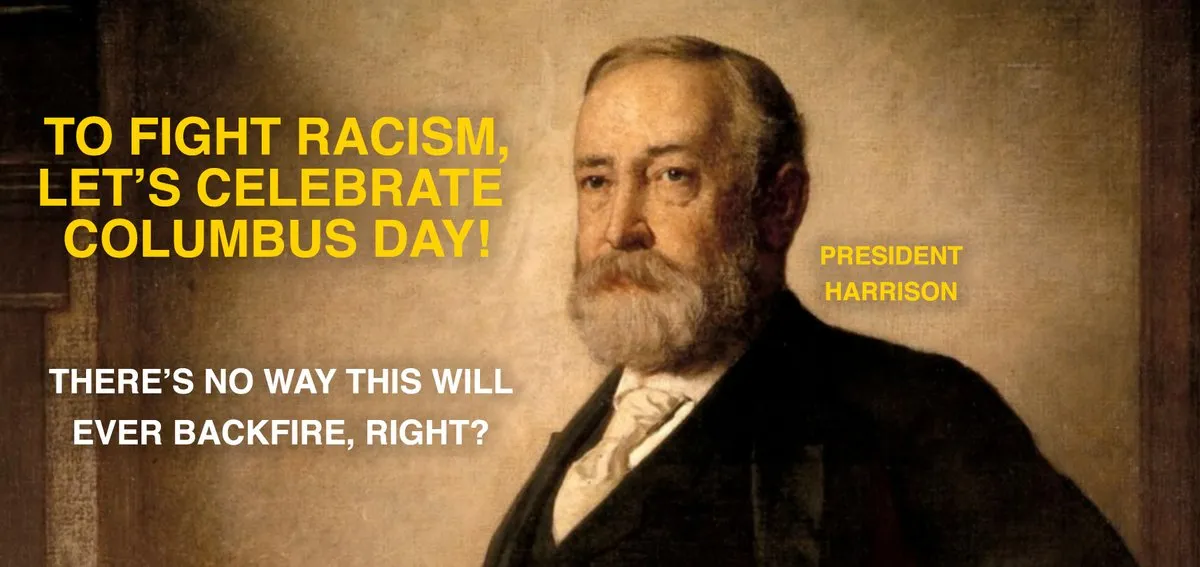
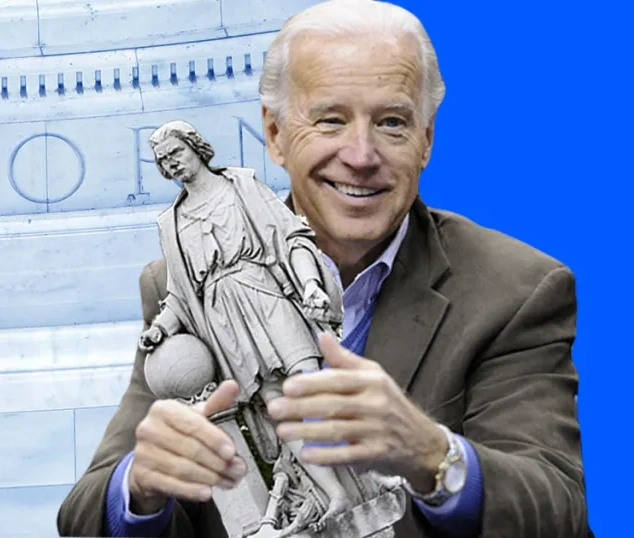
If a picture is worth a thousand words, an ironic mash-up must be worth ten thousand —even if the masher gives Harrison more credit than he probably deserves.
When it comes to Columbus "backfiring", where do we begin? We can fast-forward to the shocking murder of George Floyd —an unarmed black man —by Minneapolis police on May 25, 2020.
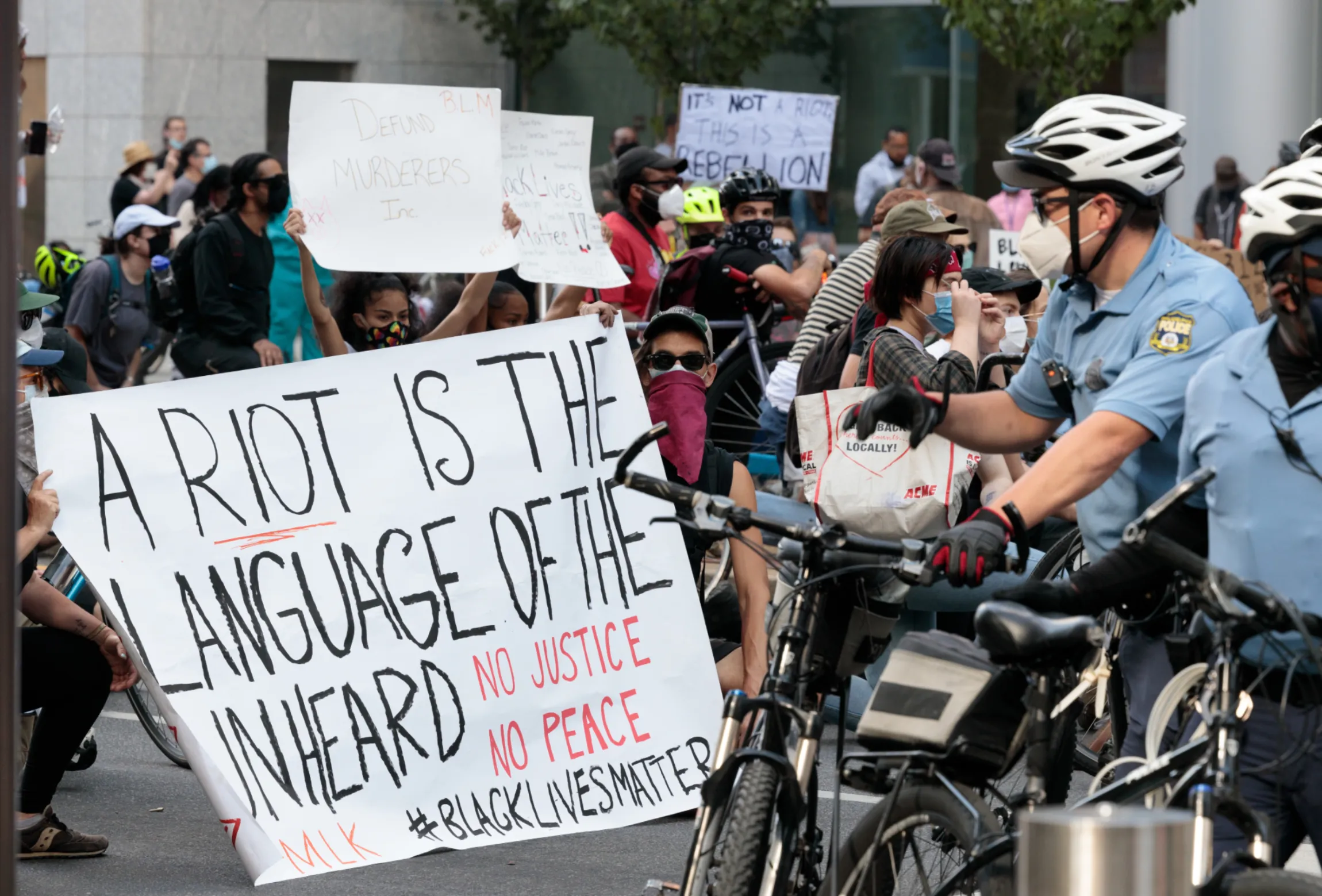
"A RIOT IS THE LANGUAGE OF THE UNHEARD" is from a 1968 address by Martin Luther King. In regard to today's climate of free-range grievance, see "INTERSECTIONALITY" (below).
What does George Floyd have to do with the Italian-American version of Christopher Columbus? A seeming non-question, but not in the current ideological climate.
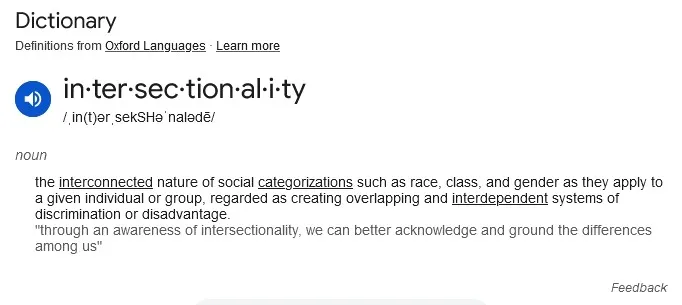
"Intersectionality: the interconnected nature of social categorizations such as race, class, and gender as they apply to a given individual or group, regarded as creating overlapping and interdependent systems of discrimination or disadvantage."
If we lived in another world, I would juxtapose two distinct sets of facts:
(1) The historical Cristoforo Colombo / Cristóbal Colón / Christopher Columbus was a man of his time (circa 1492). Directly or indirectly, he was associated with unspeakable evils, some of which persist to the present day.
(2) The historical Cristoforo Colombo / Cristóbal Colón / Christopher Columbus has just about nothing to do with the one that was shoved into a wooden box in Marconi Plaza in Philadelphia in the early summer of 2020.
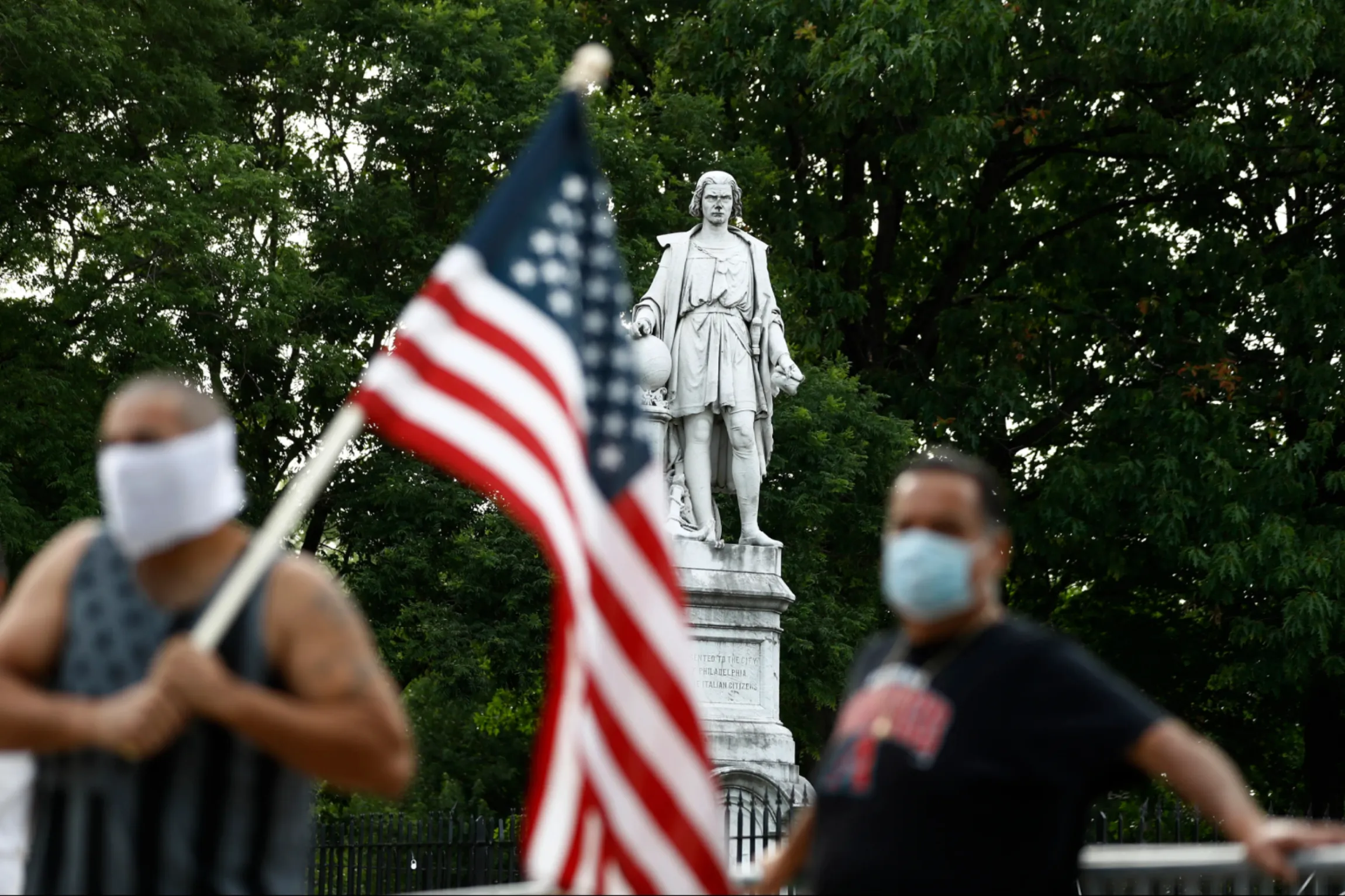
Concerned citizens (with hatchets, guns, flags, baseball bats and other patriotic symbols) defend the Columbus Statue in Marconi Plaza from Black Lives Matter protesters —thereby proving the protesters right in some of their assumptions.
Then I would venture a pair of personal observations:
(3) There were very fine (if sometimes misguided) people on both sides.
(4) There were essentially dreadful people on both sides too.
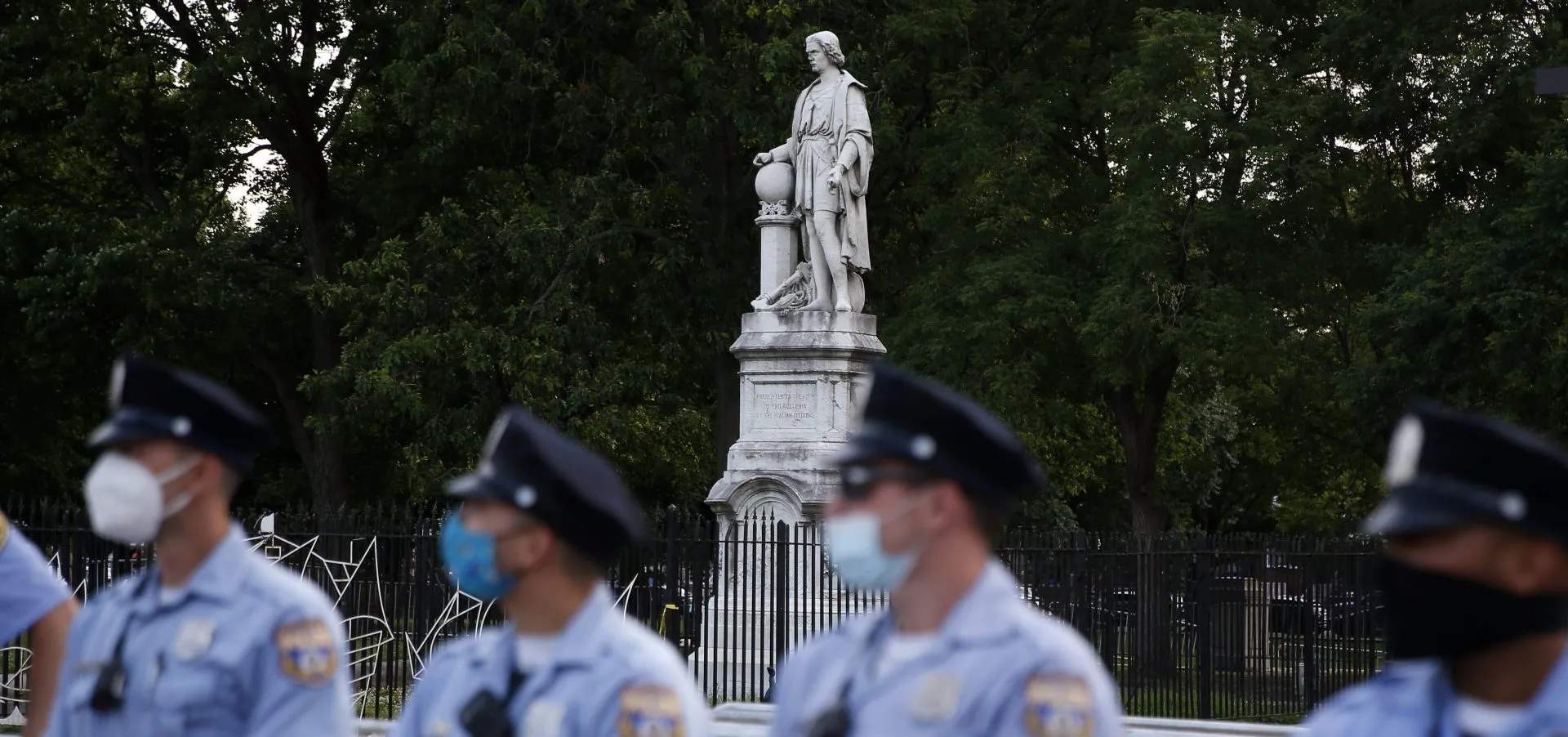
Thousands of protestors rallied in Philadelphia over the course of several weeks (May 30-June 21, 2020). Violence was in the air, so the police turned out in record numbers. For some, the sight of massed uniforms was more than a little creepy, in the wake of the George Floyd murder.
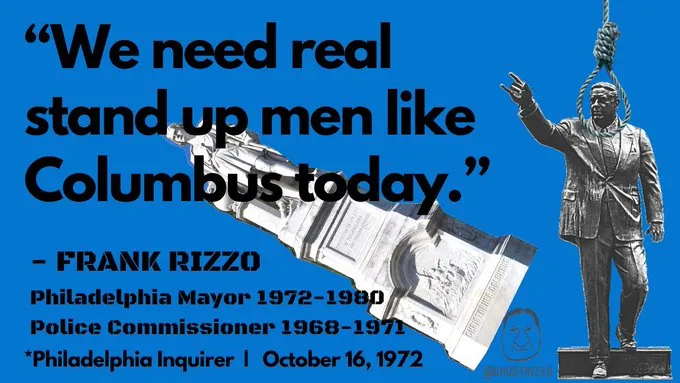
"We need real stand up men like Columbus today". Frank Rizzo offered this terse comment on October 16, 1972, when the Columbus Statue was still in Fairmount Park. His own statue in Center City Philadelphia was unveiled twenty-seven years later in 1999 (eight years after the controversial politician's death). The juxtaposition of the two monuments references the Black Lives Matter protests in Philadelphia in the Summer of 2020 and the ongoing attacks on both works.
The ghost of a Philadelphia Mayor (also Police Commissioner) hovered over the mayhem —turning it into a tale of three men: George Floyd, Christopher Columbus and Frank Rizzo.
Or three men and two statues, we might say— with more than enough intersectionality to go around.

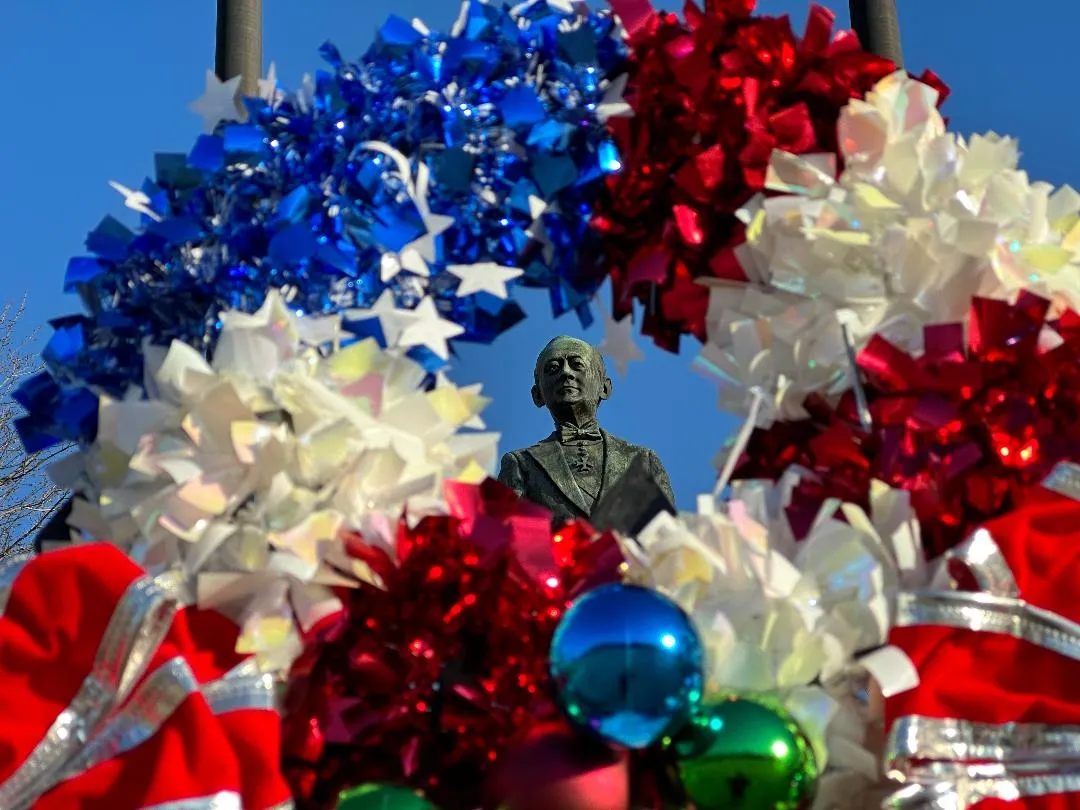
In the heart of Ninth Street in South Philadelphia (better known as “The Italian Market”), Hizzoner Frank Rizzo does his bit for holiday cheer. The mural was realized by artist Diane Keller in 1995 and removed on June 7, 2020 in the midst of the Black Lives Matter turmoil. It had already achieved notoriety as the most frequently vandalized work of public art in the city.
What would Philadelphians do without Francis Lazzaro Rizzo (1920-91) —now dead for several decades but still beloved in some circles, still a bounteous source of mind-blowing stories and only-in-Philly jokes?
A real neighborhood boy and then some, Frank Rizzo was born to a police family in a classic row-house just a few blocks from what would later be called Marconi Plaza.
He dropped out of the local high school, became a patrolman, became Police Commissioner, became Hizzoner the Mayor —all in the last rambunctious days of the old Democratic political machine.
Rizzo often seemed like a clownish neanderthal (he worked hard at it, in fact) but he was street-smart and knew how to get things done.
Racism, misogyny and homophobia were essential to his brand. He was also devoted to Christopher Columbus.
In 1976, on the cusp of the American Bicentennial, he brought this hero home— shifting the Columbus Monument from Fairmount Park to Marconi Plaza, right across the street from the Italian Fascist inventor (and almost in sight of his own childhood dwelling).
SEE ALSO:
COLUMBUS, MARCONI AND BALBO: Italian Heroes Collide with American Reality
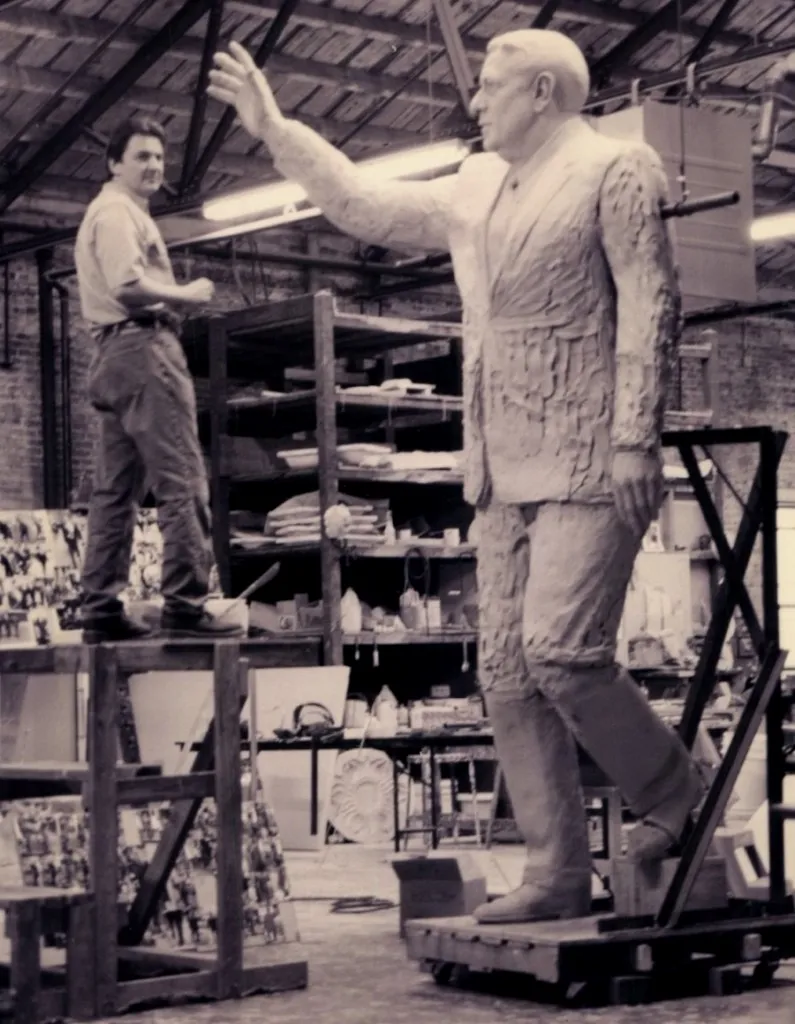
The sculptor is modeling the core from which the monumental bronze will be cast. His visual source was a photo of the late mayor (died 1991) waving at a parade. The statue was installed in late 1998 and unveiled on January 1, 1999.
Frank Rizzo eventually had a statue of his own—ten feet tall, in bronze, by the Philadelphia artist Zenos Frudakis— funded by the family, friends and fellow-travelers of Hizzoner (a.ka. "il Bambino").
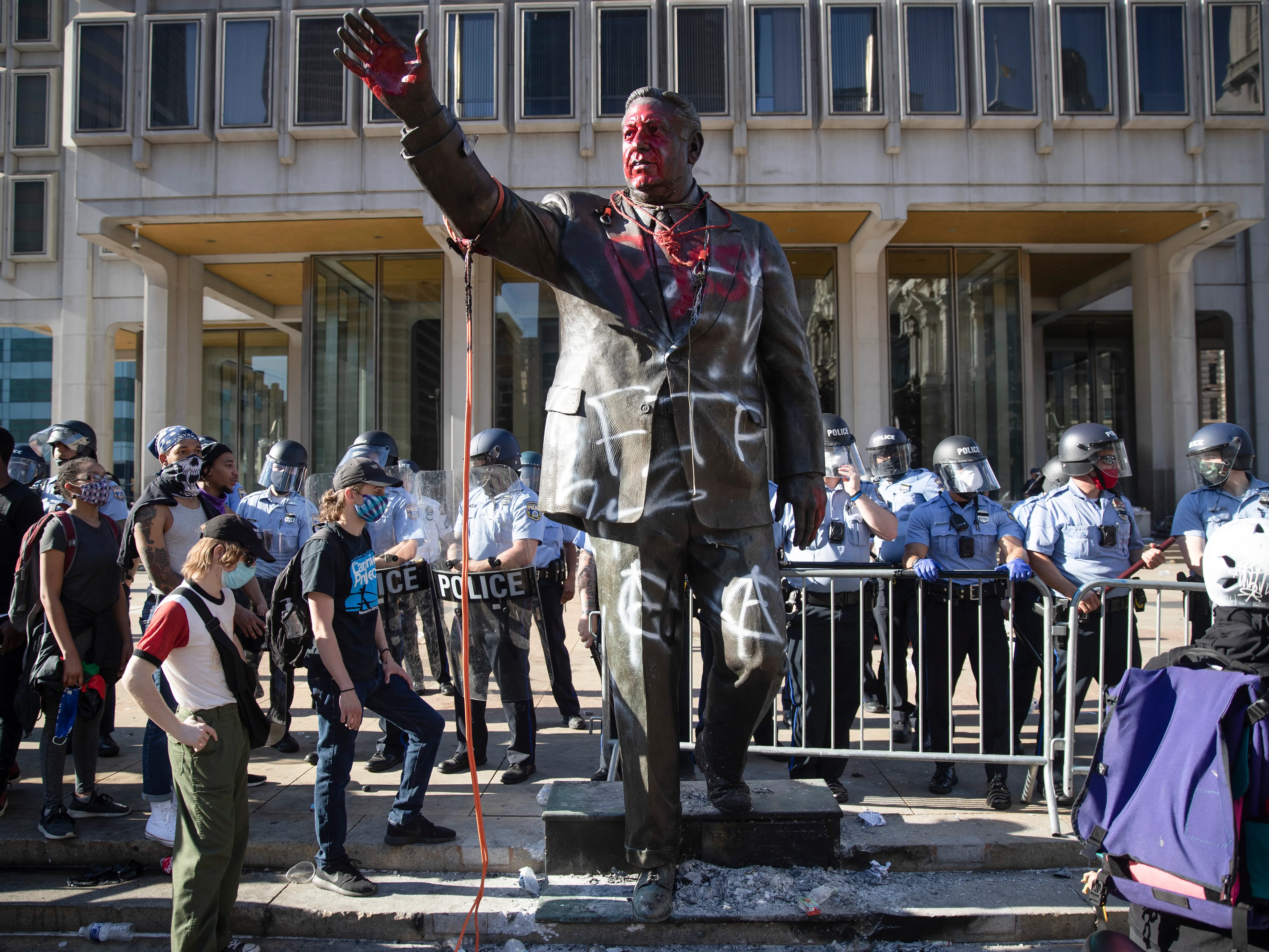

Here we see the Rizzo Statue in its last harrowing moments as a public monument.
In 1999, the Frank Rizzo statue was installed in front of the Municipal Services Building, right across from City Hall.
There it remained until June 3, 2020, when it was pulled out in the heat of the BLM protests.
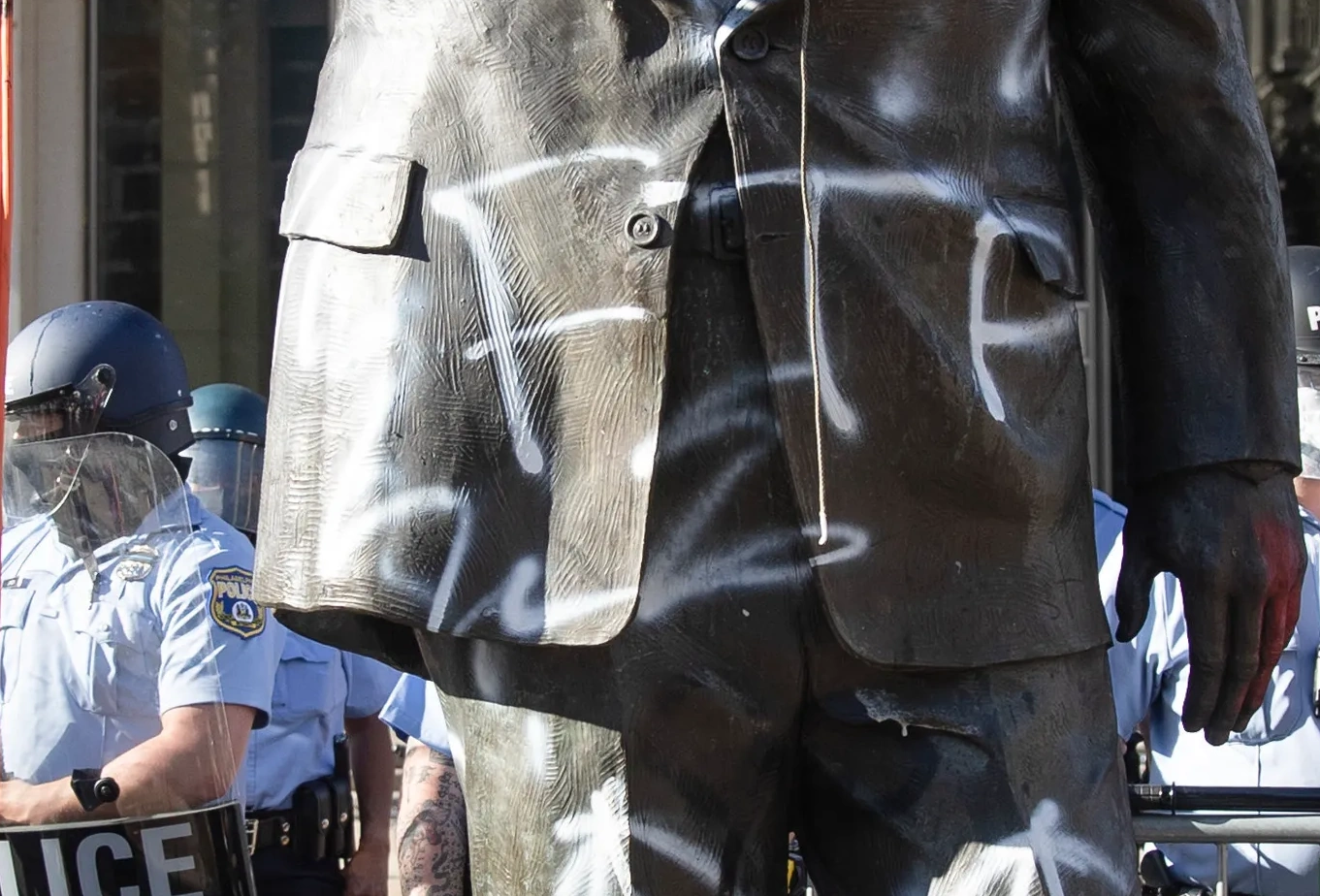
Deconstructing the message: F.T.P. = FUCK THE POLICE
Not a lovable work of art, the Rizzo statue received its share of hostile attention. Then in the early days of the BLM+ protests, it emerged as a potent symbol —in everyone's face, in the heart of downtown.
Frank Rizzo was the poster boy for racialized violence, having based his career as Police Commissioner on exactly that.
During the turmoil of 2020, the Philadelphia Police (long post-Rizzo) still found themselves compelling targets —not least because of their perceived chumminess with counter-protesters on the anti-Black Lives Matter and pro-Columbus side.
Mayor James Francis Kenney (born 1958) was another South Philly product and the son of a fireman—but unlike Frank Rizzo, he was nearly forty years younger and Irish too.
From 2016 to 2024, he presided over an evolving city and wanted as little as possible to do with outrages perpetrated on someone else's watch.
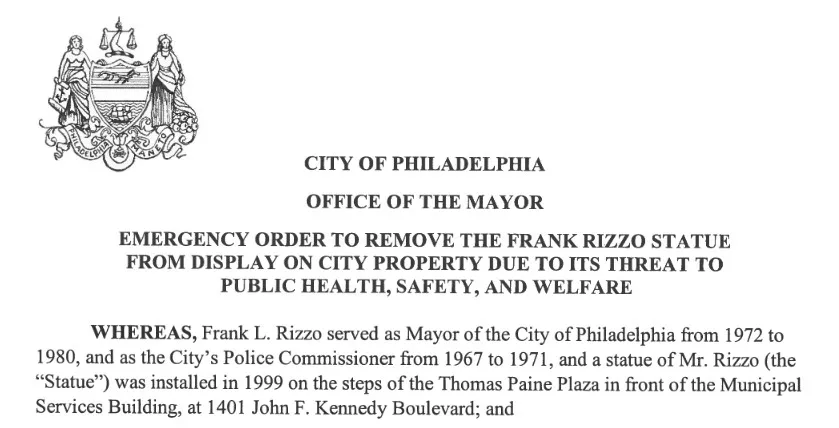
Kenney ran through a rapid series of whereases—sixteen of them, in fact:
WHEREAS, the Statue has become a painful symbol of racism, bigotry, and police brutality for members of the Black community, the LGBTQ community, and many others because of how their communities were treated by the Philadelphia Police Department under Mr. Rizzo’s leadership, and its presence on City property has negatively impacted police-community relations...
WHEREAS, many Philadelphians hold varying opinions on the Statue, but one of the things that all Philadelphians can agree upon in 2020 is that the Statue divides our great City...
WHEREAS, the continued display of the Statue, because of its infamy and association with racism, bigotry, and police brutality, has enraged persons protesting Mr. Floyd’s death and many others, and, once again, the Statue was subject to numerous attempts by enormous crowds to demolish, light on fire, excavate, smash, break, and topple it— risking severe injury and death to nearby persons and causing damage to other City property...
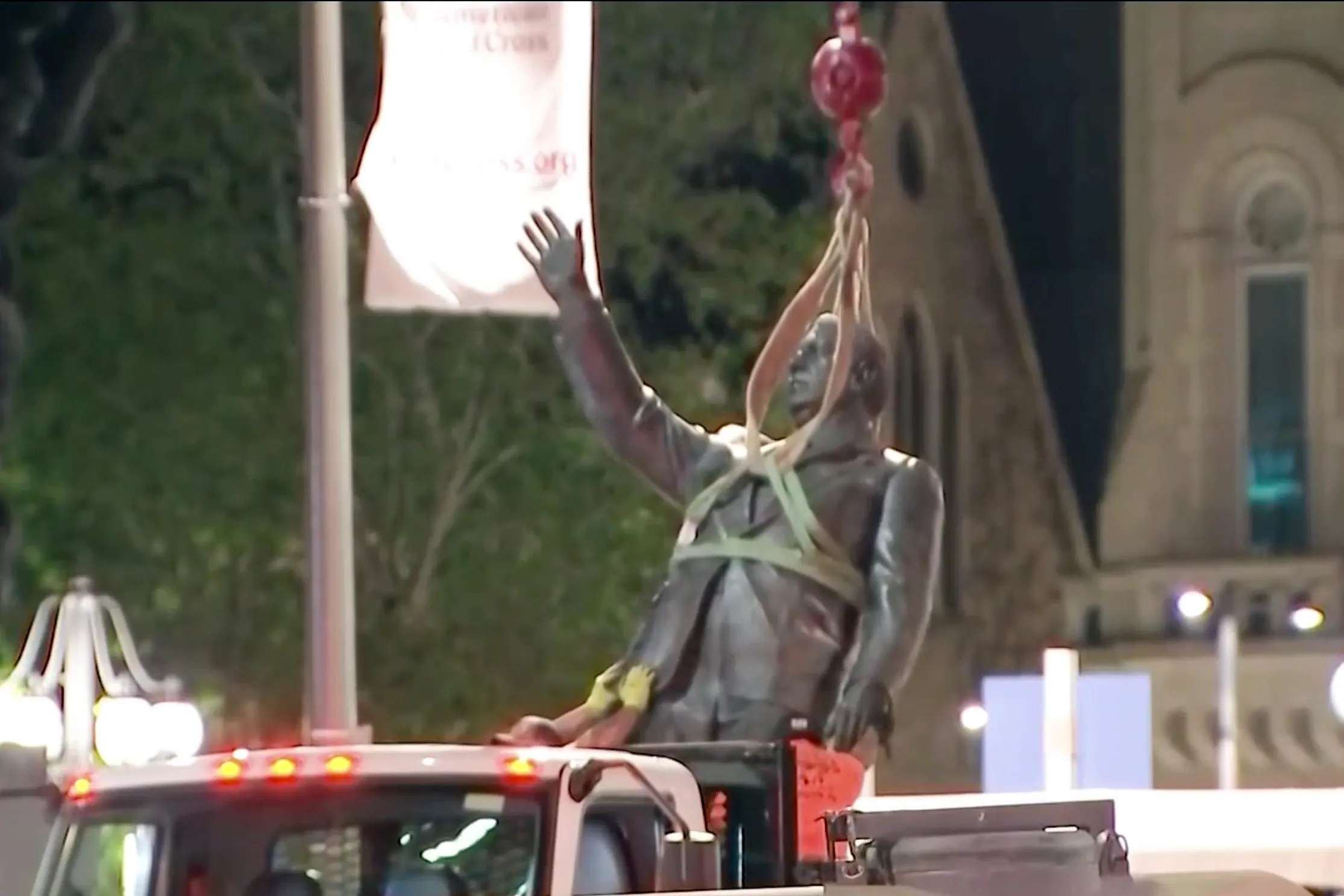
NOW, THEREFORE, I, James F. Kenney, by the power vested in me as the Mayor of the City of Philadelphia …do hereby declare as follows: The Managing Director shall immediately ...carry out the safe and secure removal of the Statue from the front of the Municipal Services Building, in whole or in parts …The Statue or its parts should be placed in secure storage by the Department of Public Property until such time as a plan is developed to donate, relocate, destroy, or otherwise dispose of the Statue... June 2, 2020.
So, that was that for the Rizzo Statue? Four years later, it remained in storage (mostly whole, but damaged).
The fate of the Marconi Park monument was more complex. Rizzo was a local phenomenon, while Columbus triggered reactions across the country and around the world.
Then there were the statues themselves. Unlike the Zenos Frudakis bronze, the Emanuele Caroni marble was 150 years old and could make a plausible case for being a work of art.
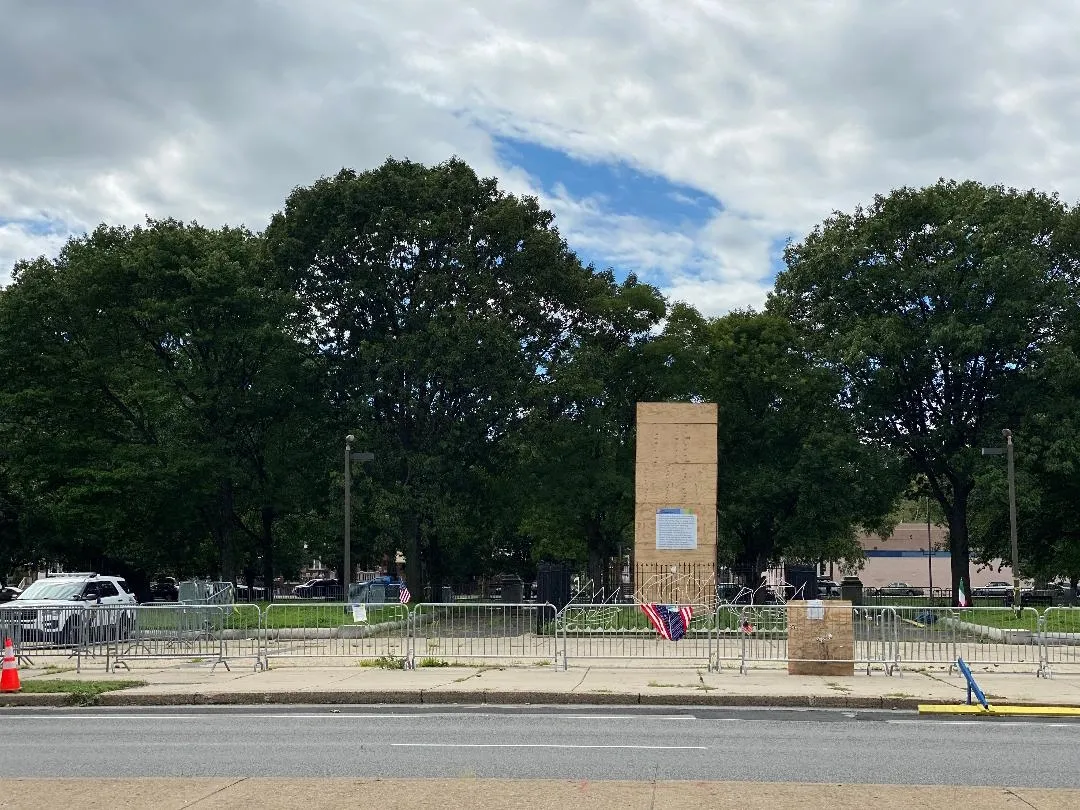
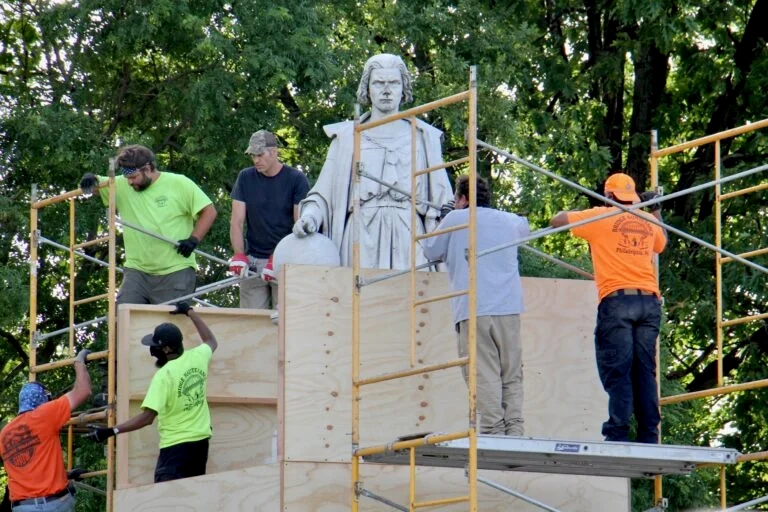
First, a grand plywood box was erected around the Columbus Monument, protecting the statue and buying time, while creating an instagrammable meme for the ages.
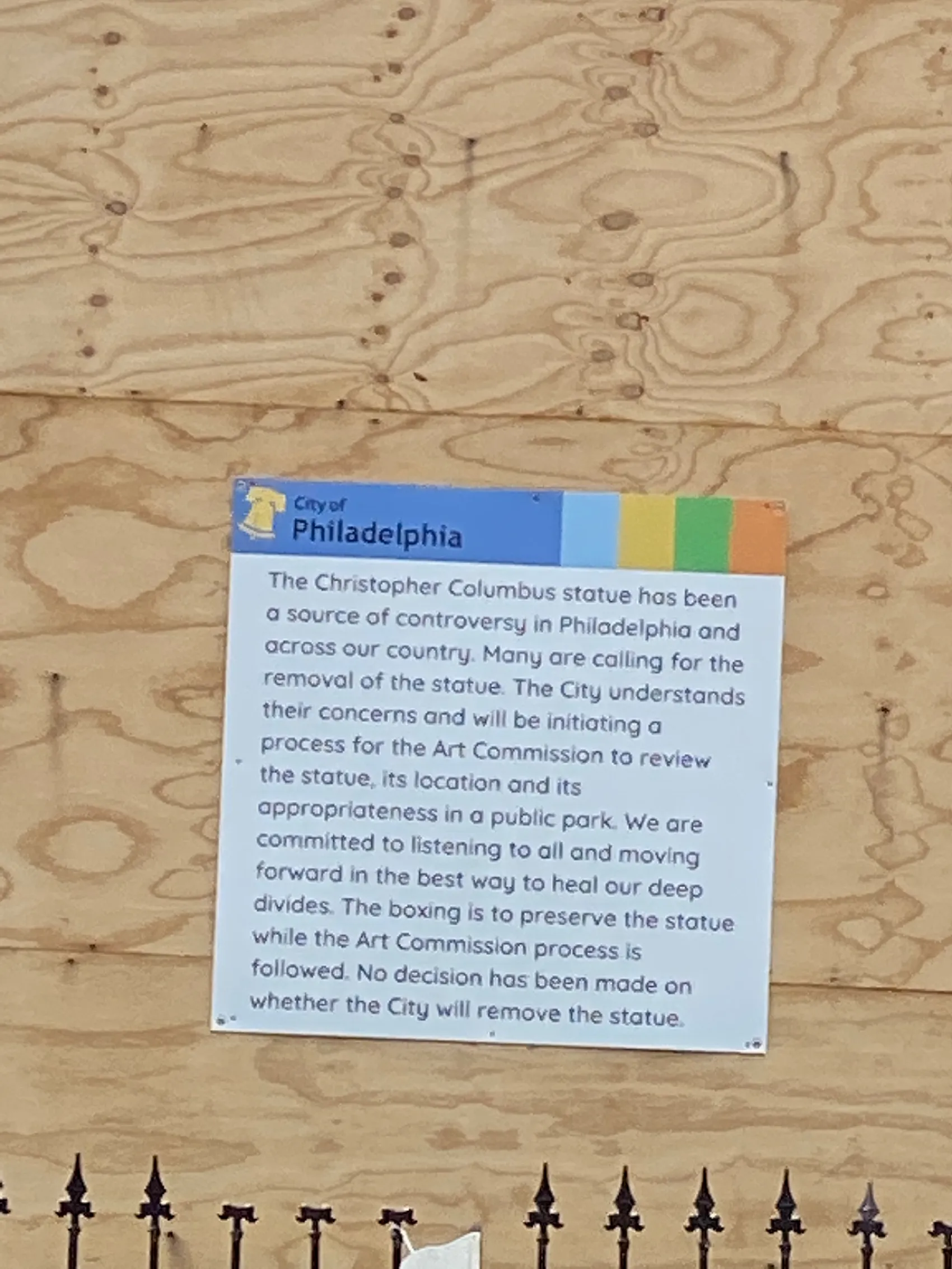
"CITY OF PHILADELPHIA: The Christopher Columbus statue has been a source of controversy in Philadelphia and across our country. Many are calling for the removal of the statue. The City understands their concerns and will be initiating a process for the Art Commission to review the statue, its location andi ts appropriateness in a public park. We are committed to listening to all and moving forward in the best way to heal our deep divides. The boxing is to preserve the statue while the Art Commission process is followed. No decision has been made on whether the City will remove the statue."
Controversy...
Concerns...
Appropriateness...
Deep divides...
No decision has been made...
During the summer of 2020, the city council eventually resolved to remove the statue... until such time as whatever... but no concrete steps were taken and it remained in its box.

Rudy Giuliani, ex-mayor of New York (1994-2001) and reactionary provocateur, swooped into South Philly to photo-op "Columbus in the Box".
Columbus Day 2020 rolled around—a notably low-key occasion in Phildelphia that year.
Meanwhile, The Box held its grip on right-wing politicians with axes to grind.
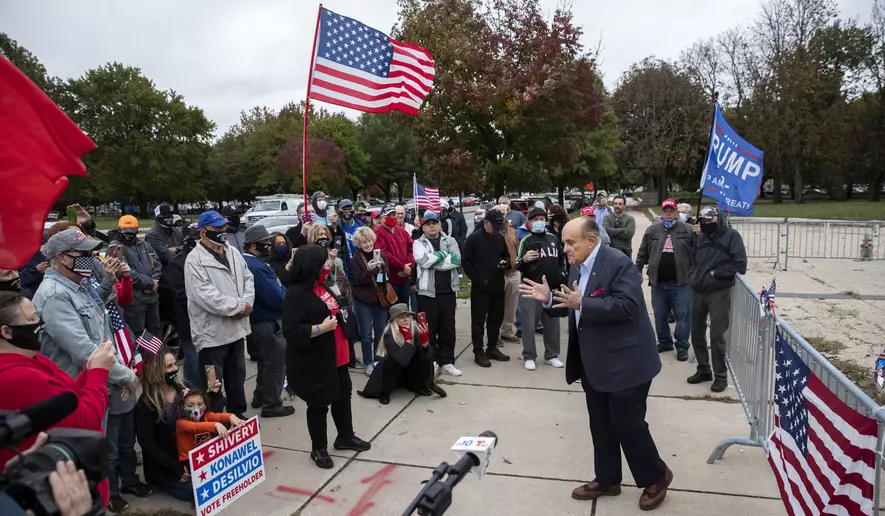
Rudy Giuliani addresses the same miniscule Columbus Day gathering. The seemingly red flag to the left is presumably the third section of the Italian tricolore.
The Second Monday in October was the 12th that year—five months after the death of George Floyd and three weeks before the November 5 presidential election.
Donald J. Trump dispatched Rudy Giuliani, his highest profile Italian-American surrogate, to spin as much ethnic outrage as he could.
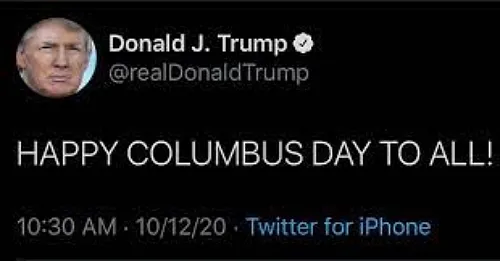
Candidate Trump was with Giuliani in spirit, wringing every drop of rancor from The Columbus Thing.
2020 was the fourth time that he presided over that particular holiday, but never before had he taken much notice. In one regard, however, he remained utterly consistent —his perfect silence concerning Indigenous Peoples on what is now U.S. soil.
Three days earlier, on October 9, Trump set the stage with a bull-horn proclamation in full "American Carnage" mode (unlike his perfunctory announcements in past years).
He began with elementary school history ("Christopher Columbus and his crew sailed across the Atlantic Ocean on the Niña, Pinta, and Santa María"), then segued into amiable sterotyping ("the warmth and generosity of nearly 17 million Italian Americans, whose love of family and country strengthen the fabric of our Nation").
He evidently forgot the part about "science, medicine, entrepreneurship, education and the arts".
Finally, he got down to MAGA business, with the George Floyd convulsons still fresh in everyone's mind:
"Sadly, in recent years, radical activists have sought to undermine Christopher Columbus’s legacy. These extremists seek to replace discussion of his vast contributions with talk of failings, his discoveries with atrocities, and his achievements with transgressions.... We must teach future generations about our storied heritage, starting with the protection of monuments to our intrepid heroes like Columbus."
.webp)
Trump continues:
"This June, I signed an Executive Order to ensure that any person or group destroying or vandalizing a Federal monument, memorial, or statue is prosecuted to the fullest extent of the law."
June 26, 2020 was the date of his order. For the sake of our timeline, Frank Rizzo was removed from his berth in Center CIty Philadelphia three weeks earlier and Christopher Columbus was already in protective police custody in Marconi Plaza. (For the record: neither of those two are "Federal Monuments".)
Many say that we now live in a Post-Truth or Post-Factual Age.
That may or may not be so, but we certainly broke the back of what was formerly known as Irony.
Trump's supporters couldn't get enough of his campaign (electoral and otherwise) "to root out the ...type of revisionist history that is trying to erase Christopher Columbus".
What was there not to love in the Executive Order ensuring the "protection of monuments to our intrepid heroes like Columbus"?
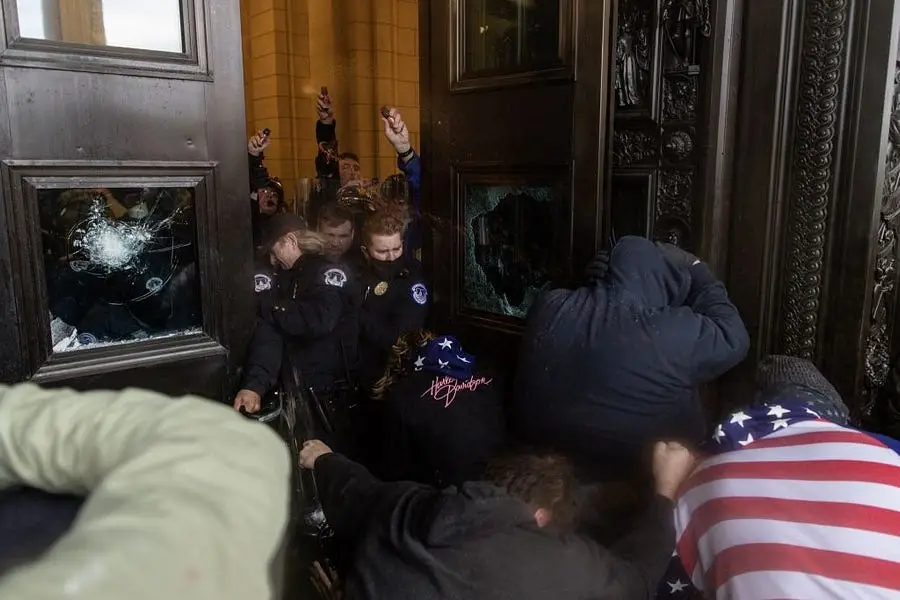
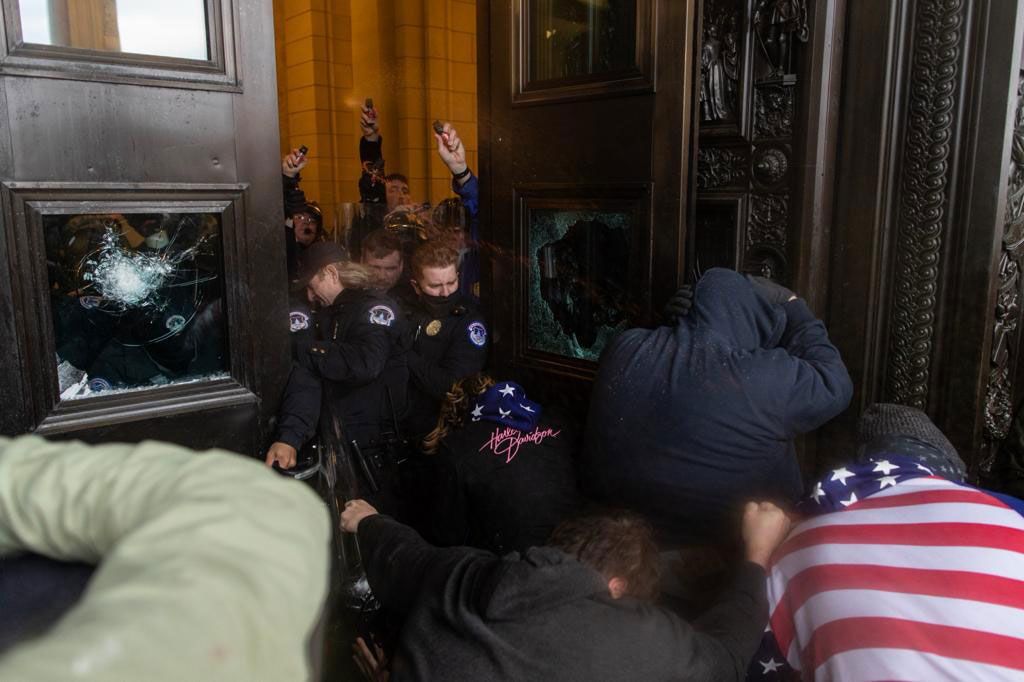
Then came Trump's electoral defeat and the protracted MAGA Afterparty.
The irate Ex-President unleashed a riot far more violent and destructive than anything he had ever decried on the other side.
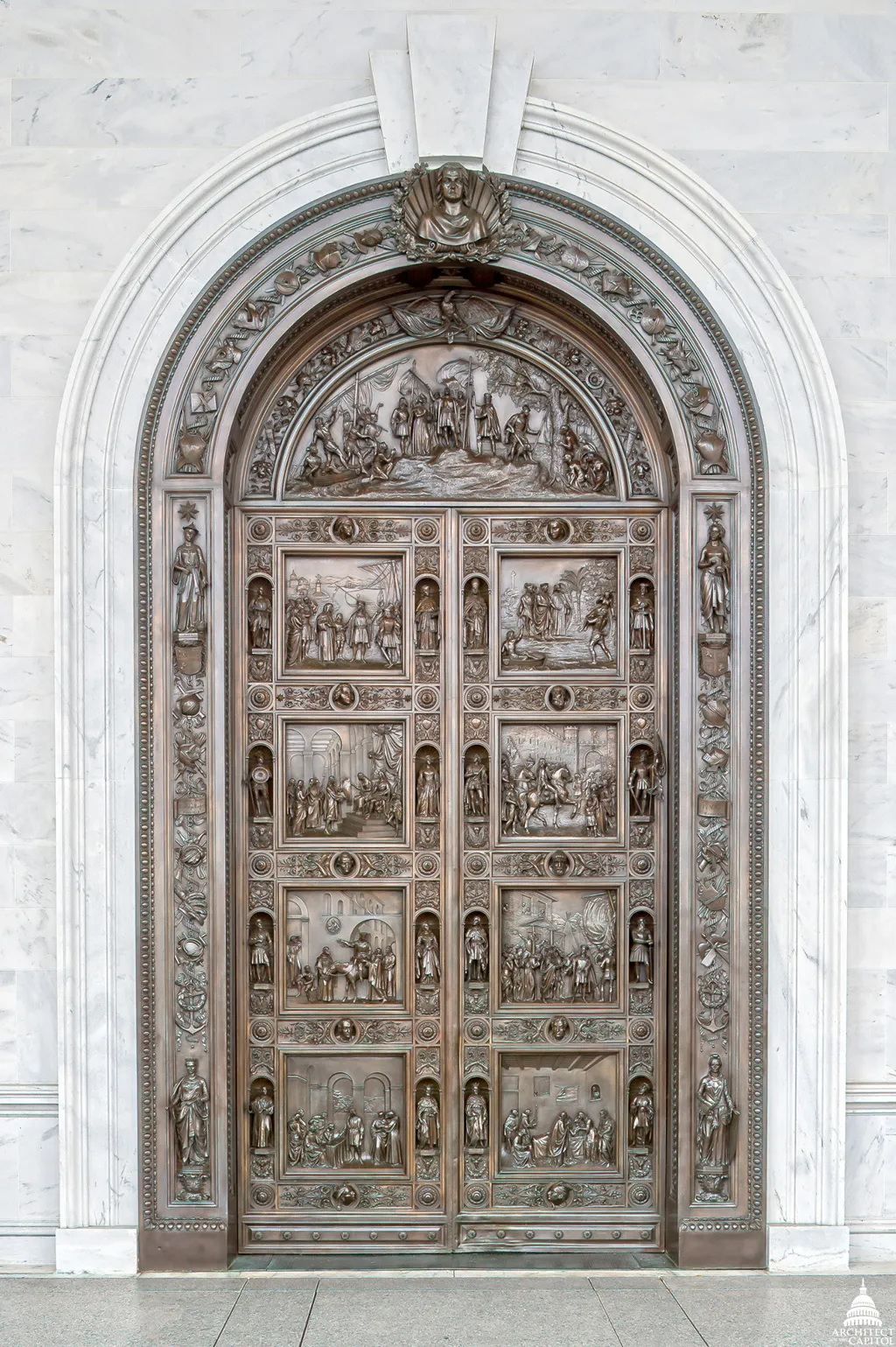
Did the insurgents even know—or care—that they were breaking into the Capitol through the historic Columbus Doors, damaging them in the process?
This intriguing detail was largely overlooked by the media.
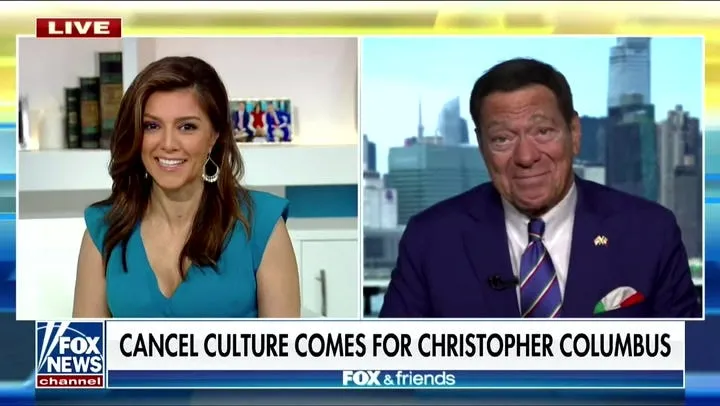
The obsession with Cancel Culture did not wane —with each side hugging their own pet grievances.
Those on the conservative spectrum raged about beleaguered truth-tellers —usually individuals —banished from the public discourse for espousing politically incorrect views.
They also fixated on signs and symbols —monuments included —that told the story of a now contested past (ie. "Cancel Culture Comes for Christopher Columbus".)
The left took a maximalist view, casting themselves as champions of a broad swathe of suppressed but intersecting races and peoples— amorphous masses of the "the unseen" and "the unheard" (ie. "A Riot is the Language of the Unheard.")
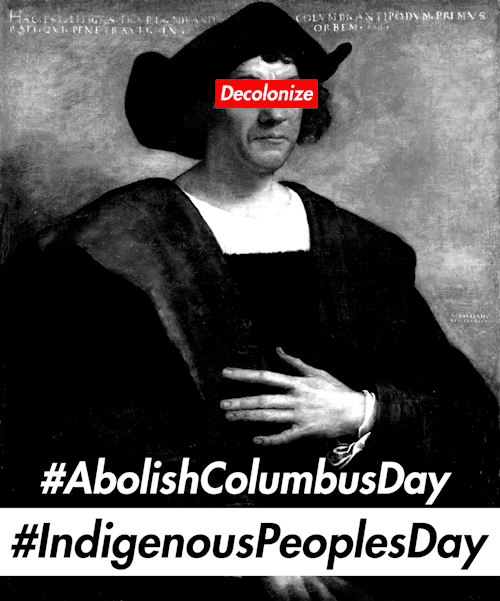

DECOLONIZED: The point of departure is a Portrait of a Man (by Sebastiano del Piombo or school), popularly considered to be Christopher Columbus for no especially good reason. (New York, Metropolitan Museum of Art.)
Both sides lobbed their own claims of victimization, obscuring basic facts and shutting down rational argument before it began.
Yes, Columbus and his ilk did terrible things (by the standards of our time, but often by the standards of their own too).
However, the ancestors of today's Italian-Americans had been nowhere near the scene of the crimes in 1492, 1592, 1692, 1792 and even after.
Instead, many were living as colonized people themselves, in the lands most of them eventually left in the South of Italy.
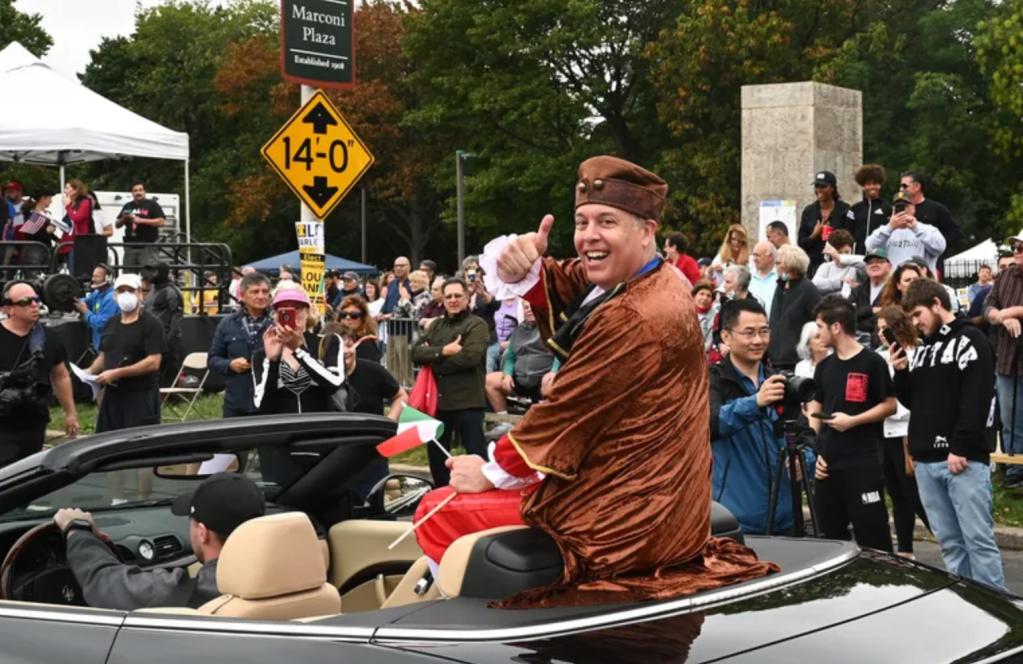
Philadelphia Columbus Day Parade, 2021: A laughing Christopher cruises by his alter ego in his increasingly weathered plywood box. Brothers in adversity, all'italiana?
On Columbus Day, most Italian-Americans want to have fun and feel good about being who they are. So nostalgia leavened with amiable silliness is the prevailing mode.
In 2021, it was a bittersweet occasion. As of January 27 —after another barrage of mayoral wherases— Columbus Day no longer existed in Philadelphia.
Not as an official holiday, at least:
WHEREAS, the story of Christopher Columbus is deeply complicated. For centuries he has been venerated with stories of his traversing the Atlanltic and "discovering" the "New World". The true history of his contact is in fact infamous. Mistakenly believing that he had discovered a new route to India, Columbus enslaved indigenous people, and punished individuals who failed to meet his expected service through violence and, in some cases, murder;
...
NOW, THEREFORE, I, MAYOR JAMES F. KENNEY, Mayor of the City of Philadelphia, by the powers vested in me by the Philadelphia Home Rule Charter, do hereby ORDER as follows:
...
The City holiday celebrated on the second Monday in October, formerly known as COLUMBUS DAY, shall now be designated as INDIGENOUS PEOPLES DAY.
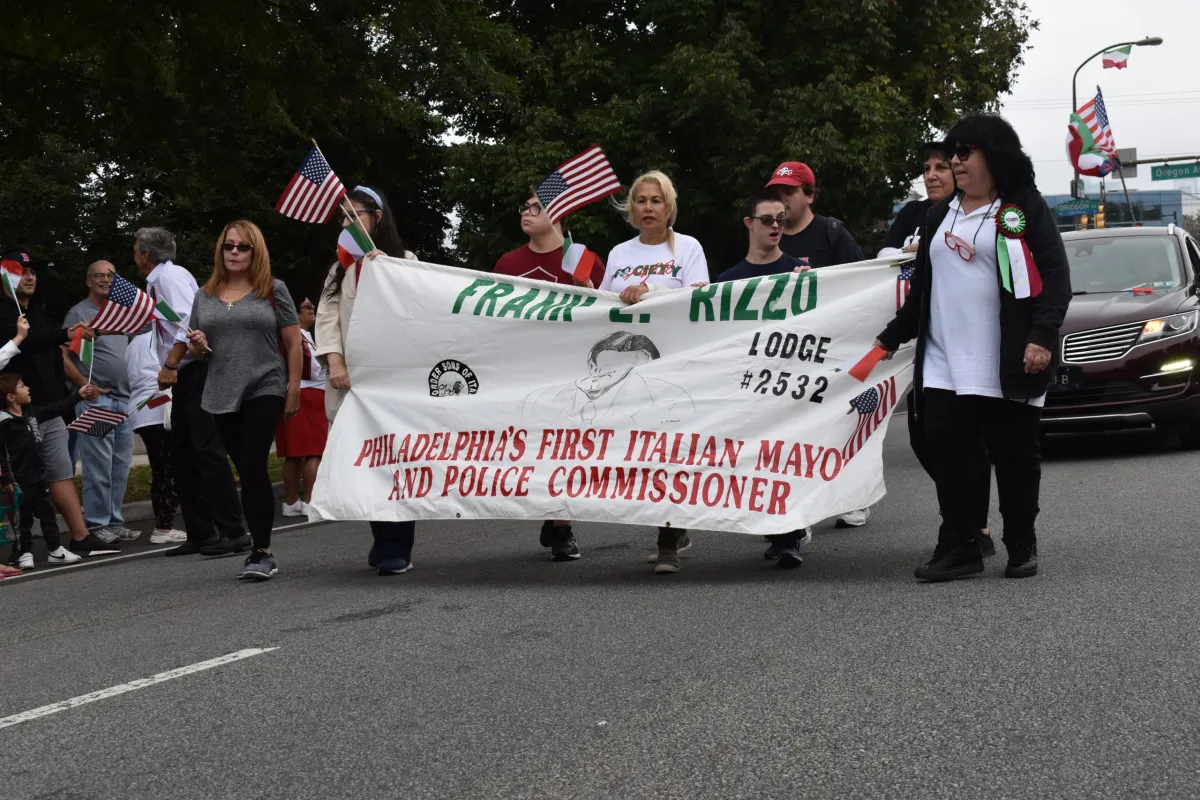
Columbus Day in South Philly, Indigenous Peoples' Day elsewhere in the city... The Francis L. Rizzo Lodge of the Sons of Italy proclaim their allegiance to their namesake, "Philadelphia's First Italian Mayor and Police Commissioner". Then by extension, to all things Italian— with the Great Explorer in First Place.
At the national level, President Biden went for a Solomonic solution— issuing two parallel proclamations on October 8, 2021, effectively splitting the holiday down the middle.
Henceforth, the Second Monday in October would be Columbus Day and Indigenous Peoples Day —all at once. So choose either, both or neither and call them what you will.
.webp)
Columbus Day... then and now...densely layered in Marconi Plaza. The Rizzo photo was shot in Fairmount Park in the early 1970s. Photographer and journalist Victor Fiorillo pulled in the newly tricolored Columbus Container in 2022.
%20article.jpg)
"New name. New paint job. Same old Frank Rizzo". A masterpiece of editorial concision ...and you can read it however you wish.
Italian-Americans in Philadelphia were not going to stop celebrating Columbus Day and Frank Rizzo was not going away any time soon. For many, both were victims of the same cancelation and/or decolonization campaign.
In the lead-up to the October 10, 2022 holiday, City Councilman Mark Squilla (whose district included Marconi Plaza), induced the city to beautify The Box.
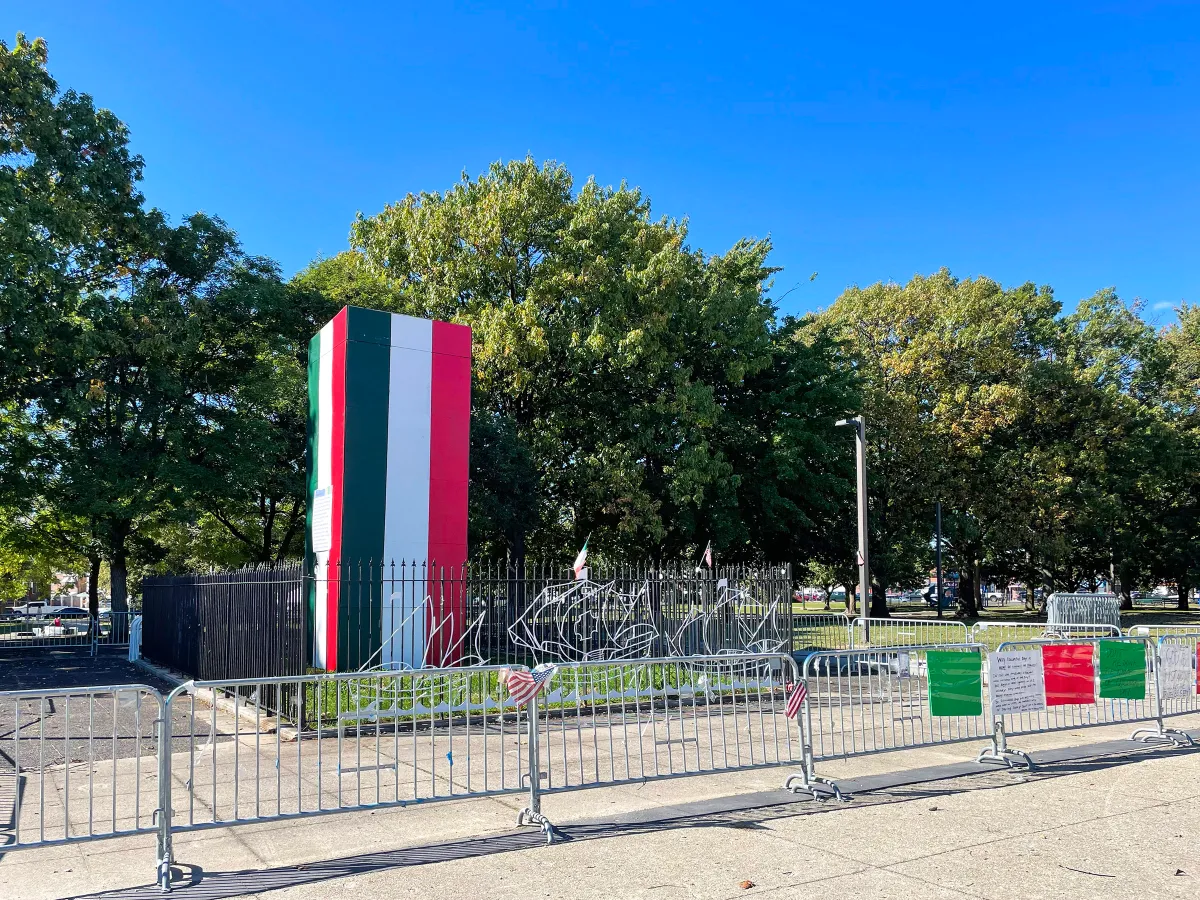
Christopher Columbus at three degrees of separation... First a temporary security barricade, then a a cast-iron fence, then The Box.
According to a prevalent tale, the official order was simply to paint the container Park Service Green.
But then...in the light of the new day...eccolà!
Philadelphia had a down-home monument to the local Italian resistance.
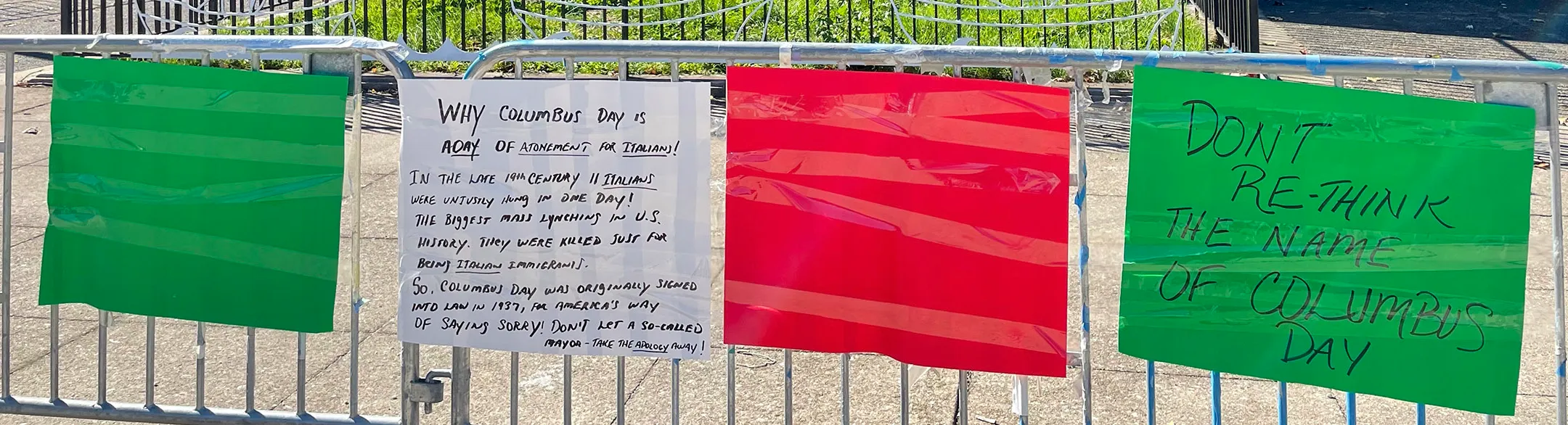
Impassioned messages in Green, White and Red....
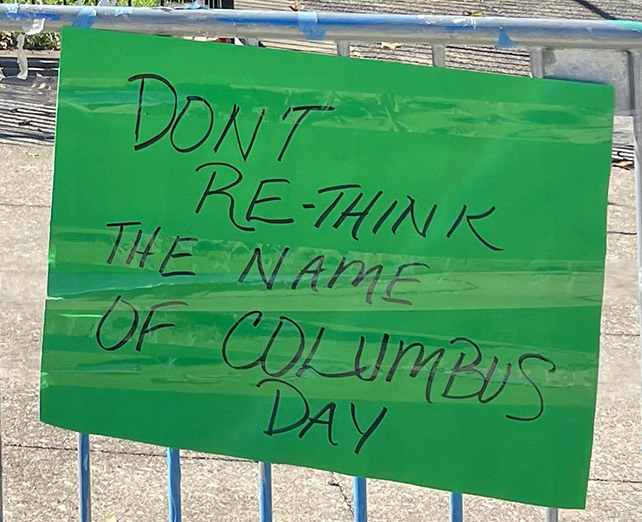
"Don't Re-think the Name of Columbus Day"???
In fact, there was no end of rethinking going on...
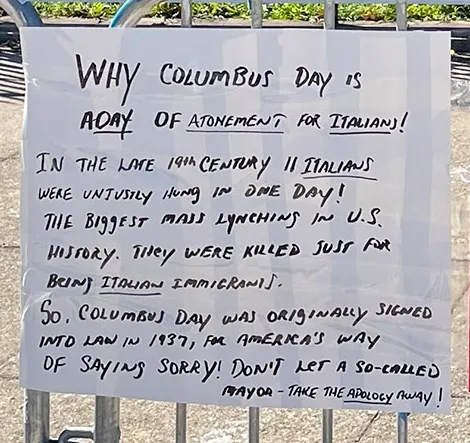
"Why Columbus Day is a Day of Atonement for Italians! / In the late 19th Century 11 Italians were unjustly hung in one day! The biggest mass lynching in U.S. history. They were killed just for being Italian immigrants. / So, Columbus Day was originally signed into law in 1937, for America's way of saying sorry! Don't let a so-called mayor take the apology away."
FOR THE 1891 NEW ORLEANS LYNCHING AND ITS CONTEXT, SEE:
WHOSE COLUMBUS? WHOSE COLUMBUS DAY? Part 2: The New Orleans Massacre (1891) and Italian-American Identity
A deeply-felt appeal... The author traces Columbus Day to 1937 (with Roosevelt), not 1892 (with Harrison) and introduces the long-lost theme of the New Orleans lynchings.
After more than a hundred years, people were once again focusing on the 1891 Italian massacre— although it remains to be proven that the tragic event had a substantive impact on the holiday in 1892. (Documents might yet emerge from the Italian or American diplomatic correspondence. Has anyone looked?)
It also remains to be proven that the forty year-old Italian massacre influenced the American Congress or Franklin Delano Roosevelt in 1934-37. (The issue does not seem to have been in the air at that time.)
%252520movie%252520cover.webp)
"When the Old Country Meets the New World, The Streets Will Run With Blood / Vendetta / The largest lynching in American History."
A (rather good) movie was released in 1999, focusing on the New Orleans lynchings. In the screen notes before the closing credits, there is no mention of the imminent 1892 holiday—exactly the sort of wrap-up that film-makers love.
Today, it is still not clear when these tragic events were fully absorbed into the Columbus Day narrative. Maybe not until Columbus and Columbus Day came under increasing fire in recent years?
In any case, Italian-Americans were not going to leave their own sufferings out of the story.
Philadelphia's Columbus Monument quickly became the chief emblem of the national controversy.
Jumping back to the long hot summer of 2020, Candidate Biden had to come up with something after Candidate Trump's June 3, 2020 Executive Order against "destroying or vandalizing a Federal monument, memorial, or statue".
Trump was mostly blowing hot air, since few of the works in question were Federal property (including the Marconi Plaza statue). But still, this was a visceral issue for many voters.
Joseph Biden called a news conference on June 30, 2020, his first since emerging from COVID quarantine. A reporter asked:
"[T]he nation is in this moment of reckoning when it comes to race, we’re seeing the removal of statues, also the removal of names from institutions and schools, do you think that this is the right approach to come to terms with our nation’s history and its leaders? What do you think when you see the removal of some of these statues?" (46:48)
The president replied (with less than crystal clarity):
"I think with regard to those statues that are in monuments like the Jefferson Memorial or whatever, I think there’s an obligation that the government protect those monuments because they’re different than that’s a remembrance. It is not a dealing with, revering somebody who had that view. They had much broader views. They may have things in their past that are now and then distasteful, but that’s a judgment for the … For example, taking down, toppling Christopher Columbus statue, George Washington’s statue, or et cetera, I think that is something that is, the government has an opportunity and a responsibility to protect from happening." (47:08)
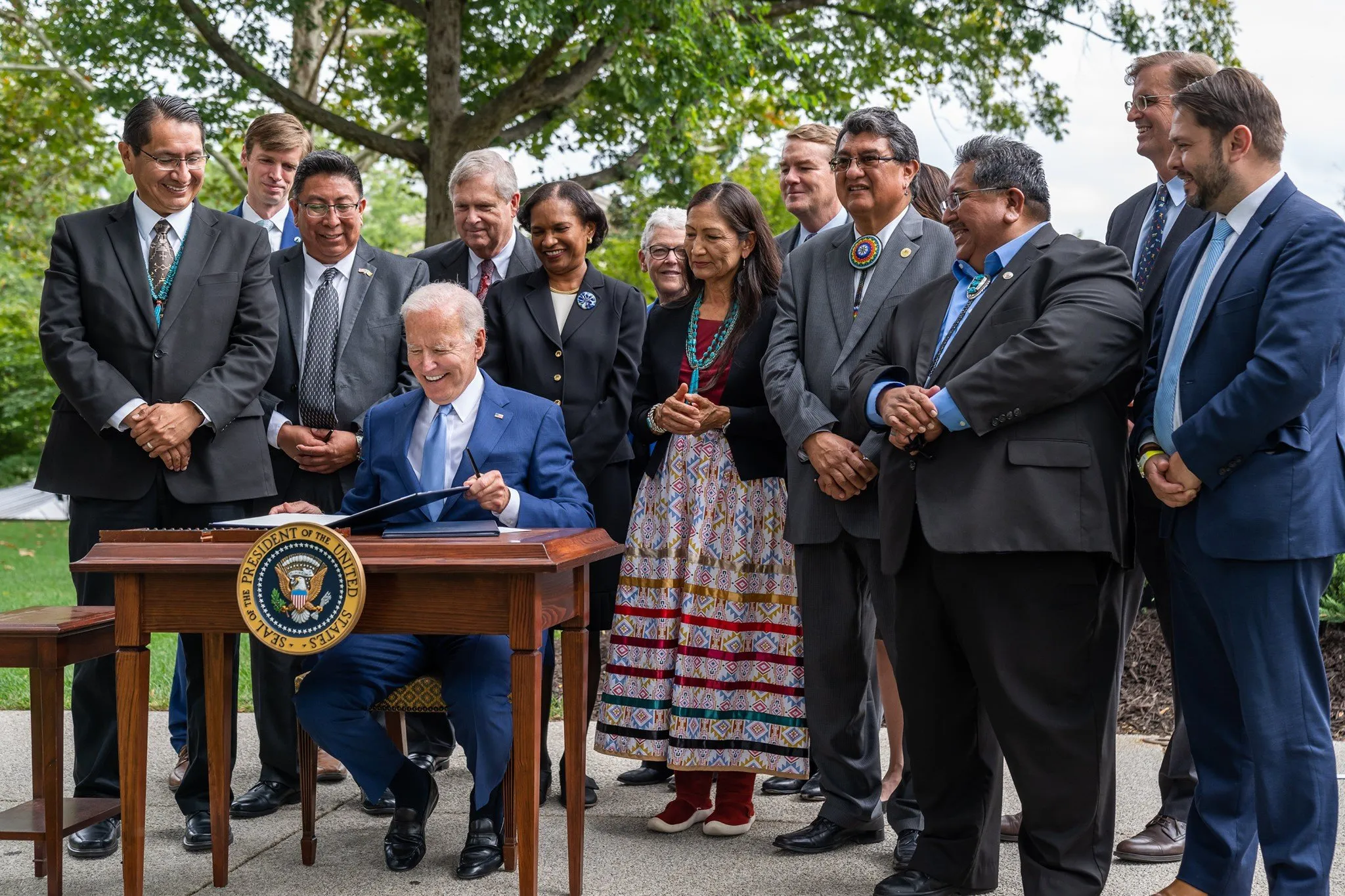
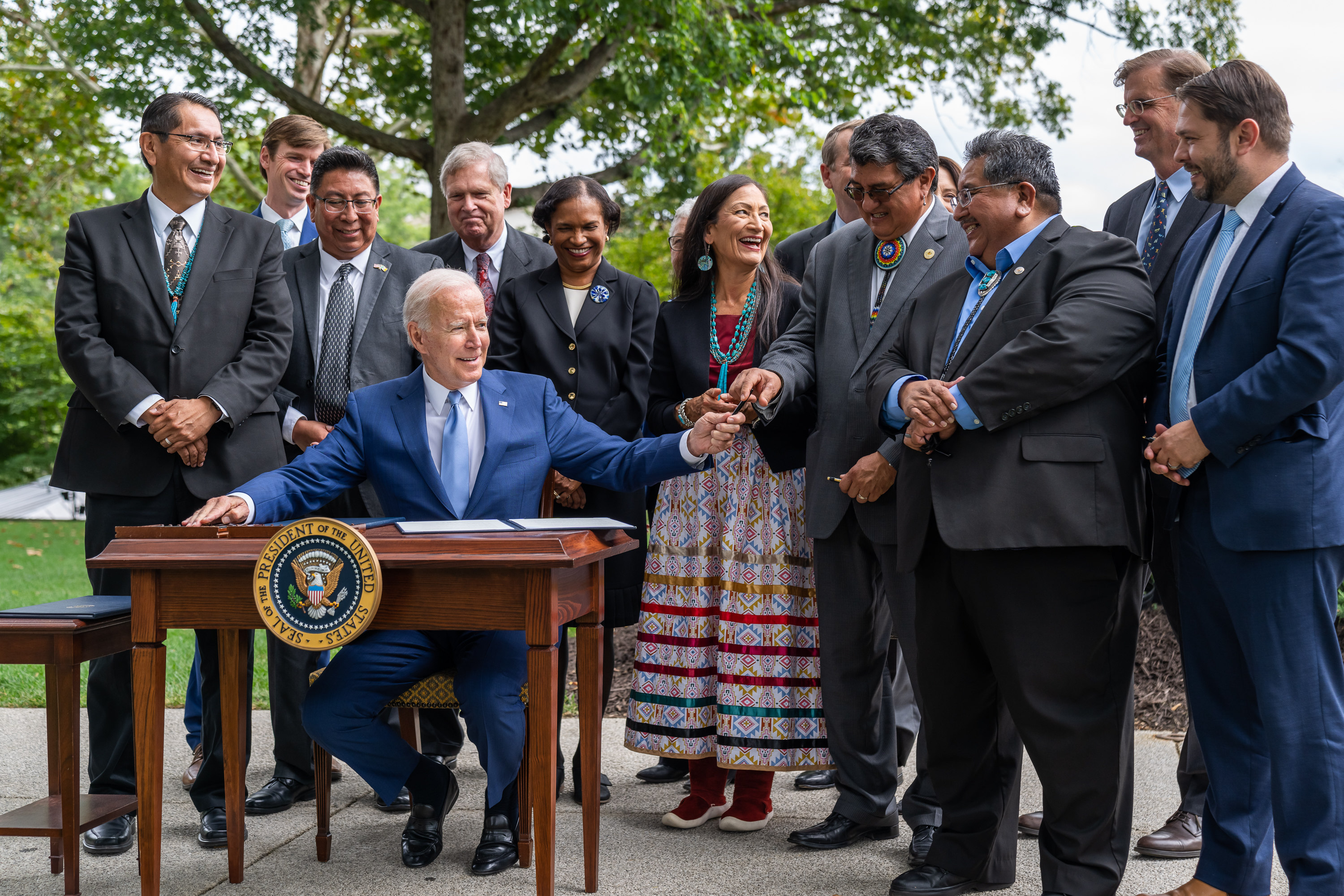
Joseph Biden seemed to thread the needle, for a while at least—when it came to Christopher Columbus and two slave-owning presidents. But after winning the 2020 election, concrete action was hard to avoid.
On Friday October 8, 2021, he issued two separate proclamations declaring Monday October 11 —both at once—Columbus Day (per usual) and Indigenous Peoples Day (brand new).
As the Associated Press reported on October 8:
"While Native Americans have campaigned for years for local and national days in recognition of the country's indigenous peoples, Biden's announcement appeared to catch many by surprise."
There was a less gratifying surprise for Italian-Americans—as the New York Post signaled on October 9:
"Biden also marked Columbus Day on Friday, but—in an unusual move—included a lengthy carve out for his [Columbus'] detractors in his statement."
In fact, the vehement 135-word denunciation of "the wrongs and atrocities that many European explorers inflicted on Tribal Nations and Indigenous communities" overwhelmed any grudging acknowledgement of the man whose holiday the president was allegedly proclaiming.


This egregious insult to Italian-Americans was entirely unnecessary. President Biden had already made his "historic apology" in the appropriate place —the Indigenous Peoples Day proclamation. Now he had a year to put this fiasco behind him and rebuild the Federal Holiday from scratch.
Monday October 10, 2022 was the next Columbus Day. In his announcement on the Friday before, Biden stripped away the anti-Indigenous "wrongs and attrocities", then swapped in anti-Italian ones instead:
"Things have not always been easy; prejudice and violence often stalled the promise of equal opportunity. In fact, Columbus Day was created by President Harrison in 1892 in response to the anti-Italian motivated lynching of 11 Italian Americans in New Orleans in 1891. During World War II, Italian Americans were even targeted as enemy aliens."
Was this the first time that the Federal Government officially —or even unofficially —paired Columbus Day with the New Orleans lynchings? What are they implying about Benjamin Harrison's once-and-done celebration in 1892?
Maybe the Executive Branch knows things we don't— diplomatic history, that is to say? Or maybe they just watch the same movies and visit the same web sites as everyone else?

Then came Columbus Day 2023 (October 9). In that year's proclamation, Biden shifted the New Orleans lynching and Benjamin Harrison to the top of the page.
Then he went Full Christopher—inducting the Great Navigator into every Italian-American family:
"In 1891, 11 Italian Americans were murdered in one of the largest mass lynchings in our Nation’s history. In the wake of this horrific attack, President Benjamin Harrison established Columbus Day in 1892.
For so many people across our country, that first Columbus Day was a way to honor the lives that had been lost and to celebrate the hope, possibilities, and ingenuity Italian Americans have contributed to our country since before the birth of our republic...
For many Italian Americans, the story of Christopher Columbus’ voyage... remains a source of pride. It reflects the stories of trips across the Atlantic that so many Italian Americans grew up hearing at the dinner table...
Today, we honor those stories told around the dinner table and celebrate what these hopeful Italian American newcomers brought to our Nation. "
Related posts
WHOSE COLUMBUS? WHOSE COLUMBUS DAY? Part 1: It begins with a statue in Philadelphia in 1876
Why is Columbus Day the most controversial of American holidays?
People disagree —often violently —about its past and present meaning.
Here are the facts. Make of them what you will!
***
The story begins in South Philly (then and now) and takes us to the American Civil War and the 1876 Centennial Exposition.
We meet Christopher Columbus (in several incarnations), sculptor Emanuele Caroni and Nunzio Finelli (ideator of Philadelphia’s Columbus Statue, long in Fairmount Park, now in Marconi Plaza).
WHOSE COLUMBUS? WHOSE COLUMBUS DAY? Part 2: The New Orleans Massacre (1891) and Italian-American Identity
Why is Columbus Day the most controversial of American holidays?
People disagree —often violently —about its past and present meaning.
Here are the facts. Make of them what you will!
***
A deadly anti-Italian riot in New Orleans in 1891 gave rise to the Columbus Day holiday —or so many people claim.
We meet Italian Ambassador Francesco Fava and Italian Consul Pasquale Corte, plus a host of corrupt New Orleans politicians and rumor-mongering journalists across America and around the world.
WHOSE COLUMBUS? WHOSE COLUMBUS DAY? Part 3: Italian Columbus Day vs. American Columbus Day
Why is Columbus Day the most controversial of American holidays?
People disagree —often violently —about its past and present meaning.
Here are the facts. Make of them what you will!
***
“Everyone” knows that Columbus Day began in 1892 (1492 plus 400) when President Benjamin Harrison declared that national holiday —in reparation for the recent lynching of 11 Italians in New Orleans.
“Everyone” is wrong, however. The story is far more complicated —with two plausible “origin myths”, neither openly connected to the New Orleans tragedy.
1892 gave rise to a short-lived American Nativist Columbus Day, linked to the Schoolhouse Flag Movement and the new Pledge of Allegiance.
1892 also formalized an older and more durable Italian and Catholic Columbus Day— culminating in the dedication of the Columbus Monument in New York City.
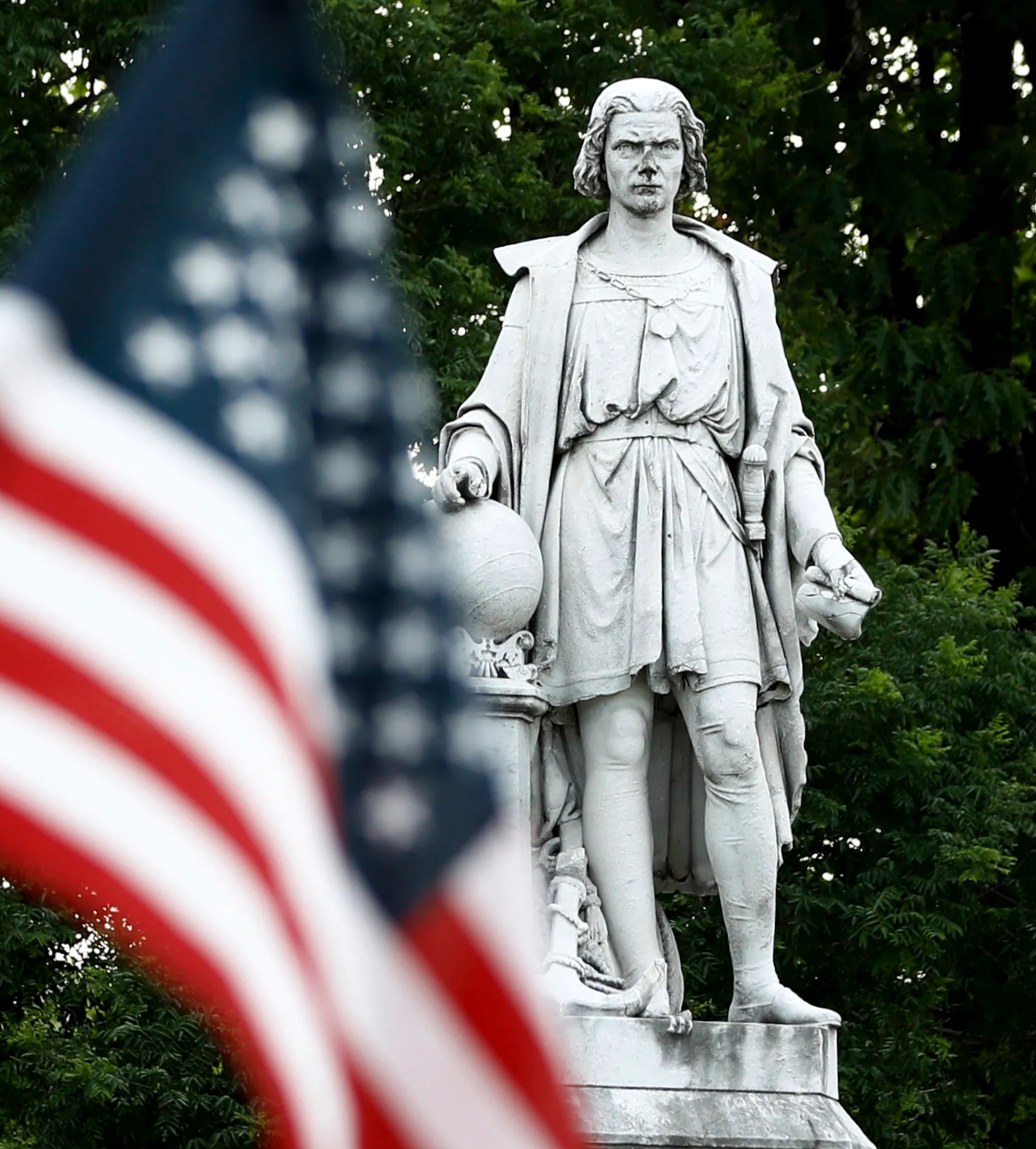
WHOSE COLUMBUS? WHOSE COLUMBUS DAY? Part 5: Strange Things Happen in Philadelphia...
Why is Columbus Day the most controversial of American holidays?
People disagree —often violently —about its past and present meaning.
Here are the facts. Make of them what you will!
***
Christopher Columbus... Guglielmo Marconi... Frank Rizzo...
Meet Italian Philadelphia's historic Gang of Three!
Now imagine them all in Marconi Plaza— South Philly's iconic park— face to face for Eternity.
COLUMBUS, MARCONI AND BALBO: Italian Heroes Collide with American Reality
In 1930s America, Guglielmo Marconi, the inventor of the radiotelegraph and Italo Balbo, the aeronautical "Second Columbus" led a brilliantly orchestrated public relations campaign on behalf of Benito Mussolini's regime.
Fascist Italy commanded a dazzling array of scientific, technological and cultural resources. It channeled them all— astounding the American public at Chicago's Century of Progress Exposition in 1933-34.
Lorem ipsum dolor sit amet, consectetur adipiscing elit. Suspendisse varius enim in eros elementum tristique. Duis cursus, mi quis viverra ornare, eros dolor interdum nulla, ut commodo diam libero vitae erat. Aenean faucibus nibh et justo cursus id rutrum lorem imperdiet. Nunc ut sem vitae risus tristique posuere.