ITALY AND ME...
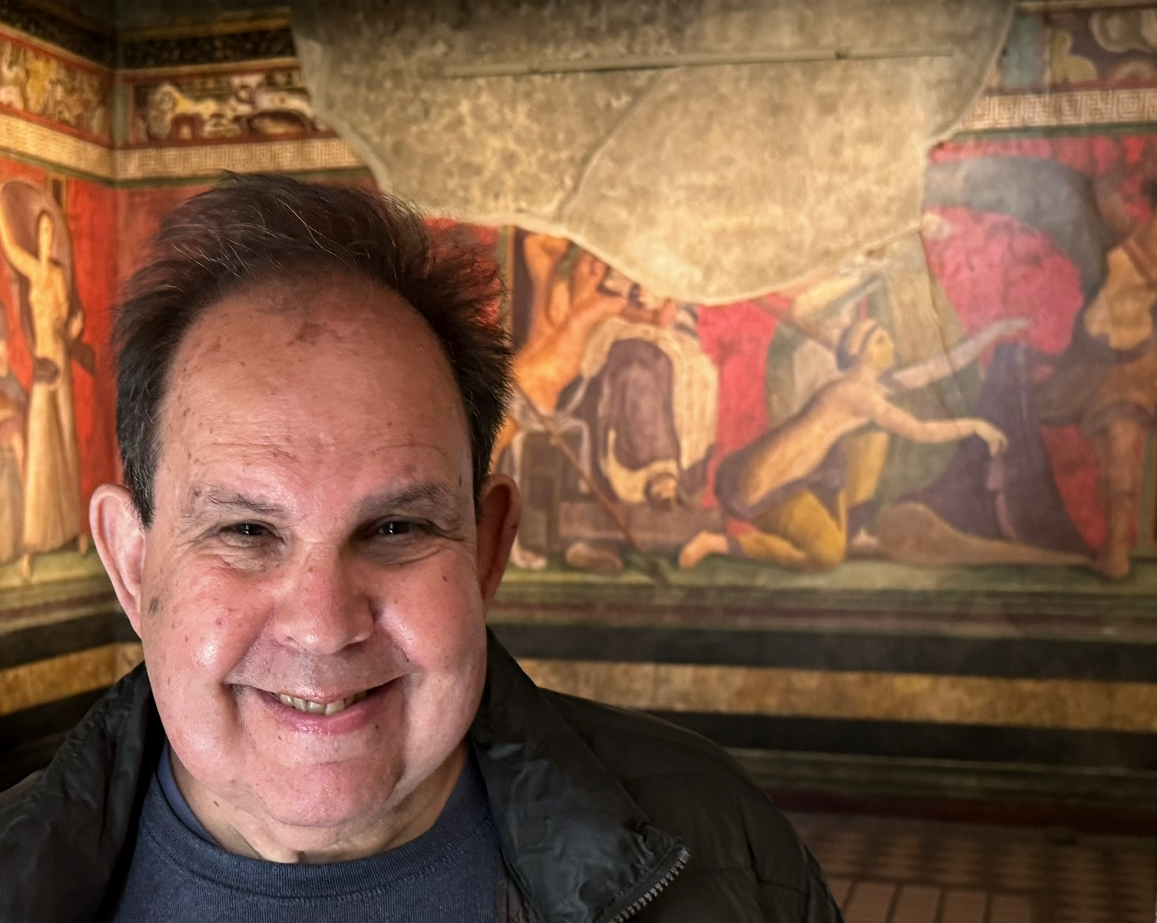
If you want to understand a place, being there —with your eyes open —is what matters most.
Days, months and years pass... You watch patterns form... You see pieces come together and break apart.
Local realities take on a life of their own, so quietly you might not even notice.

That, basically, is my story in Italy—as a historian, a writer and an ordinary person doing everyday things.
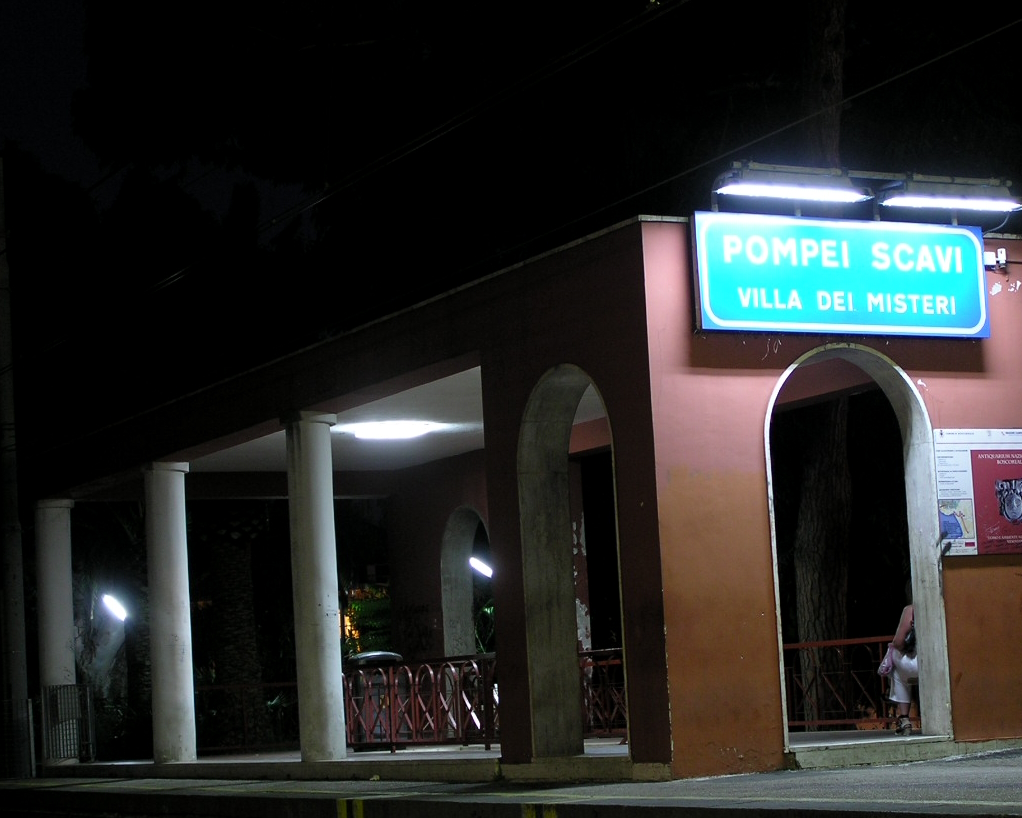
Late at night, at the Villa of the Mysteries station on the Circumvesuviana line out of Naples.
Italy—real and imagined —has been ground zero for most of my adult life.
In my more fanciful moments, I see myself at a late-night train station waiting for the next load of experiences to rumble through.
Experiences but also facts— historical and otherwise.
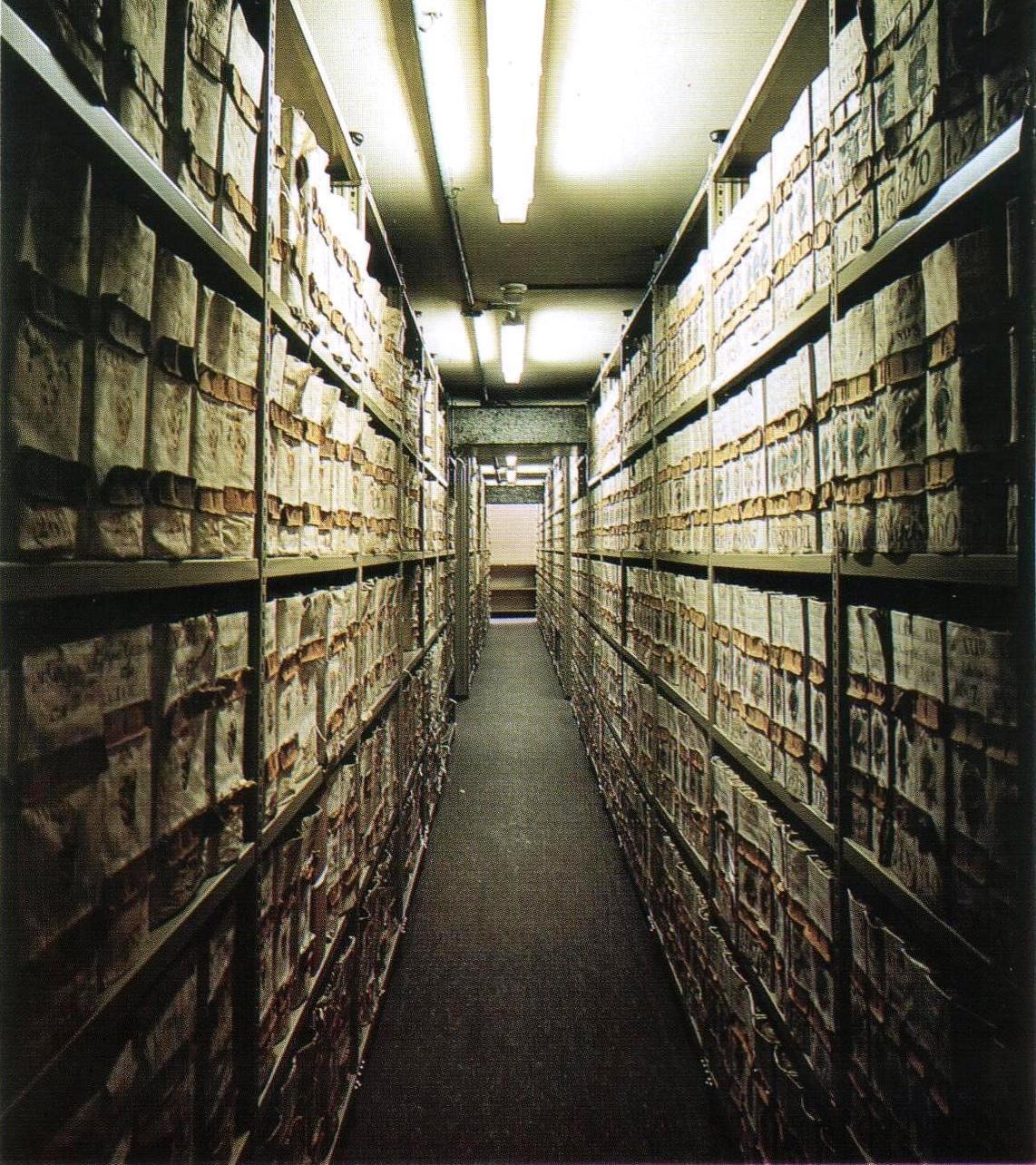
A view of the stacks of the Florentine National Archive.
For decades, my chief outpost has been the Florentine National Archive (Archivio di Stato di Firenze), with forays to other documentary repositories of that sort.
There I burrow through heaps of ancient parchment and paper, watching events unfold— seeing them through the eyes of the people most immediately involved, hearing about them in their own words.
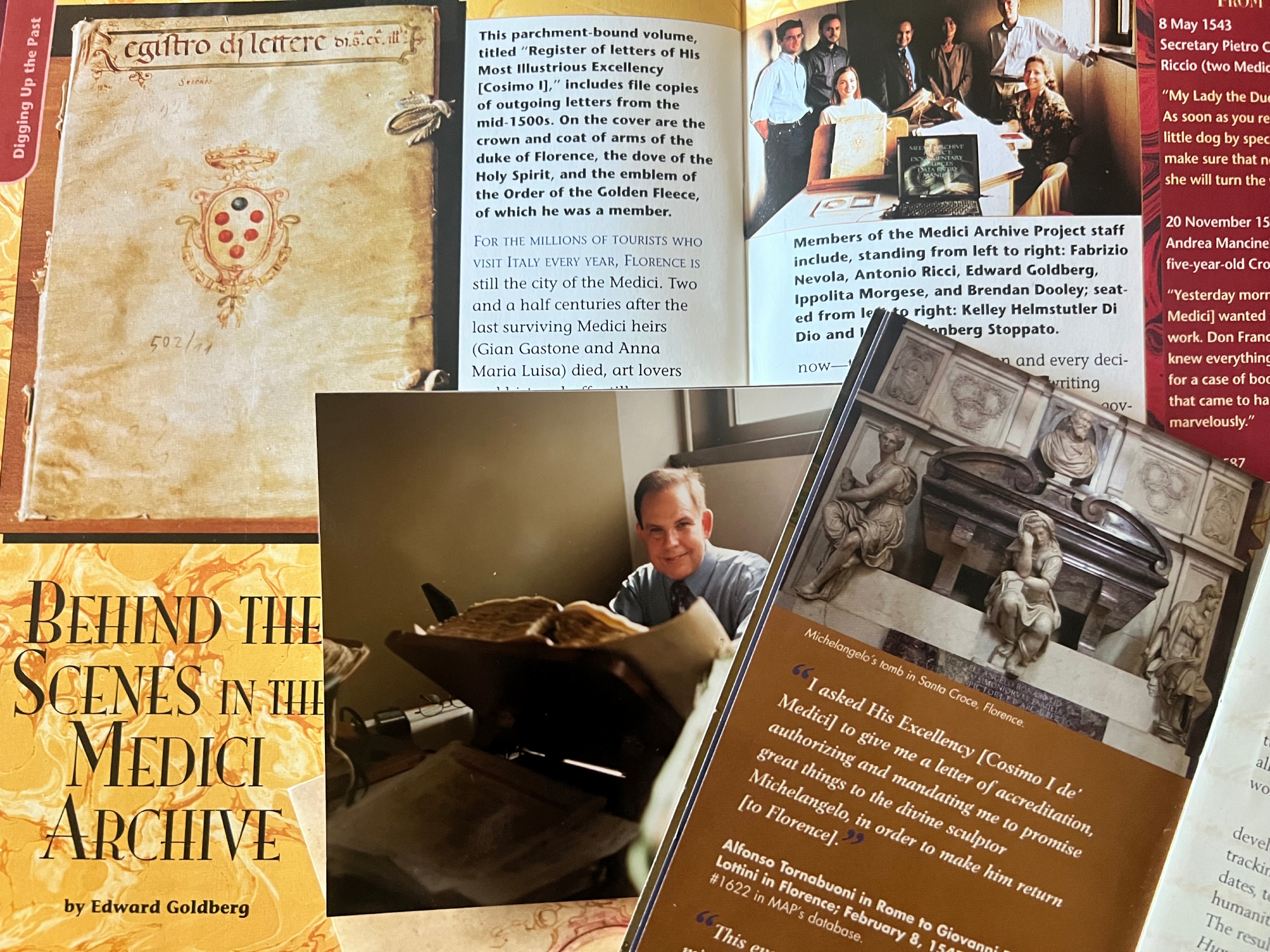
Odds and ends from my filing cabinet, documenting decades of work in the Florentine National Archive. This includes my time with the Medici Archive Project, an international foundation that I launched and directed for many years.
Along the way, I lost patience with simple tales of cause and effect.
History —like life itself —is never about just one thing.
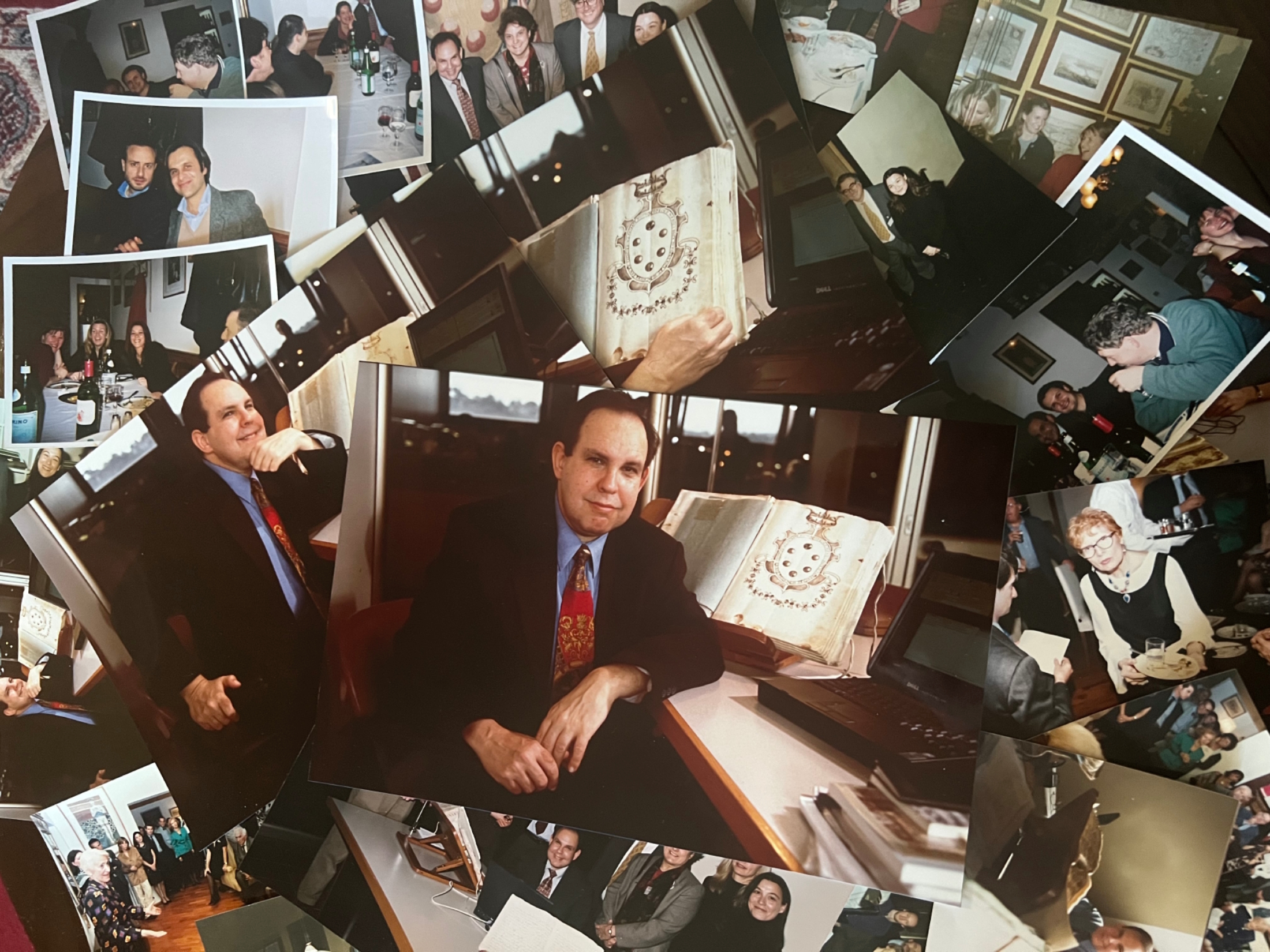
As “Source Material”, we claim whatever we encounter in our journey.
Words on paper, of course, but also people, places and situations. Also, buildings, landscapes and works of art.
Anything that triggers associations and uncaps the flow of memory.
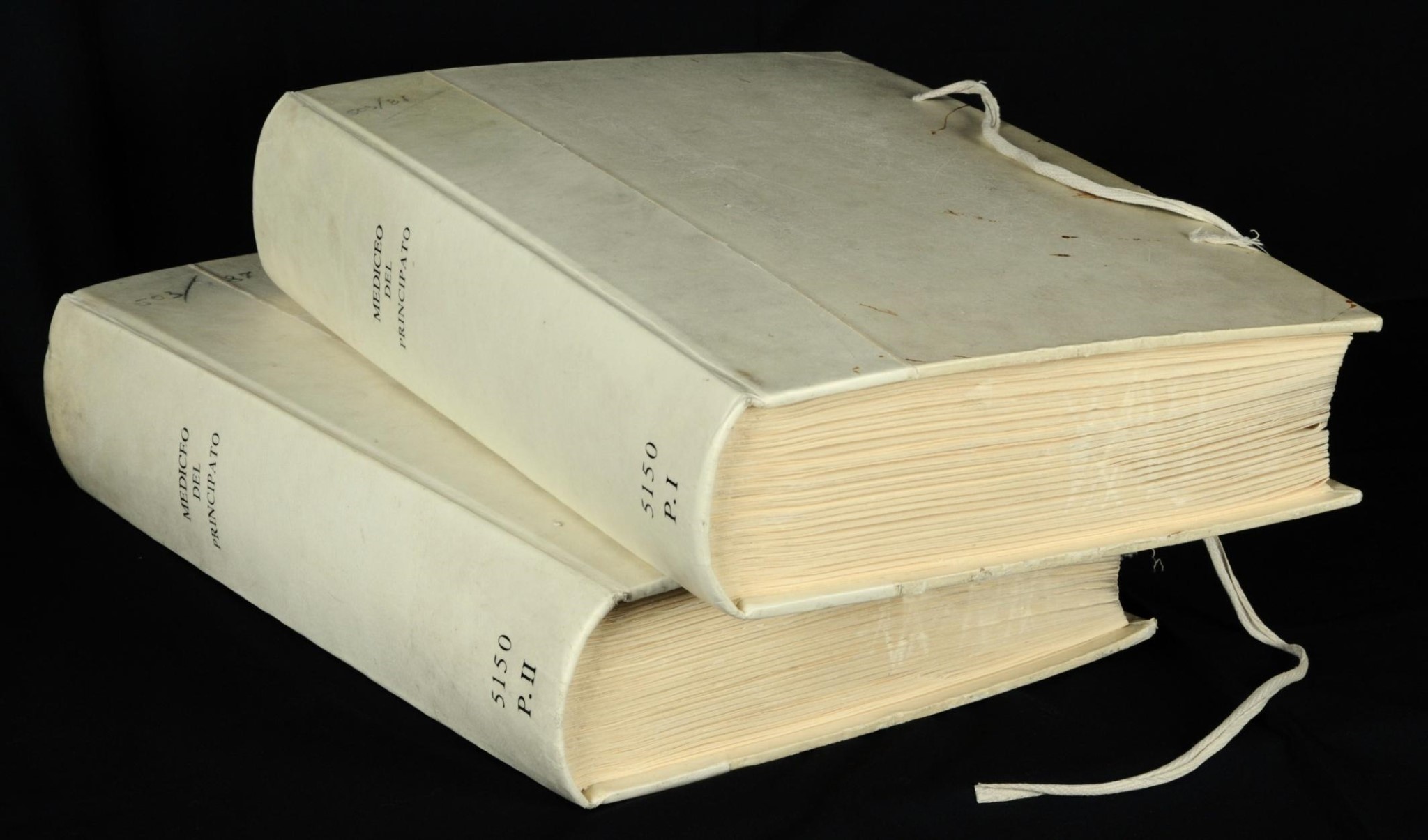
This double volume includes 220 letters from Benedetto Blanis (1615-21), a Jew in the Florentine Ghetto. My discovery launched many years of research and writing, culminating in two books.
SEE:
JEWS AND MAGIC IN MEDICI FLORENCE: The Secret World of Benedetto Blanis
A JEW AT THE MEDICI COURT: The Letters of Benedetto Blanis Hebreo, 1615-1621
What is a “discovery”—in the archive or beyond?
Sometimes we happen on a seemingly magical document that sheds light on things we never expected to see.
Far more often, miscellaneous findings combine slowly, exposing truths long hidden in plain sight.
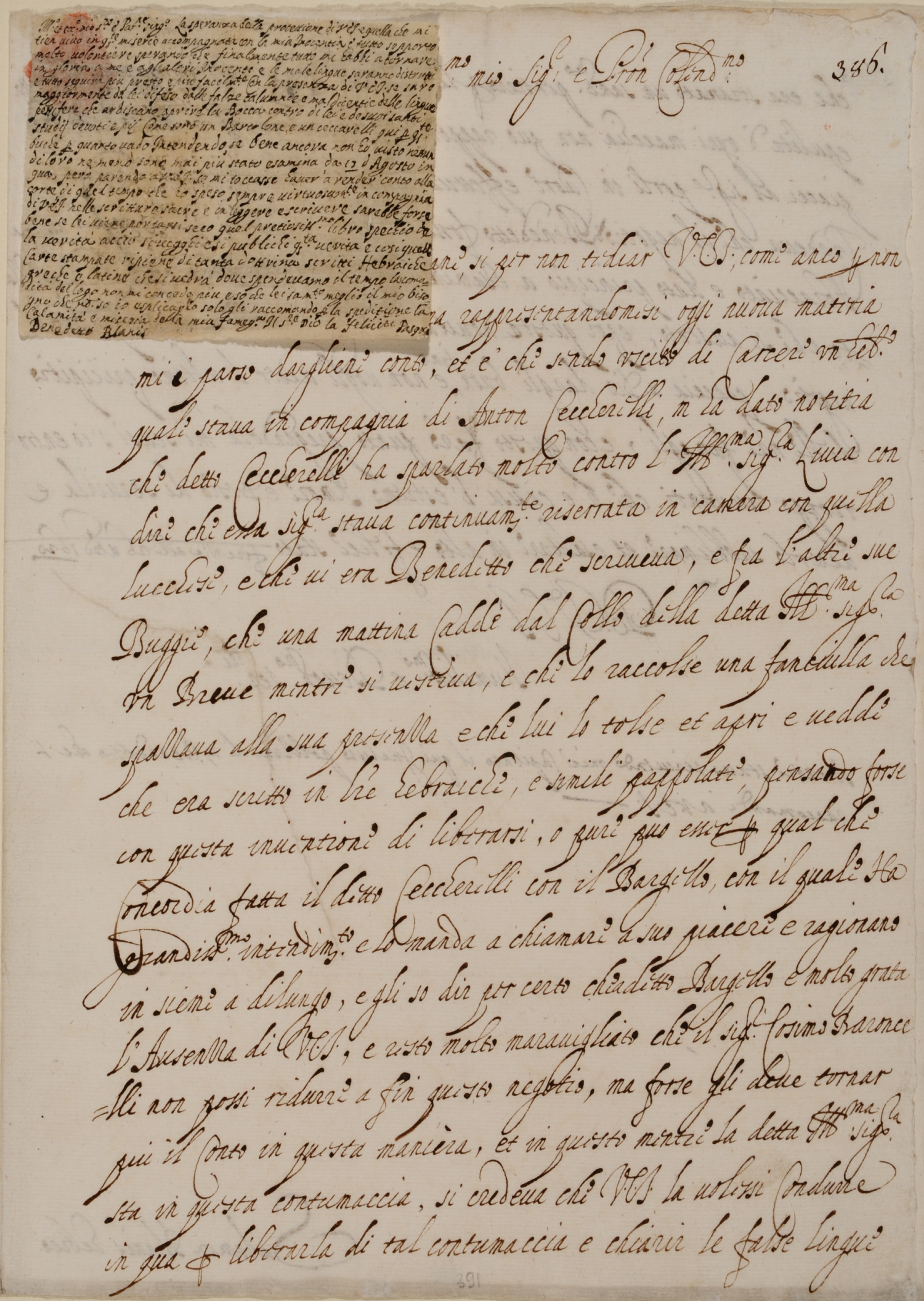
At the upper left, the last known letter from Benedetto Blanis Hebreo smuggled out of the Bargello prison in Florence in September 1620.
DI COSA NASCE COSA
(ONE THING GIVES BIRTH TO ANOTHER)
That is a favorite Italian proverb, profound or damned obvious depending on your point of view.
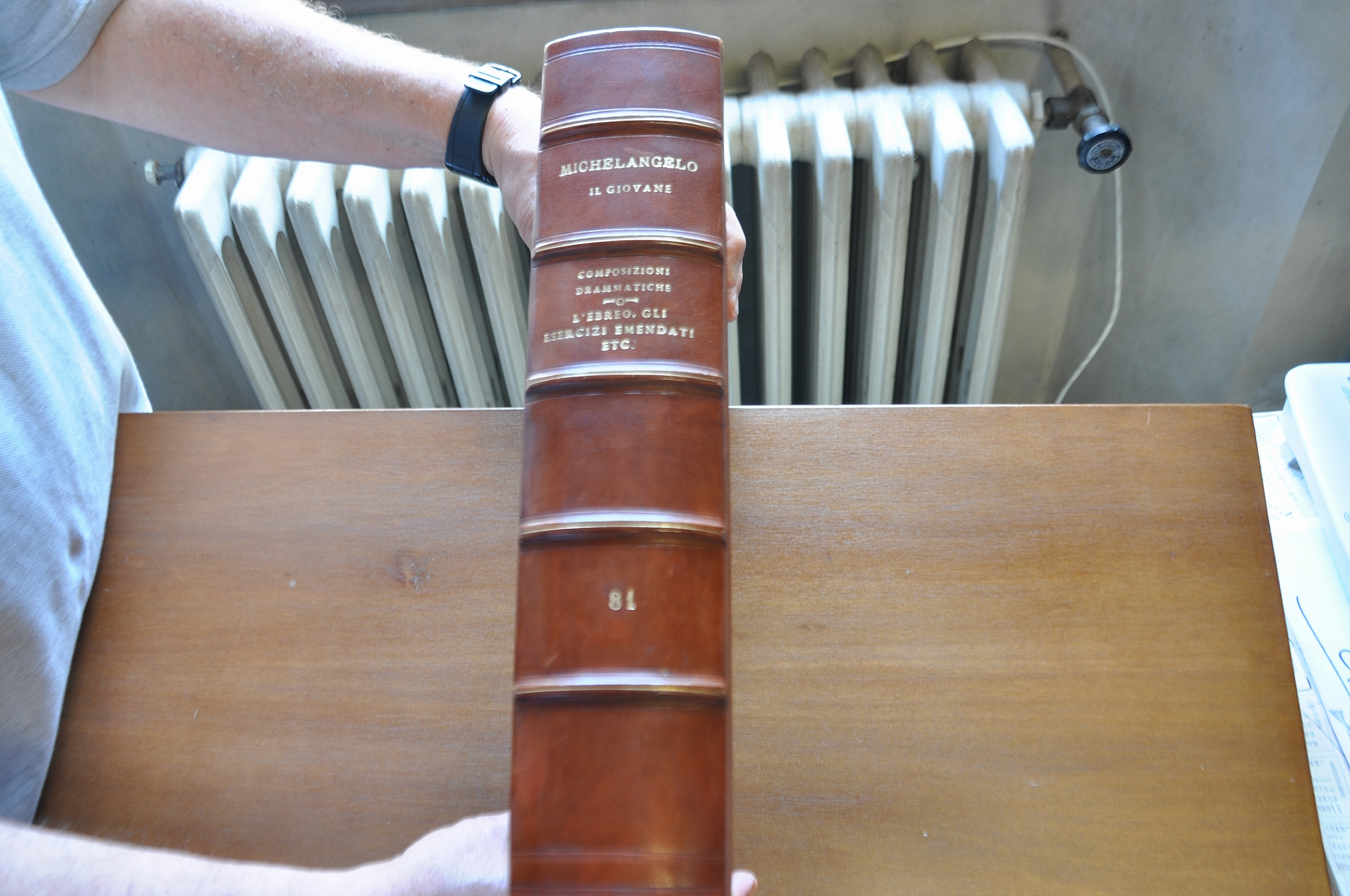
In this unpublished gathering of poetry and plays, I found the manuscript of Michelangelo Buonarroti the Younger's lost comedy, L'Ebreo (The Jew), conceived for the Carnival of 1614 at the Medici Court in Florence.
That triggered another voyage of discovery and another book (unpublished):
CARNIVAL BLOOD: Jews in Italy, Onstage and Off
Also, my dramatic adaptation in English of Michelangelo Buonarroti's the Younger's comedy:
L'EBREO/ THE JEW: A Performance Script
In the course of research and writing, I have always jumped into the middle of the story without knowing how things will end.
Intellectual discretion? Yes, no and maybe... For better or worse, that is how I am wired and the only way I can work.
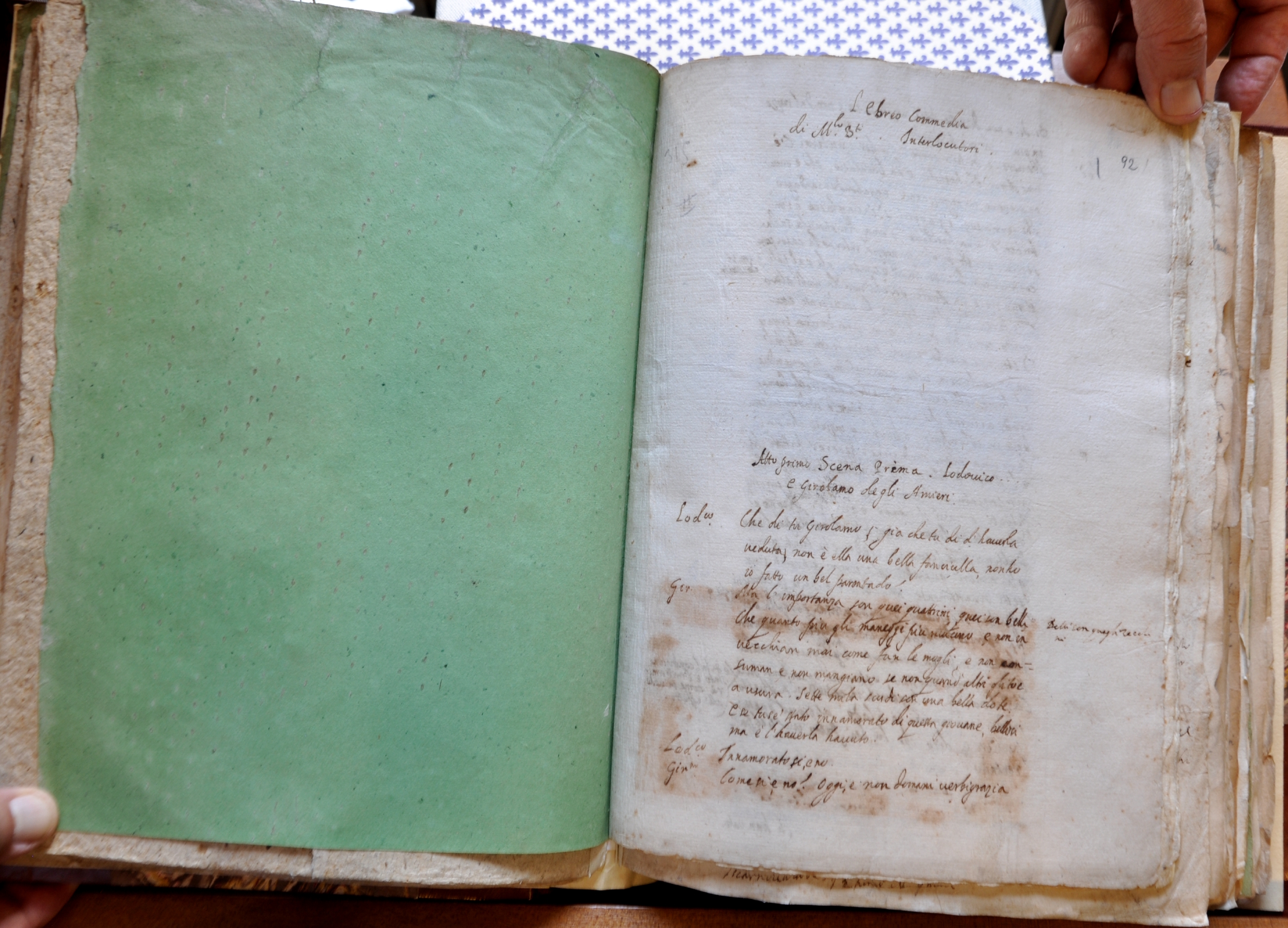
L'Ebreo Commedia di M[ichelange]lo B[uonarrot]ti (The Jew, a Comedy by Michelangelo Buonarroti [the Younger]). This is the opening scene.
FOR THE BACKSTORY TO MY DISCOVERY, SEE:
L'EBREO / THE JEW: How It Began
I've written a few books and any number of articles over the years.
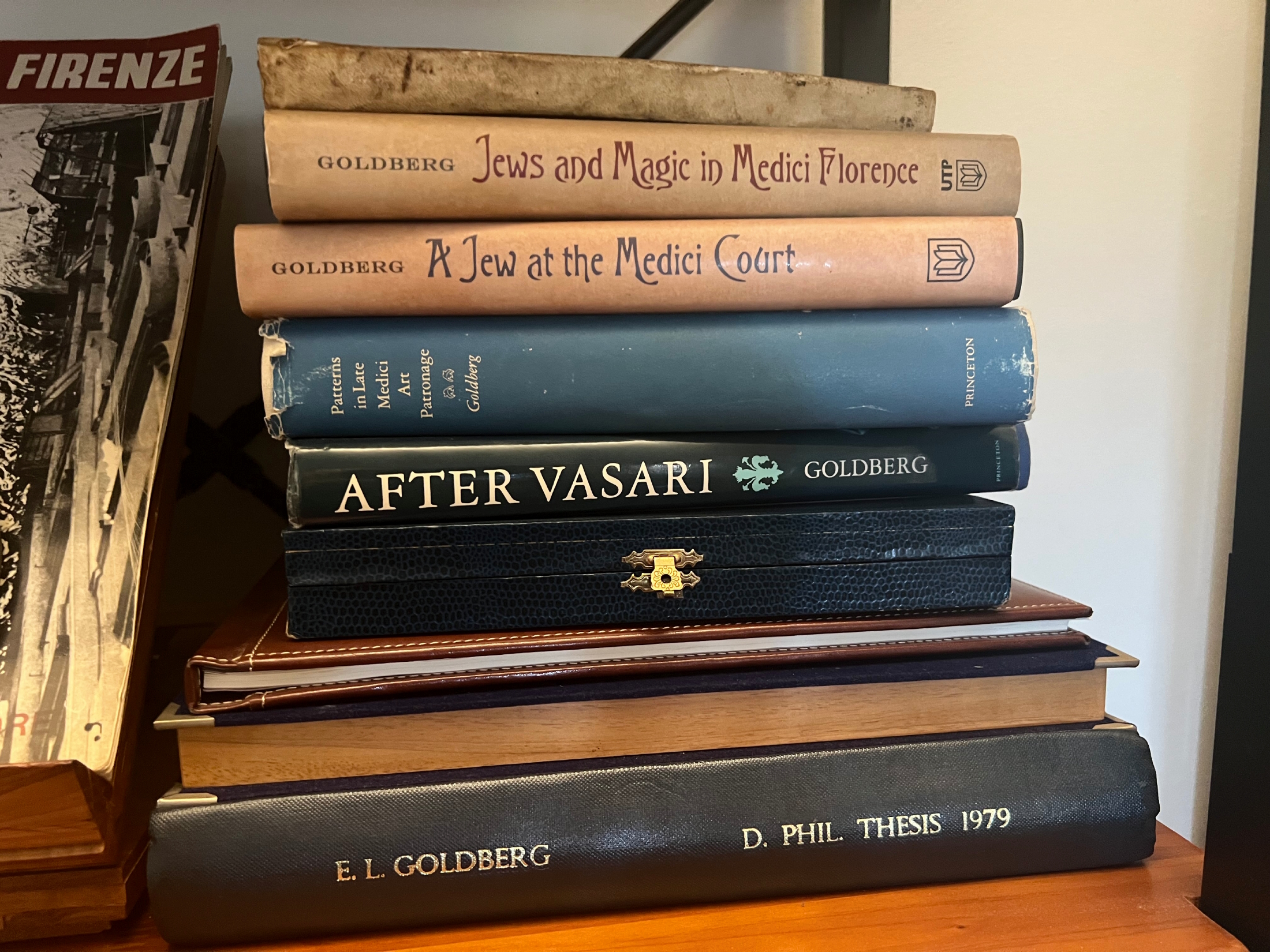
From bottom to top, in not quite chronological order: Personality and Politics in Medici Collecting (my 1979 doctoral dissertaition from Oxford University), After Vasari (Princeton, 1988) and Patterns in Late Medici Art Patronage (Princeton, 1983), A Jew at the Medici Court (Toronto, 2011), and Jews and Magic in Medici Florence (Toronto , 2011)
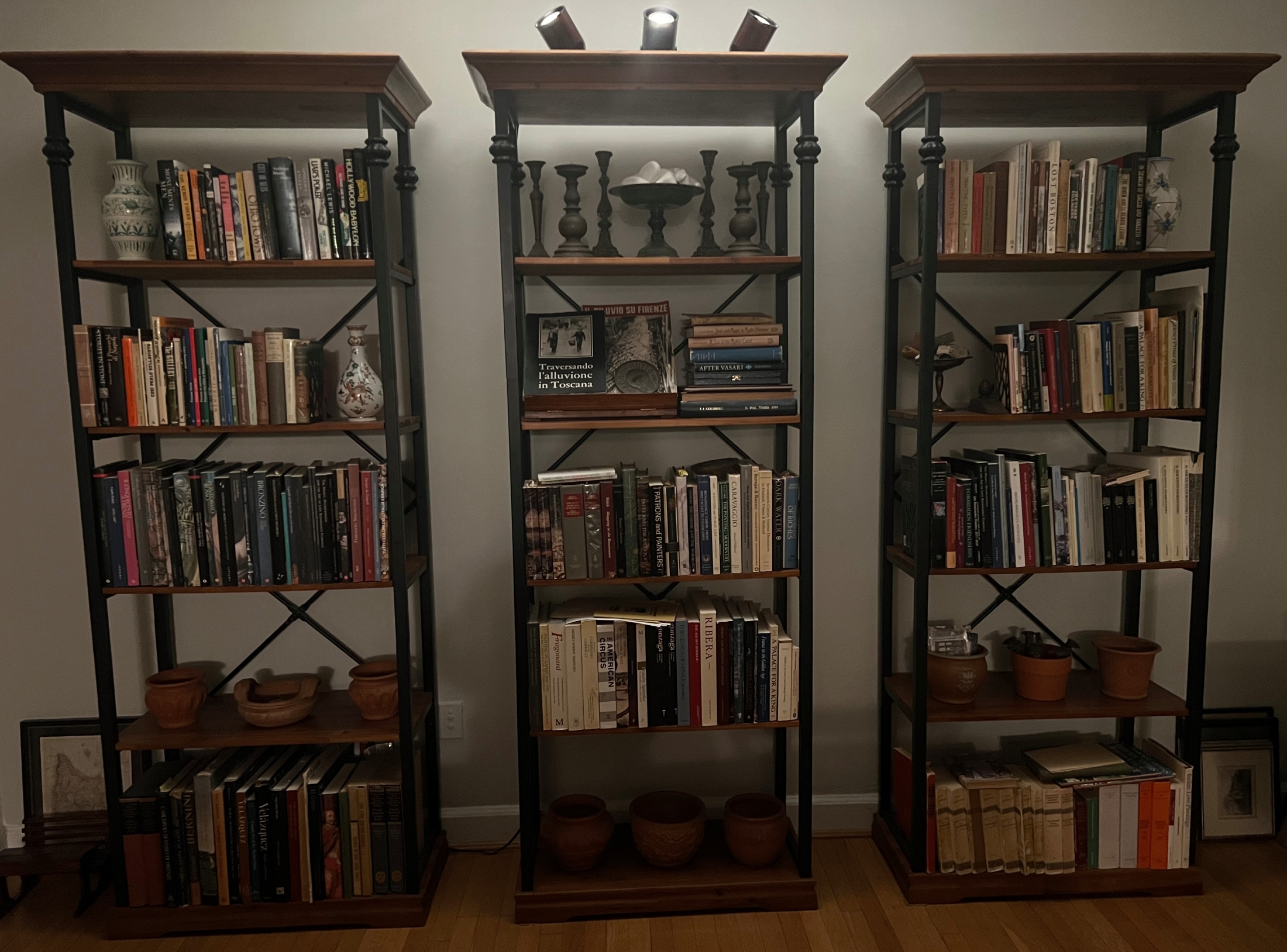
These are now filed away on a shelf in my living room, hinting at a cosmic arrangement of some kind.
Other bits, meanwhile, are fixed on my bedroom wall.
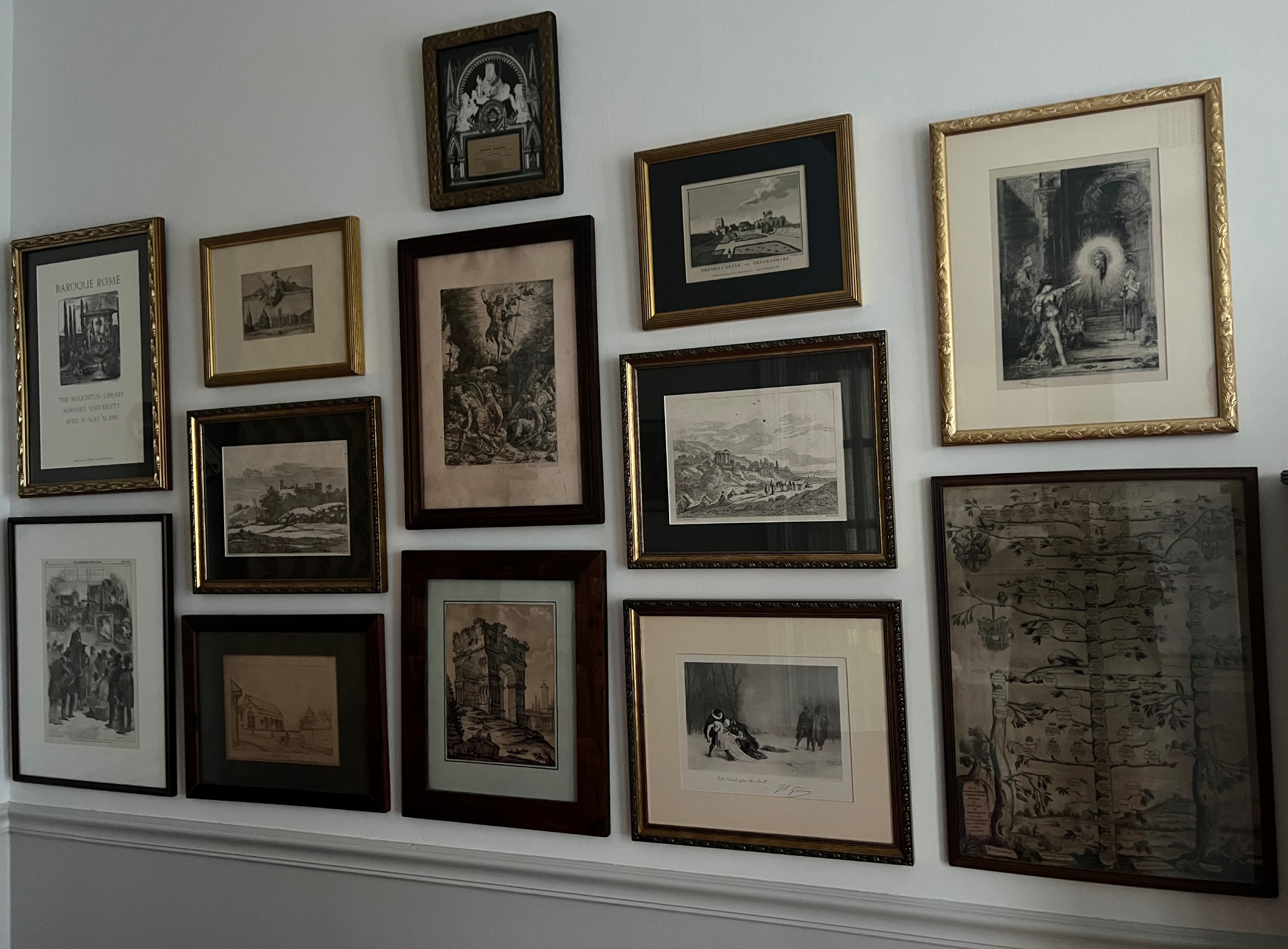
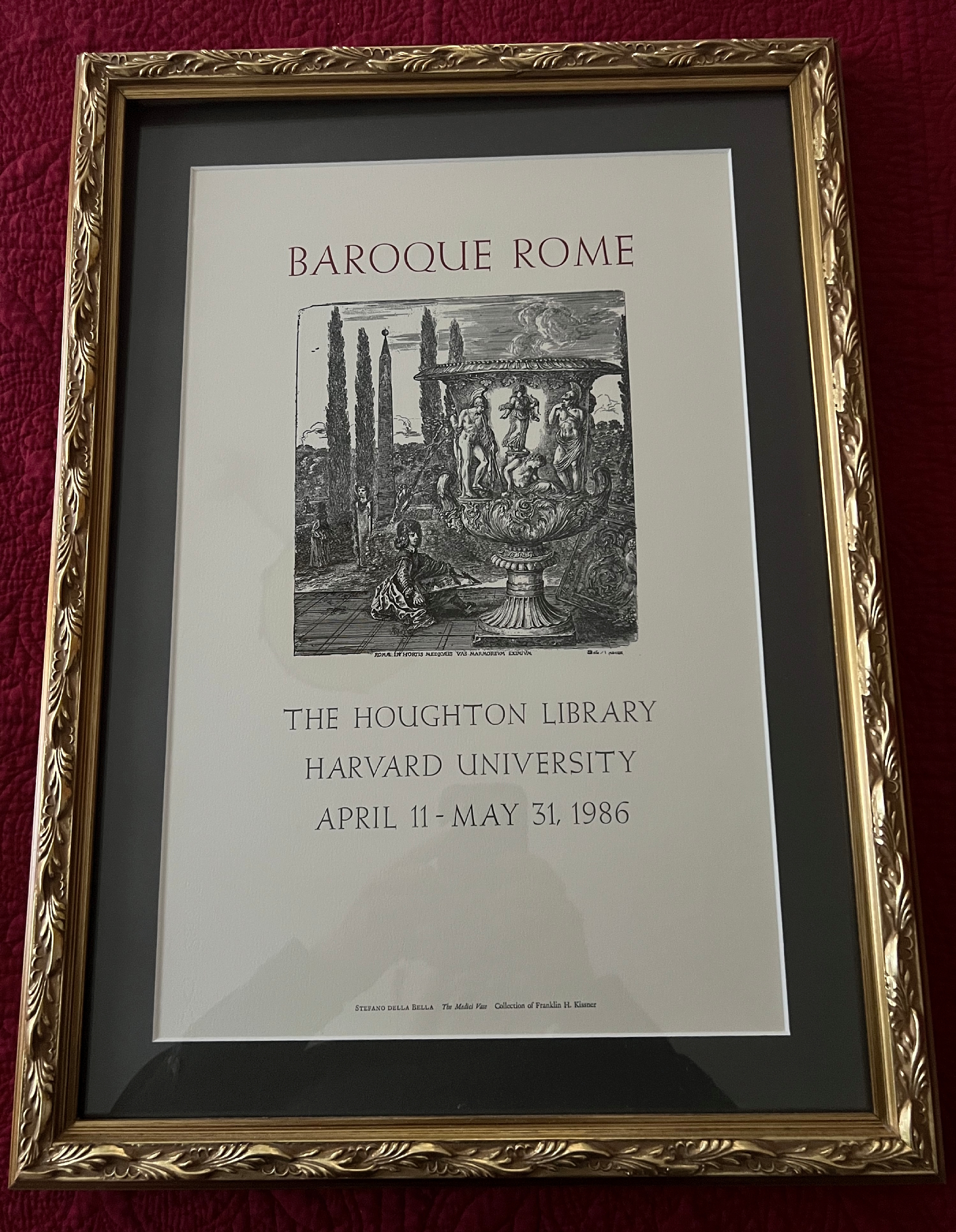
Designed and printed by John Kristensen of the Firefly Press, this is a souvenir of an exhibition that I curated at the Houghton Library while I taught Art History at Harvard University, focusing on the history of printing and book illustration.
But where do I fit into this picture —as exemplified (above) by the device-waving reflection toward the bottom of the frame?
I have always been more of a searcher than an explainer, but with an engrained habit of thinking out loud.
This "thinking our loud" is what I am asking you to share— here on this website.

At the Church of the Holy Sepulcher in Jerusalem, I am revealing the bronze altar by the sculptor Giambologna (circa 1588), installed by Ferdinando de'Medici, Grand Duke of Tuscany, at the purported site of the Crucifixion of Christ.
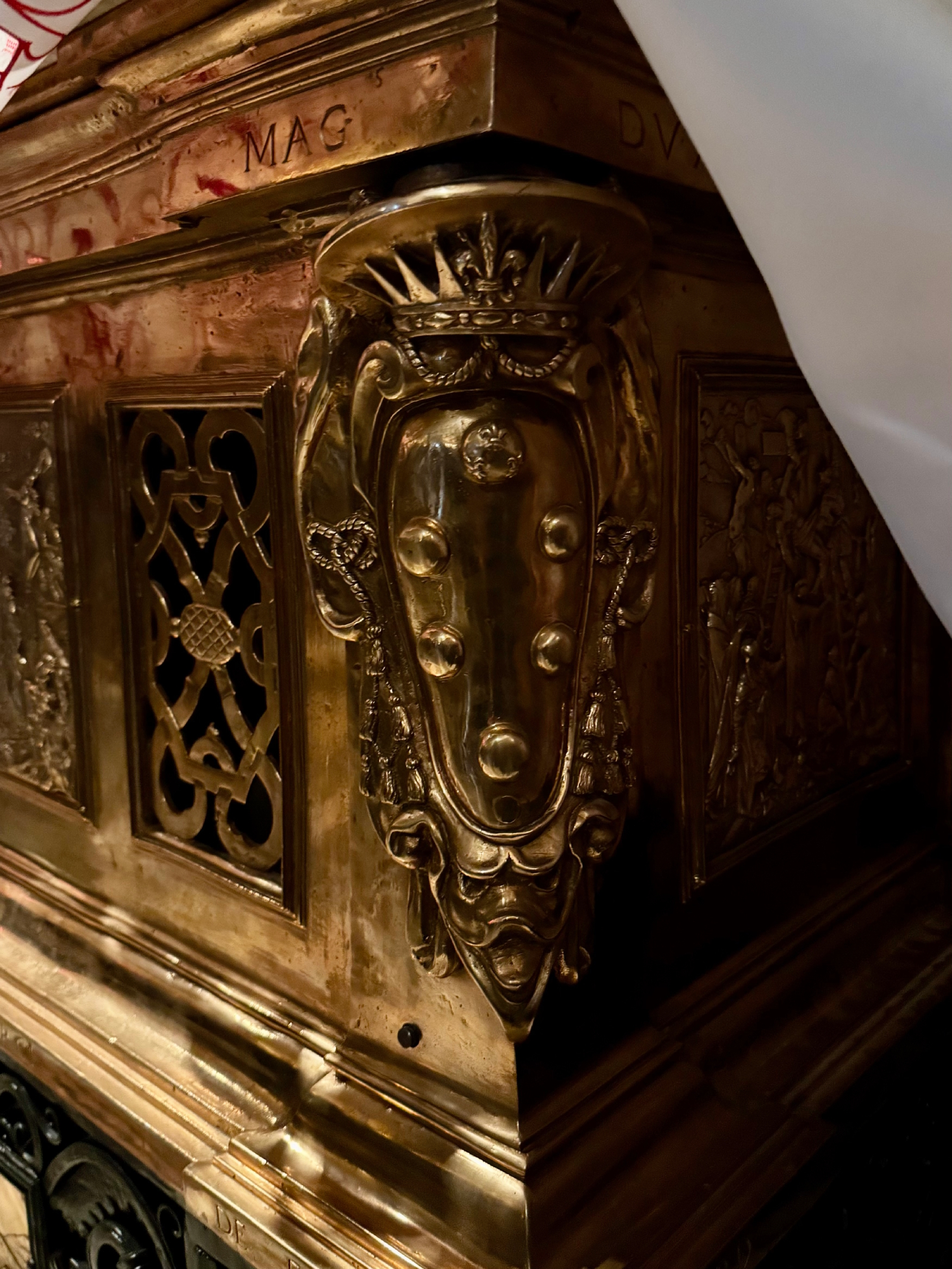
On Giambologna's Altar of the Crucifixion, the Medici arms are surmounted by the grand ducal crown.
Omniscient magus with a guidebook? Oh, please!!!
Still, it is often hard to avoid grandiloquent gestures.
For example: when the most important work of Renaissance art in the Holy Land (amply documented in the Archivio di Stato di Firenze) is covered by a schmatta and generally ignored.
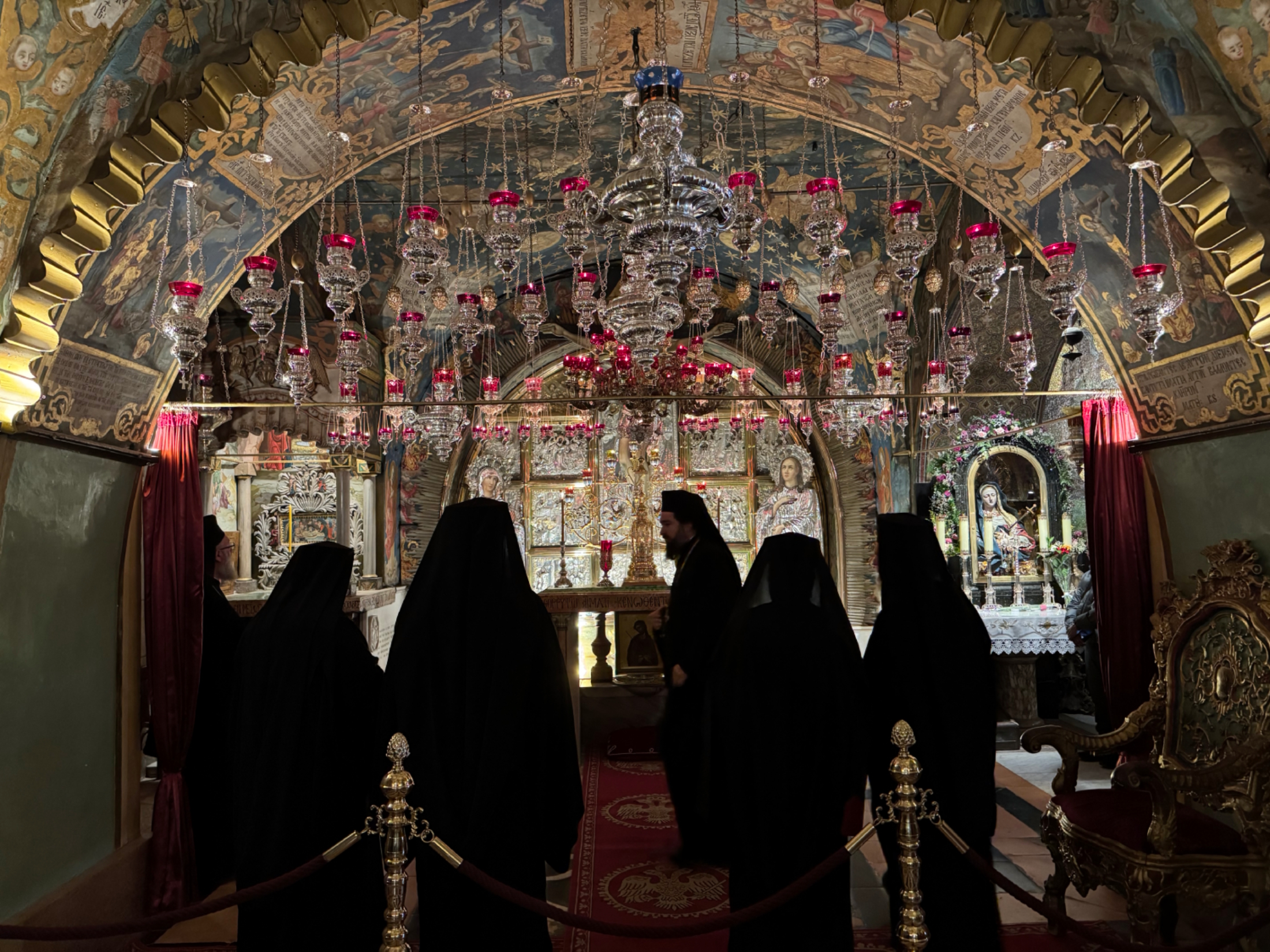
This was the scene at Golgotha the last time I was there —along with the Armenian Patriarch —coming up on Passover and Easter 2025. The Giambologna altar is off to the right.
In real life, most discoveries reveal themselves slowly.
Usually we begin with the context, working inward toward the center.

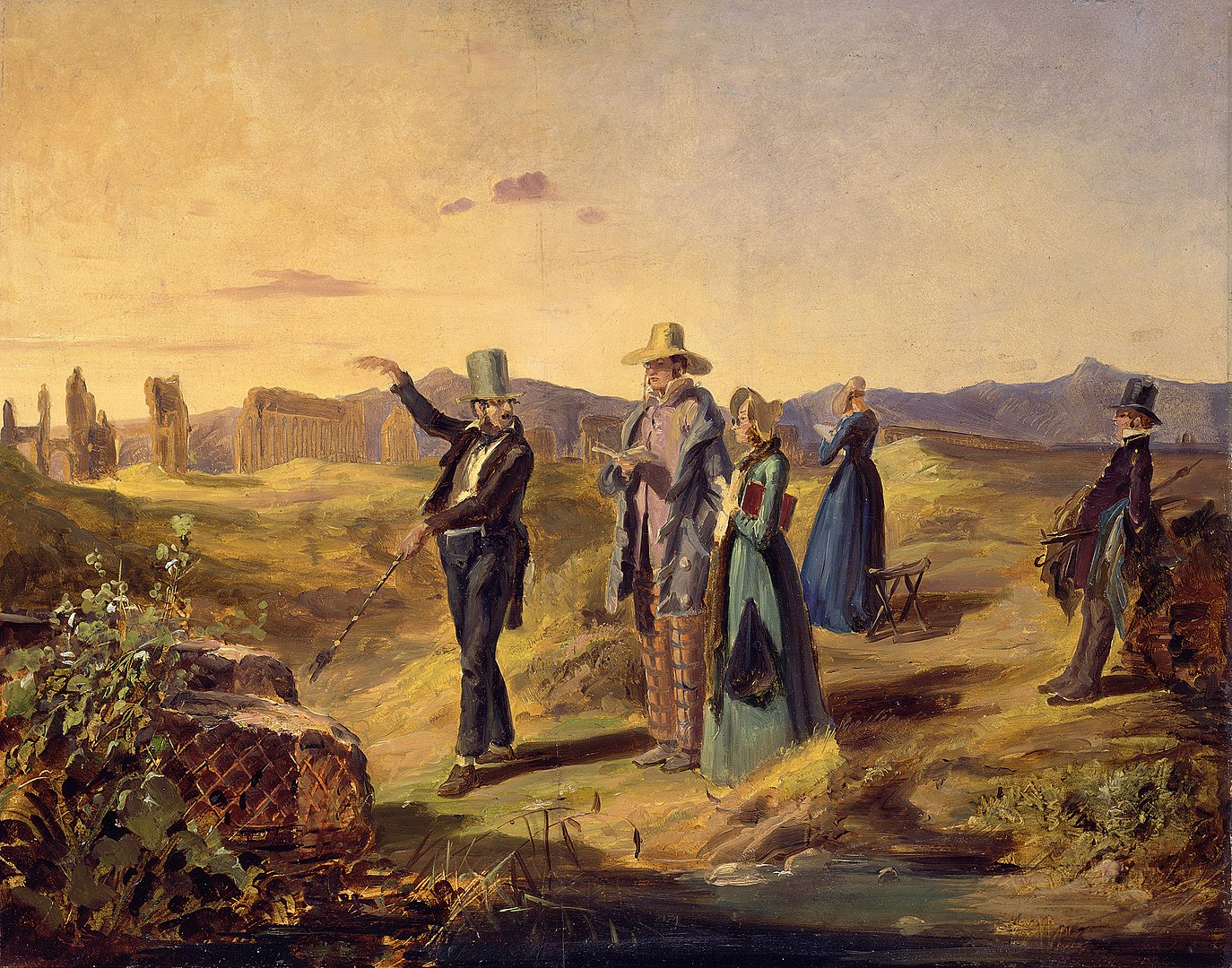
In spite of what you might think, I have always been allergic to "discovery-itis" —the mania for facile revelations based on one-off details.

I think of Carl Spitzweg's Roman guide. Then there are all those top-hatted gentlemen in nineteenth century prints, pointing with their umbrellas at London's Crystal Palace or Philadelphia's Centennial Exposition.

Studying a grave marker in a historic Armenian cemetery.
Along the way, I learn essential facts from local non-Academics who live with this stuff day-by-day.

Exploring a chapel in a historic Armenian cemetery.
Meanwhile, I poke around— imagining that I am also part of the story.

Communing with history by the Trevi Fountain in Rome.
What do you do about "discoveries", when thousands of others are in your face, making them too?
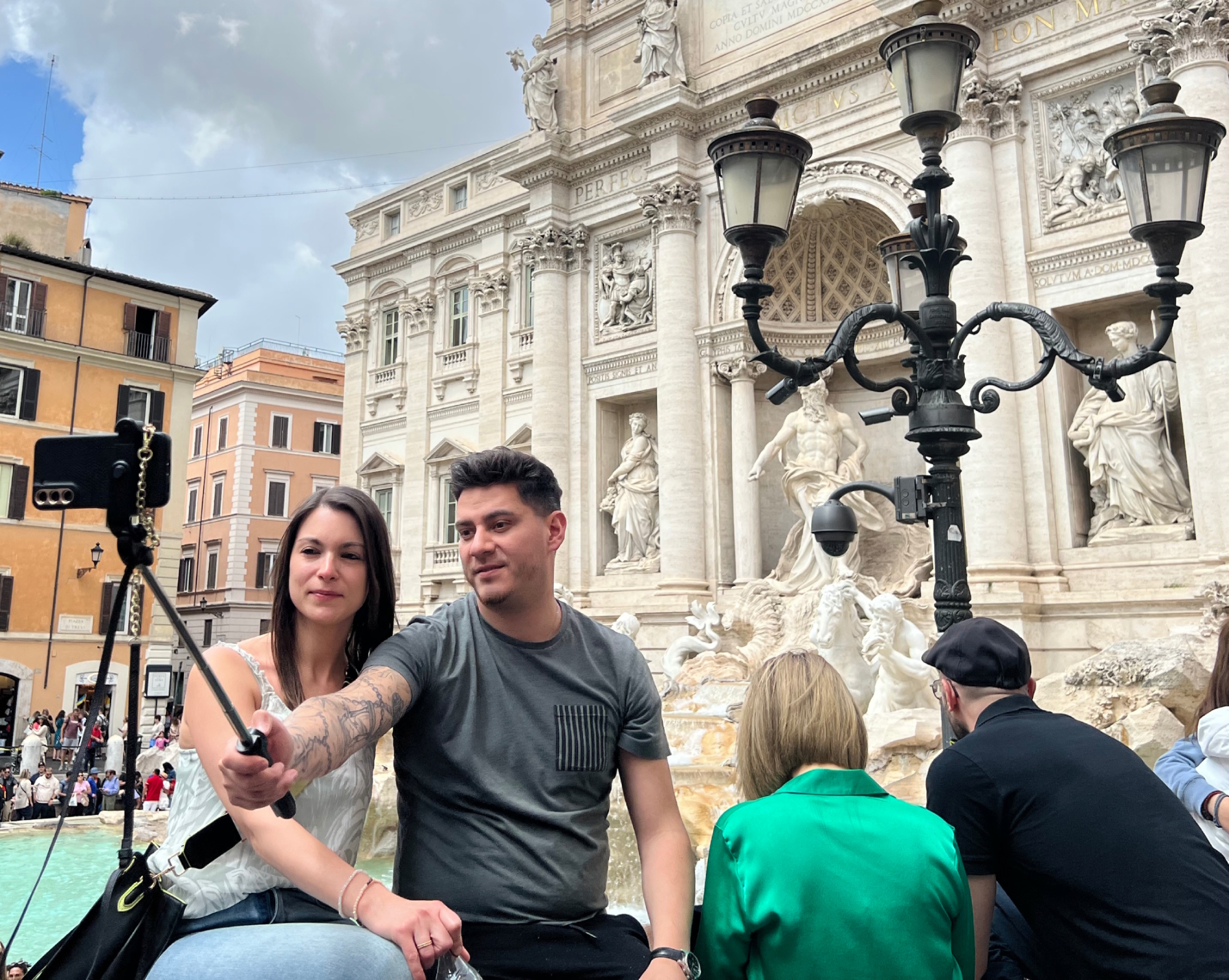
Advanced selfie-stick technology at the Trevi Fountain.
You keep moving...

Lyle Goldberg at the Trevi Fountain— photographed while photographing.
You shoot first...
You ask questions later...
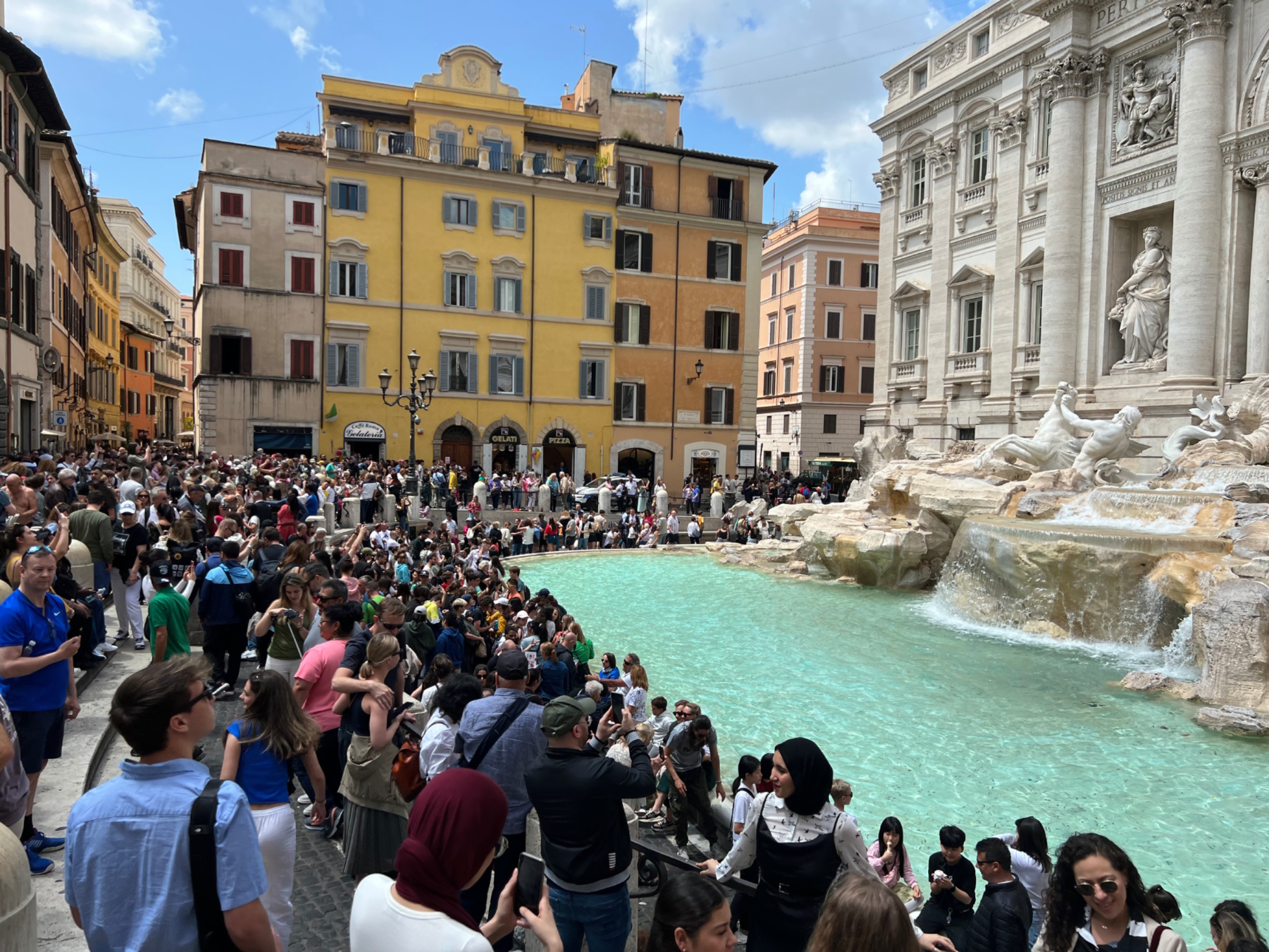
And you never know what you will find...
REGARDING THE IMAGES ON THIS WEBSITE, SEE:
WHERE DO THESE PICTURES COME FROM?
Related posts

JEWISH IN ITALY?
What's it like— being Jewish in Italy?
Especially when you're a mildly observant foreign Jew like me?
Social and cultural affinity kick in.
And it isn't always "religion" that matters most.
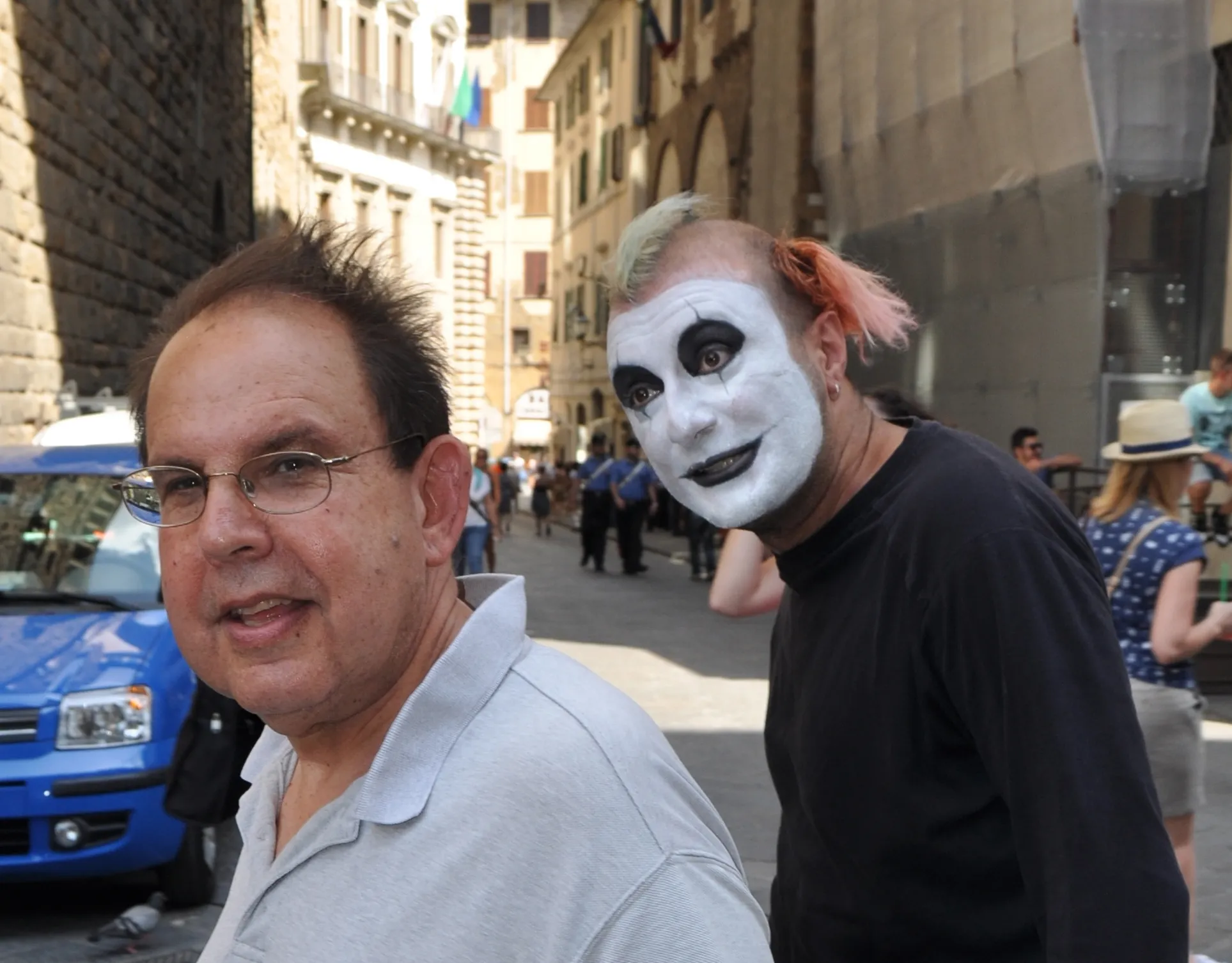
PUNKED BY A MIME ARTIST OUTSIDE THE UFFIZI GALLERY
Don't mess with Florentine Street Performers!
They are smarter than you, tougher than you and have secret powers.
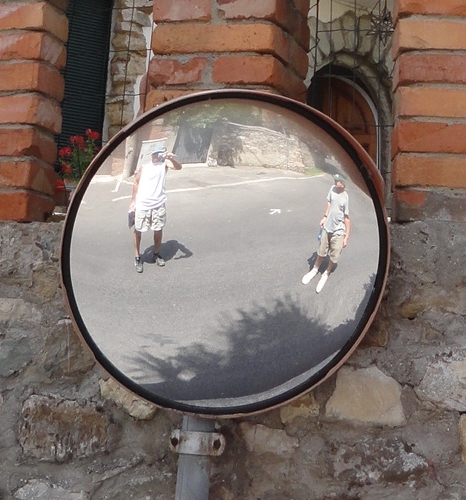
WHERE DO THESE PICTURES COME FROM?
Here you meet photographer Lyle Goldberg, who contributed much of this site's visual content.
You see him at work in Italy, Spain, Greece, Croatia, Israel and Uzbekistan —just to begin the list.
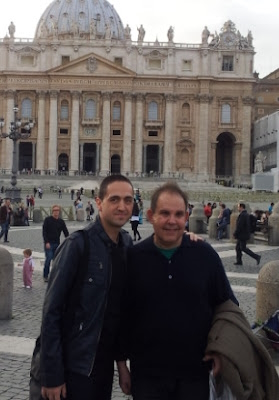
WHO'S A PIONEER?!: Hasan Niyazi Interviews Me
Hasan Niyazi, an arts blogger with a bold mission and unique voice, interviewed me in 2013 shortly before his death.
He made me answer probing questions that I would never have thought to ask myself— regarding Italy, archival research, digital innovation and the not-so-slow death of the humanities in Academe.
Lorem ipsum dolor sit amet, consectetur adipiscing elit. Suspendisse varius enim in eros elementum tristique. Duis cursus, mi quis viverra ornare, eros dolor interdum nulla, ut commodo diam libero vitae erat. Aenean faucibus nibh et justo cursus id rutrum lorem imperdiet. Nunc ut sem vitae risus tristique posuere.