Going to the Indian
GOING TO THE INDIAN: Across Florence’s Cascine Park and off the Edge of the Earth (Part 3)
In Florence, “Going to the Indian” is more than a very long walk. It is an existential journey leaving the known world behind.
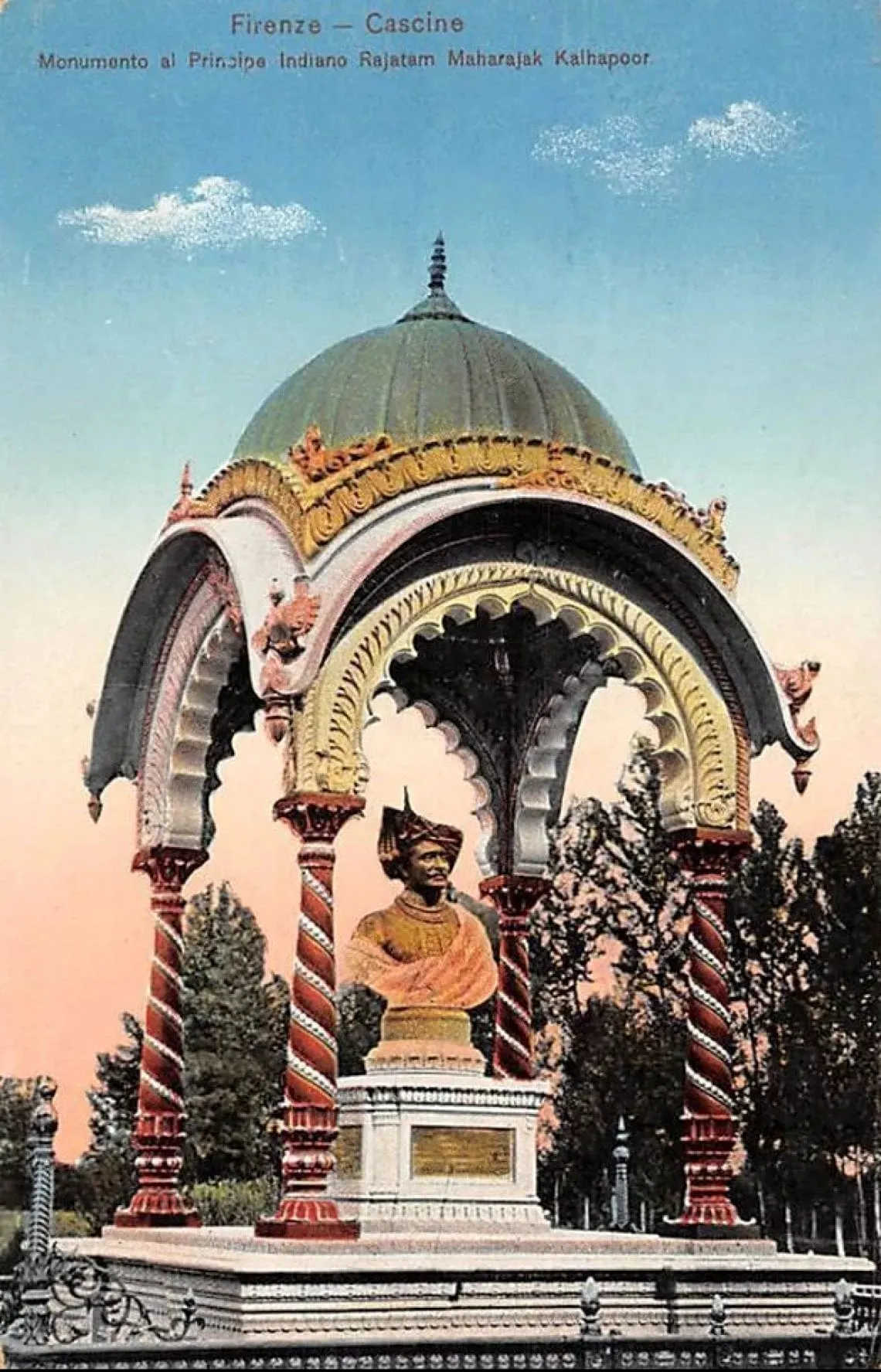
In 1870, the young Maharajah of Kohlapoor died in the Tuscan capital and a lavish monument was erected at the site of his cremation at the farthest limit of the city’s largest park.
Then Florentine culture and custom kicked in…
***
For centuries, the Cascine functioned as both a working farm and a princely hunting preserve.
Then in the course of the 19th and 20th centuries, modern athletic pursuits developed in that increasingly public park—making it ground zero for almost everything that is played in Florence today.
We cross the vast expanse of the Cascine, tracking half-forgotten pastimes like pallamaglio (a precursor of croquet and golf), pallone al bracciale and tamburello (cousins of handball and racquetball). Then comes soccer, tennis, horse racing and polo.
“Going to the Indian” means "trekking to the edge of the earth". But as we approach the Maharajah’s monument on the far side of the Cascine, another adage comes to mind,
“Go throw myself off the Indian” refers to the “Viaduct of the Indian”, an ill-omened highway overpass right nearby.
This potent magnet for local suicides has a dire history of its own.
GOING TO THE INDIAN: Across Florence’s Cascine Park and off the Edge of the Earth (Part 2)
In Florence, “Going to the Indian” is more than a very long walk. It is an existential journey leaving the known world behind.
In 1870, the young Maharajah of Kohlapoor died in the Tuscan capital and a lavish monument was erected at the site of his cremation at the farthest limit of the city’s largest park.
Then Florentine culture and custom kicked in…
***
The Cascine is a borderland, where anything and everything seems possible.
Sex and danger? You could (and maybe still can) get whatever you want from a diverse array of night-workers—females, males and (most famously) transvestites.
"La Romanina” (Romano Cecconi) ruled the 1960s and 70s (also known as “Batwoman”, embodying an acerbic Italian pun).
Then came Carlo Paiano (“La Carlotta, Queen of the Transexuals”), whose exploits characterized the wild world of 1980s Florence.
How about Mussolini and Hitler in this enchanted wood? Then swarms of banner-waving partisans when the tide turned?
GOING TO THE INDIAN: Across Florence’s Cascine Park and off the Edge of the Earth (Part 1)
In Florence, “Going to the Indian” is more than a very long walk. It is an existential journey leaving the known world behind.
In 1870, the young Maharajah of Kohlapoor died in the Tuscan capital and a lavish monument was erected at the site of his cremation at the farthest limit of the city’s largest park.
Then Florentine culture and custom kicked in…
***
What is the inside story of the Cascine, from Medici farm to urban park?
Who was “The Indian” and why did his earthly journey end there?
What did the Cascine's “Festa del Grillo” (Cricket Festival) mean to generations of Florentines?
And what else? Once upon a time, there were camels in the Cascine too.